
Laboratory Incident in Siberia Raises Concerns Over Pneumonic Plague Following Technician's Death
Why it matters
This incident raises concerns about laboratory safety protocols and the potential for infectious diseases to cross borders.
What happened (in 30 seconds)
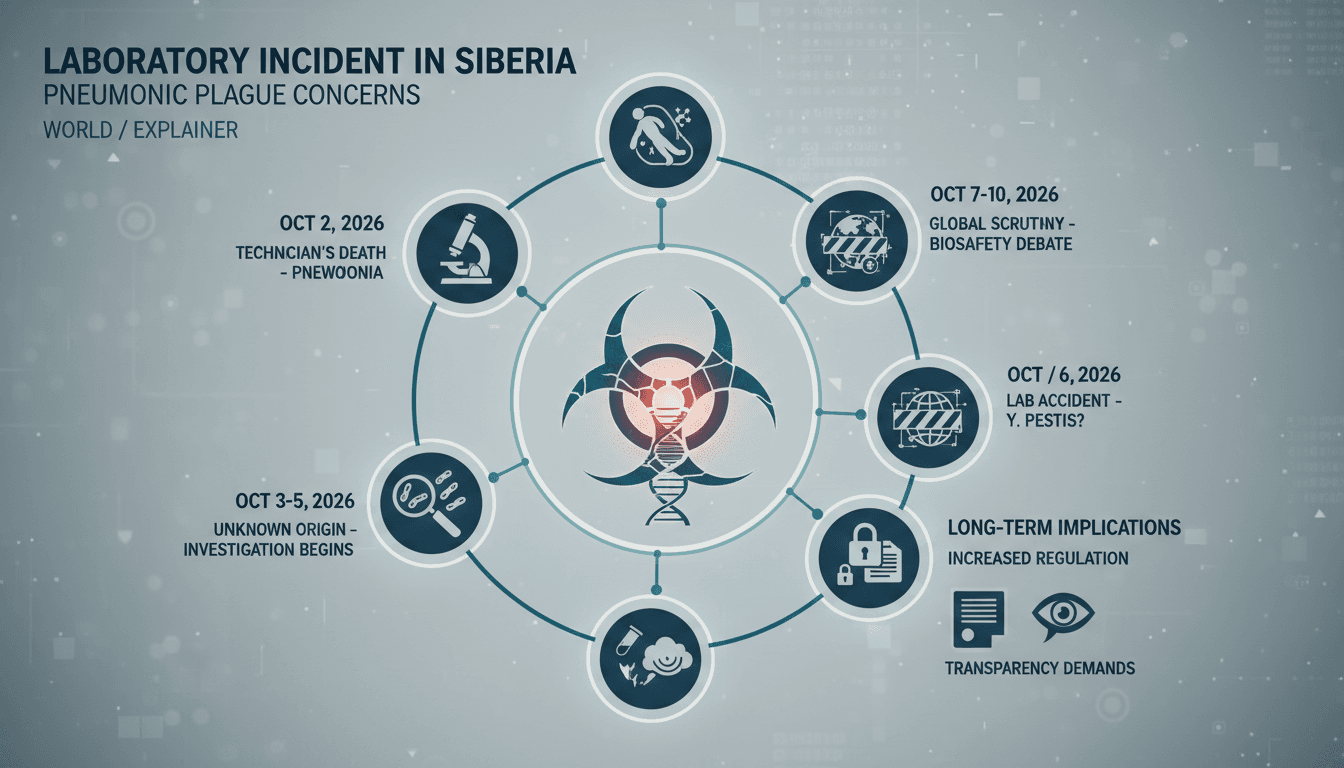
- Darya Shipilova, a lab technician, died on October 2, 2026, from pneumonia of unknown origin, raising suspicions of pneumonic plague.
- Russian authorities reported no emergency and claimed no dangerous pathogens were detected after extensive testing of contacts.
- International scrutiny has intensified, with the WHO and U.S. officials calling for transparency regarding the incident.
The context you actually need
- Historical concerns: The Irkutsk Anti-Plague Research Institute has a legacy tied to Soviet-era bioweapons programs, which have previously faced scrutiny for accidental releases.
- Pneumonic plague: This highly transmissible disease, caused by Yersinia pestis, can spread rapidly through respiratory droplets and is often fatal without prompt treatment.
- Global biosafety focus: The COVID-19 pandemic has heightened awareness and concern regarding laboratory safety and the potential for pathogens to escape containment.
What's really happening
On September 25, 2026, Darya Shipilova reportedly broke a test tube containing live biological material at the Irkutsk Anti-Plague Research Institute. Following this incident, she developed severe respiratory symptoms and was hospitalized on September 29. Despite being vaccinated against relevant pathogens, she succumbed to pneumonia on October 2.
Local media reported that approximately 200 individuals who had contact with Shipilova were placed under medical observation, with quarantine measures implemented in several hospitals. Russian officials have maintained that there was no emergency situation, asserting that extensive testing yielded no positive results for dangerous pathogens.
The World Health Organization (WHO) has requested further details about the incident, while U.S. officials, including President Trump, have urged for greater transparency from Russian authorities. This incident has reignited discussions about biosafety protocols, particularly in regions with a history of bioweapons research.
The potential for a pneumonic plague outbreak, although currently assessed as low risk, has prompted neighboring countries like Mongolia to enhance surveillance measures. The incident underscores the delicate balance between scientific research and public health safety, particularly in laboratories handling high-risk pathogens.
As global health agencies continue to monitor the situation, the implications of this incident extend beyond Russia, highlighting the interconnectedness of global health security. The focus remains on verifying the circumstances surrounding Shipilova's death and ensuring that similar incidents do not occur in the future.
Who feels it first (and how)
- Health officials: Increased scrutiny and pressure to ensure laboratory safety and transparency.
- Local communities: Heightened anxiety regarding potential health risks and the effectiveness of public health responses.
- International travelers: Potential changes in travel advisories or health screenings based on evolving assessments of risk.
What to watch next
- International health assessments: Continued evaluations by the WHO and other health agencies will determine the global response and any necessary precautions.
- Biosafety regulations: Potential changes in laboratory safety protocols in Russia and globally, influenced by this incident and its fallout.
- Public health communications: Monitoring how governments and health organizations communicate risks and safety measures to the public in the wake of this incident.
Darya Shipilova died from pneumonia of unknown etiology; approximately 200 individuals were placed under medical observation.
Increased international scrutiny on biosafety practices in laboratories handling high-risk pathogens.
The exact cause of Shipilova's pneumonia and whether it is linked to Yersinia pestis or another pathogen.
Frequently Asked Questions
- Why it matters?
- This incident raises concerns about laboratory safety protocols and the potential for infectious diseases to cross borders.
- What happened (in 30 seconds)?
- Darya Shipilova, a lab technician, died on October 2, 2026, from pneumonia of unknown origin, raising suspicions of pneumonic plague. Russian authorities reported no emergency and claimed no dangerous pathogens were detected after extensive testing of contacts. International scrutiny has intensified, with the WHO and U.S. officials calling for transparency regarding the incident.
- What's really happening?
- On September 25, 2026, Darya Shipilova reportedly broke a test tube containing live biological material at the Irkutsk Anti-Plague Research Institute. Following this incident, she developed severe respiratory symptoms and was hospitalized on September 29. Despite being vaccinated against relevant pathogens, she succumbed to pneumonia on October 2. Local media reported that approximately 200 individuals who had contact with Shipilova were placed under medical observation, with quarantine measur
- Who feels it first (and how)?
- Health officials: Increased scrutiny and pressure to ensure laboratory safety and transparency. Local communities: Heightened anxiety regarding potential health risks and the effectiveness of public health responses. International travelers: Potential changes in travel advisories or health screenings based on evolving assessments of risk.
- What to watch next?
- International health assessments: Continued evaluations by the WHO and other health agencies will determine the global response and any necessary precautions. Biosafety regulations: Potential changes in laboratory safety protocols in Russia and globally, influenced by this incident and its fallout. Public health communications: Monitoring how governments and health organizations communicate risks and safety measures to the public in the wake of this incident.
Reports on science policy, discoveries, and public debate in the scientific realm.
"The Guardian’s science section is known for thoughtful and critical reporting on global research, ethics, and public understanding of science."
— A47 Editor
Today in Focus: Should we be worried about a plague outbreak? – podcast
A 28-year-old laboratory worker, Darya Shipilova, died at a plague research center in Siberia, prompting quarantine measures in several hospitals in eastern Russia. The cause of death has been attributed to 'pneumonia of unknown aetiology,' but there...
News and current affairs from across Europe.
"The Guardian is known for its progressive editorial stance and in-depth analysis."
— A47 Editor
Today in Focus: Should we be worried about a plague outbreak? – podcast
Darya Shipilova, a 28-year-old laboratory worker at the Irkutsk Anti-Plague Institute in Siberia, has died after falling ill, leading to quarantine measures for around 200 individuals. Russian health authorities attributed her death to pneumonia of u...
Updates on health, medicine, public health policy, and medical research worldwide.
"France 24 is viewed as a globally focused outlet with moderate and balanced editorial coverage, offering a European perspective on international affairs."
— A47 Editor
Should we be worried about a plague outbreak in Russia?
The recent death of a female researcher at the Irkutsk Anti-Plague Institute in Siberia, reportedly from pneumonia of unknown origin, has raised alarms about a potential plague outbreak, despite Russian authorities denying any such risk. Approximatel...
European current affairs, EU politics, and regional developments.
"France 24 is viewed as a globally focused outlet with balanced coverage and a European perspective."
— A47 Editor
Should we be worried about a plague outbreak in Russia?
The recent death of a female researcher at the Irkutsk Anti-Plague Institute in Siberia, reportedly from pneumonia of unknown origin, has raised alarms about a potential plague outbreak, despite Russian authorities denying any such risk. Approximatel...
Public health news, medical research, and wellness coverage.
"NBC News is a mainstream outlet known for comprehensive national and international news coverage with a centrist to slightly left-leaning editorial tone."
— A47 Editor
Mystery death in Russian lab
A woman employed at a laboratory in Russia that conducts research on the plague has died, prompting U.S. officials to closely monitor the situation. The circumstances surrounding her death remain unclear, raising concerns about potential implications...
Comprehensive coverage of global events, politics, and international issues.
"NBC News is a mainstream outlet known for comprehensive national and international coverage with a centrist to slightly left-leaning editorial tone."
— A47 Editor
Mystery death in Russian lab
A woman employed at a laboratory in Russia that conducts research on the plague has died, prompting U.S. officials to closely monitor the situation. The circumstances surrounding her death remain unclear, raising concerns about potential implications...