
US Intensifies Military Strikes Against Iran Amid Escalating Tensions
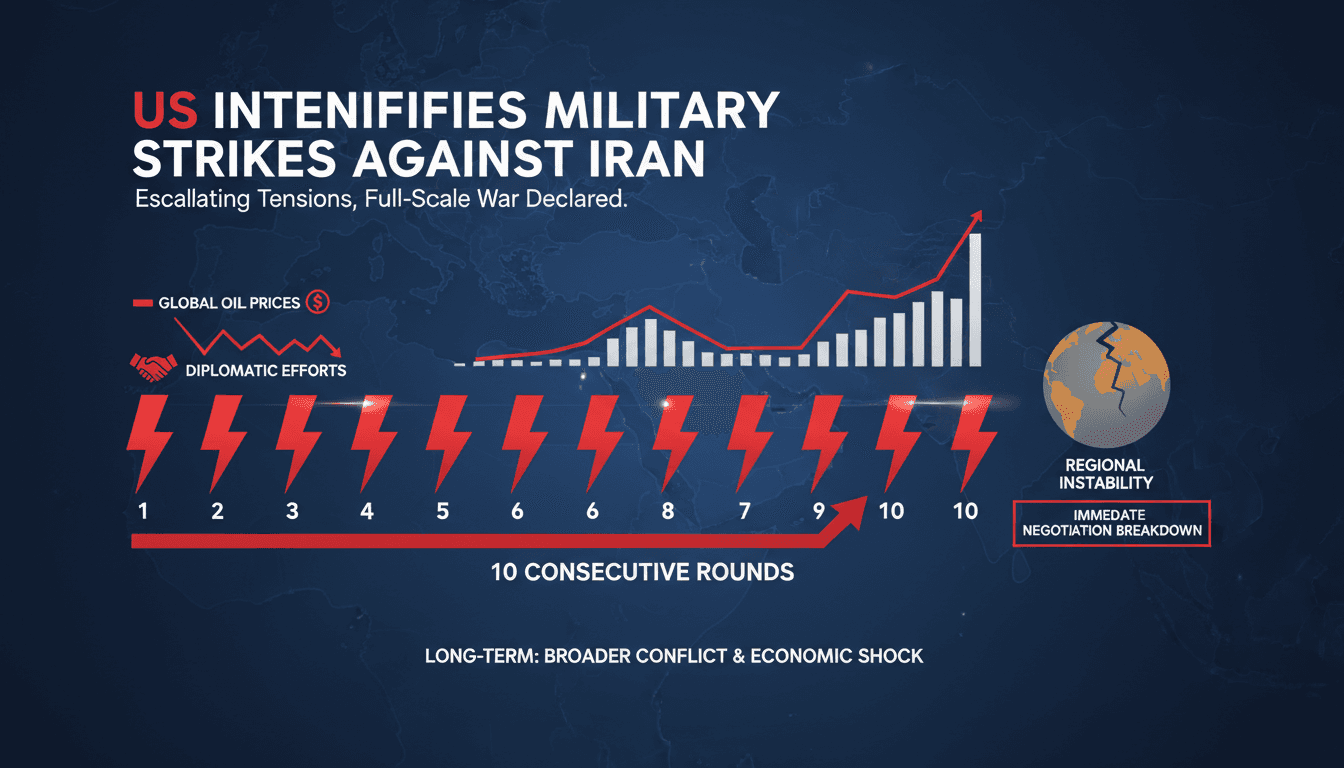
Here's what it means for you.
The intensification of military strikes by the United States against Iran signals a significant escalation in geopolitical tensions that could have far-reaching implications. For markets, this conflict may lead to volatility in global oil prices, impacting energy sectors and economies reliant on oil imports. Policymakers will need to navigate the delicate balance between military action and diplomatic efforts to prevent further destabilization in the region. As both nations remain entrenched in their positions, the potential for broader regional conflict looms large. Stakeholders across various sectors should prepare for potential disruptions and shifts in policy as the situation evolves.
What happened
The United States has launched its 10th consecutive round of military strikes against Iran, marking a significant escalation in the ongoing conflict. This latest round of attacks comes as Iran's president has declared a 'full-scale war' against the US, indicating a severe breakdown in diplomatic negotiations. The strikes have targeted Iranian military sites, including areas near a nuclear power plant, raising concerns about the implications for regional security.
In retaliation, Iran has attacked US allies in the region, including Bahrain and Jordan, further complicating the situation. Reports indicate that over 50 casualties and hundreds of injuries have resulted from US strikes since late June, underscoring the human cost of this escalating conflict. The sustained military actions reflect a deepening entrenchment of both nations in their respective positions.
The Context
The conflict between the US and Iran has escalated dramatically, with both sides engaging in retaliatory actions that threaten regional stability and global oil supply. Iran's declaration of a full-scale war highlights the heightened tensions and the potential for further military engagement. The US Secretary of State has stated that while the US remains open to diplomacy, compliance from Iran is essential for any meaningful negotiations.
The timeline of events shows a rapid escalation, with US strikes resulting in casualties among service members in Jordan and Iraq just days before the latest round of attacks. This backdrop of military action complicates the already fragile diplomatic landscape, as both nations appear unwilling to back down. The international community is closely monitoring the situation, aware of the potential for broader conflict.
Takeaway
As military actions continue, the outlook remains precarious, with both the US and Iran showing no signs of de-escalation. Observers should closely monitor developments in diplomatic negotiations, as any breakthroughs could alter the trajectory of the conflict. Additionally, the potential impacts on global oil prices warrant attention, as fluctuations could affect economies worldwide.
The situation is fluid, and the international community's response will be crucial in shaping future dynamics. Stakeholders should remain vigilant as the conflict evolves, with implications that could extend beyond the immediate region.
News from the United States including domestic politics, society, and culture.
"The Guardian is known for its progressive editorial stance and in-depth analysis, often advocating for social justice, environmental issues, and liberal values."
— A47 Editor
US launches 10th round of strikes as Iran says it is in ‘full-scale war’
The United States has launched its 10th consecutive round of airstrikes against Iran, intensifying military actions aimed at reopening the Strait of Hormuz. This escalation follows statements from Iranian President Ebrahim Raisi declaring a state of ...
International coverage from The Guardian's global desks.
"The Guardian is known for its progressive editorial stance and in-depth analysis."
— A47 Editor
US launches 10th round of strikes as Iran says it is in ‘full-scale war’
The United States has launched its 10th consecutive round of airstrikes against Iran, intensifying military actions aimed at reopening the Strait of Hormuz. This escalation follows statements from Iranian President Ebrahim Raisi declaring a state of ...
Regional coverage and analysis focused on politics, diplomacy, and business across the Middle East.
"Al-Monitor is known for analytical reporting on Middle East politics and policy developments."
— A47 Editor
US-Iran strikes: latest developments
Iran's President Masoud Pezeshkian has declared that the country is engaged in a 'full-scale war' with the United States, following a series of intensified U.S. airstrikes targeting Iranian military positions, particularly around Qeshm Island near th...
English-language reporting on Saudi politics, policy, and society.
"Saudi Gazette reflects mainstream Saudi institutional perspectives."
— A47 Editor
Iran says fighting 'full-scale war' with US
Iran's President Masoud Pezeshkian declared that the country is engaged in a 'full-scale war' with the United States, following a series of U.S. airstrikes targeting Iranian military sites, including locations near a nuclear power plant in Bushehr. I...
Regional coverage and analysis focused on politics, diplomacy, and business across the Middle East.
"Al-Monitor is known for analytical reporting on Middle East politics and policy developments."
— A47 Editor
US-Iran strikes: latest developments
Iran's President Masoud Pezeshkian has declared that the country is engaged in a 'full-scale war' with the United States, following a series of U.S. airstrikes targeting Iranian military positions, particularly around Qeshm Island near the strategic ...