
Trump Administration Imposes Sanctions on International Criminal Court
Why it matters
These sanctions signal a significant shift in U.S. foreign policy that could impact international legal cooperation and accountability.
What happened (in 30 seconds)
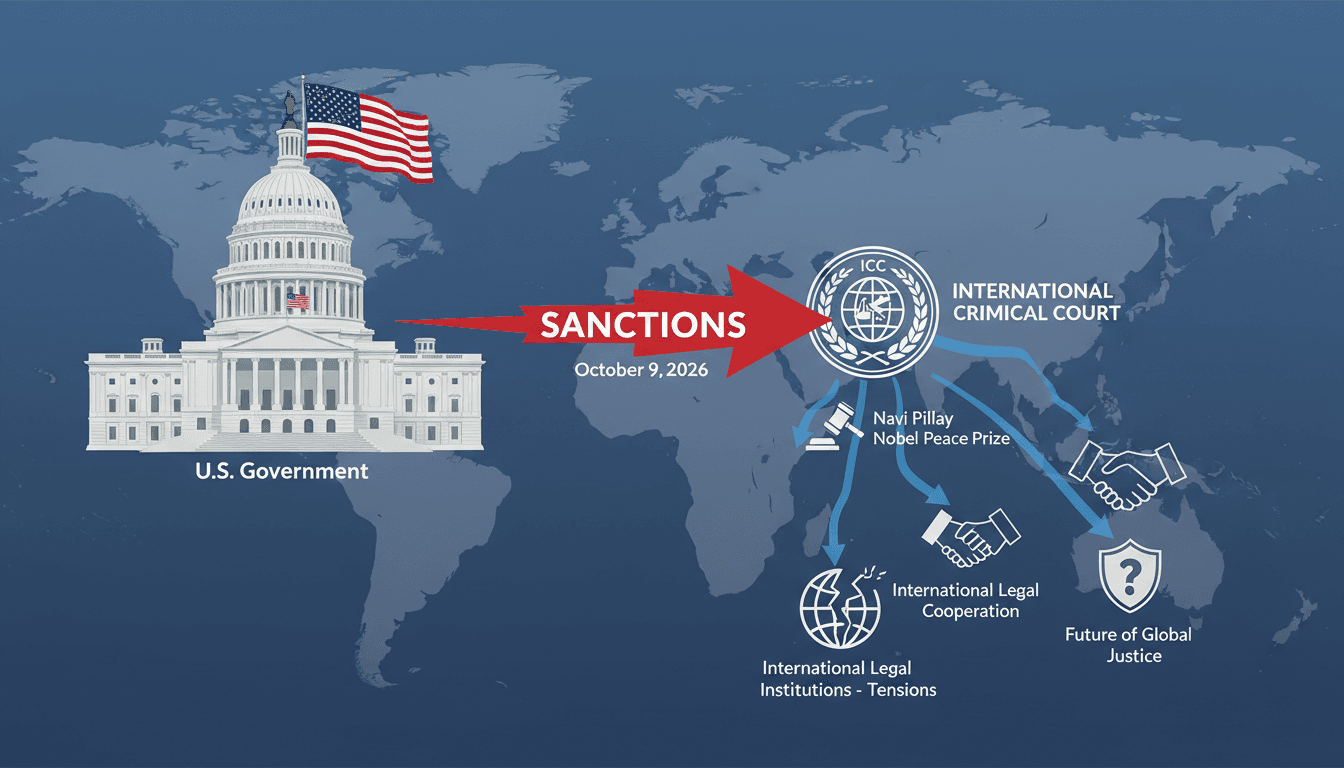
- On October 9, 2026, the Trump administration announced sanctions against the International Criminal Court (ICC), prohibiting U.S. entities from transacting with it.
- The sanctions freeze ICC assets and aim to undermine its financial operations, following previous sanctions on individual court personnel.
- This move coincides with former ICC judge Navi Pillay receiving the Nobel Peace Prize, framing the sanctions as a defense of U.S. sovereignty against a "rogue" court.
The context you actually need
- The U.S. has never ratified the Rome Statute, which established the ICC, due to concerns over its jurisdiction over non-member states, particularly regarding U.S. military personnel.
- Tensions escalated after the ICC issued arrest warrants for Israeli officials, prompting prior sanctions and a campaign to dismantle the court "brick by brick."
- Five ICC member states have announced withdrawal plans since the U.S. campaign intensified, indicating a potential ripple effect on international legal norms.
What's really happening
The Trump administration's recent sanctions against the ICC are part of a broader strategy to dismantle the court's influence and operations. This initiative began gaining momentum after Trump's return to office in 2025, with Secretary of State Marco Rubio leading the charge. The sanctions prohibit U.S. entities from engaging with the ICC, effectively freezing its assets and crippling its financial infrastructure. This move is framed as a necessary defense of U.S. sovereignty, particularly in light of the ICC's jurisdiction over non-member states, which the U.S. perceives as an infringement on its legal autonomy.
The ICC has long been a point of contention for the U.S., which has consistently opposed its authority since the court's inception in 2002. The recent sanctions are a culmination of escalating tensions, particularly following the ICC's issuance of arrest warrants for Israeli officials related to the Gaza conflict. The U.S. government views these actions as illegitimate overreach, prompting previous sanctions against individual judges and prosecutors.
The timing of the sanctions is also significant. They were announced shortly after Navi Pillay, a former ICC judge, received the 2026 Nobel Peace Prize, which the Trump administration likely saw as an opportunity to frame its actions as a necessary countermeasure against a "rogue" institution. The ICC has condemned the sanctions as an assault on international law, and European states have rallied in support of the court, emphasizing the importance of defending international institutions.
The sanctions come with a six-month grace period for compliance, during which diplomatic negotiations are expected to continue. However, the immediate impact is clear: the ICC's operational capabilities are severely hampered, and its financial stability is threatened. This could lead to broader implications for international legal cooperation, as other nations may reconsider their relationships with the ICC in light of U.S. pressure.
Who feels it first (and how)
- International legal professionals: They may face challenges in navigating cases involving the ICC or clients from the U.S.
- U.S. businesses: Companies engaged in international transactions may need to reassess their compliance strategies regarding ICC-related matters.
- Global financial institutions: Banks and financial entities may alter their compliance practices in response to the sanctions, affecting dollar-based transactions.
What to watch next
- Compliance adjustments: Monitor how U.S. entities adapt to the sanctions and whether they find alternative legal frameworks for international transactions.
- International responses: Watch for reactions from other nations regarding their stance on the ICC and potential withdrawals or support for the court.
- Diplomatic negotiations: Keep an eye on ongoing discussions during the grace period, as they could lead to further developments in U.S.-ICC relations.
The sanctions are currently in effect and target U.S. entities and the ICC's financial operations.
Other nations may reconsider their relationships with the ICC, leading to further withdrawals or support for the court.
The long-term impact on international legal cooperation and accountability remains uncertain.
Frequently Asked Questions
- Why it matters?
- These sanctions signal a significant shift in U.S. foreign policy that could impact international legal cooperation and accountability.
- What happened (in 30 seconds)?
- On October 9, 2026, the Trump administration announced sanctions against the International Criminal Court (ICC), prohibiting U.S. entities from transacting with it. The sanctions freeze ICC assets and aim to undermine its financial operations, following previous sanctions on individual court personnel. This move coincides with former ICC judge Navi Pillay receiving the Nobel Peace Prize, framing the sanctions as a defense of U.S. sovereignty against a "rogue" court.
- What's really happening?
- The Trump administration's recent sanctions against the ICC are part of a broader strategy to dismantle the court's influence and operations. This initiative began gaining momentum after Trump's return to office in 2025, with Secretary of State Marco Rubio leading the charge. The sanctions prohibit U.S. entities from engaging with the ICC, effectively freezing its assets and crippling its financial infrastructure. This move is framed as a necessary defense of U.S. sovereignty, particularly in li
- Who feels it first (and how)?
- International legal professionals: They may face challenges in navigating cases involving the ICC or clients from the U.S. U.S. businesses: Companies engaged in international transactions may need to reassess their compliance strategies regarding ICC-related matters. Global financial institutions: Banks and financial entities may alter their compliance practices in response to the sanctions, affecting dollar-based transactions.
- What to watch next?
- Compliance adjustments: Monitor how U.S. entities adapt to the sanctions and whether they find alternative legal frameworks for international transactions. International responses: Watch for reactions from other nations regarding their stance on the ICC and potential withdrawals or support for the court. Diplomatic negotiations: Keep an eye on ongoing discussions during the grace period, as they could lead to further developments in U.S.-ICC relations.
Comprehensive coverage of Middle Eastern and global issues.
"Al Jazeera is a prominent voice from the Global South, especially the Middle East, with an emphasis on underreported stories."
— A47 Editor
Why is the Trump administration trying to dismantle the ICC?
The US has imposed sweeping new sanctions on the International Criminal Court.
Global news coverage with extensive reporting on Middle Eastern conflicts and geopolitics.
"Al Jazeera is a Qatar-based broadcaster known for wide regional coverage and alternative perspectives."
— A47 Editor
Why is the Trump administration trying to dismantle the ICC?
The US has imposed sweeping new sanctions on the International Criminal Court.
English-language reporting on Saudi politics, policy, and society.
"Saudi Gazette reflects mainstream Saudi institutional perspectives."
— A47 Editor
US sanctions on ICC spark backlash from European allies, Canada, Japan and UN
The United States announced sweeping sanctions against the International Criminal Court (ICC), prompting significant backlash from European allies, Canada, Japan, and the United Nations, who warned that these measures threaten the independence of int...
Policy, elections, and government reporting.
"NPR is an American public media organization known for thoughtful reporting and a slightly left-leaning editorial tone."
— A47 Editor
U.S. imposes sweeping sanctions on International Criminal Court
The U.S. government, led by Secretary of State Marco Rubio, has imposed sweeping sanctions on the International Criminal Court (ICC), aiming to disrupt its operations and resources. This decision marks a significant escalation in the ongoing tensions...
International news coverage curated for readers in the UAE and Gulf region.
"Emirates 24|7 world coverage presents global developments through a UAE-facing and Gulf-relevant editorial lens."
— A47 Editor
US sanctions International Criminal Court, drawing widespread international condemnation
The United States has imposed extensive sanctions on the International Criminal Court (ICC), prohibiting transactions with the tribunal, a move aimed at safeguarding U.S. sovereignty and citizens from prosecution. This decision has drawn significant ...
Corporate leadership, finance, technology, and market trends.
"Fortune covers financial trends, leadership, and innovation with a pragmatic editorial approach."
— A47 Editor
‘Piece by piece’: Trump administration vows to dismantle the International Criminal Court with sweeping new sanctions
The Trump administration has announced sweeping new sanctions aimed at dismantling the International Criminal Court (ICC), effectively cutting the court off from U.S. dollars, financial services, and technology companies. American businesses have bee...
English-language news from Qatar covering domestic and regional affairs.
"Gulf Times reflects Qatari perspectives on regional developments."
— A47 Editor
US announces sanctions on ICC
The United States announced sanctions against the International Criminal Court (ICC), aiming to significantly hinder the tribunal's operations. This decision came shortly after a former ICC judge was awarded the Nobel Peace Prize, highlighting a star...
Capitol Hill news, legislation, and policy insight.
"The Hill specializes in U.S. politics and policy, with a focus on Capitol Hill developments and a reputation for insider reporting."
— A47 Editor
International Criminal Court 'firmly rejects' new US sanctions
The International Criminal Court (ICC) has firmly rejected new sanctions imposed by the United States on its financial assets, labeling the actions as an assault on the rule of law. ICC President Tomoko Akane expressed this stance in a video statemen...
International coverage of politics, culture, and current affairs.
"BBC News is widely regarded as a reputable international news organization, known for its impartial tone and public service mandate."
— A47 Editor
US unveils sanctions on ICC in move court condemns as 'assault on rule of law'
The United States has announced sanctions against the International Criminal Court (ICC), a move that the court has condemned as an 'assault on the rule of law.' Several member states, including the UK, have expressed strong disagreement with these s...
U.S. political news and right-leaning commentary.
"Fox News is a highly influential conservative news outlet known for right-leaning political commentary and coverage."
— A47 Editor
Marco Rubio announces sweeping financial sanctions against the International Criminal Court
Marco Rubio announced that the Trump administration will impose sweeping financial sanctions against the International Criminal Court (ICC), freezing its assets and prohibiting all U.S. transactions with the court. This decision reflects a significan...
Global political, business, and cultural coverage from WSJ international desks.
"The Wall Street Journal offers extensive international reporting with a reputation for financial insight and a center-right editorial stance."
— A47 Editor
U.S. Sanctions and Threatens to Dismantle International Criminal Court
The United States has announced sanctions against the International Criminal Court (ICC), threatening to sever its access to the U.S. financial system and restrict transactions in dollars. This move is part of a broader strategy to undermine the cour...
News from the United States including domestic politics, society, and culture.
"The Guardian is known for its progressive editorial stance and in-depth analysis, often advocating for social justice, environmental issues, and liberal values."
— A47 Editor
US imposes new sanctions on international criminal court
The Trump administration has escalated its stance against the International Criminal Court (ICC) by imposing new sanctions, claiming the court unfairly targets Americans for war crime charges. Secretary of State Marco Rubio stated that the U.S. does ...
24/7 international news from a French perspective in multiple languages.
"France 24 is viewed as a globally focused outlet with balanced coverage and a European perspective."
— A47 Editor
International Criminal Court faces 'test of resilience' as US imposes sweeping sanctions
The Trump administration has imposed sweeping sanctions on the International Criminal Court (ICC), labeling it a 'rogue' tribunal and threatening its operational capacity. This move has been met with condemnation from ICC leaders, who argue that such...
Coverage of national news and events from across the United States.
"HuffPost is known for its progressive editorial stance, offering opinionated yet comprehensive coverage on social, political, and cultural topics."
— A47 Editor
U.S. Imposes Sanctions On International Criminal Court, Hours After Former Judge Wins Nobel
The U.S. government has imposed new sanctions on the International Criminal Court (ICC), escalating tensions between the two entities. This decision follows a history of hostility from the Trump administration towards the ICC, which has previously fa...
News from the United States including domestic politics, society, and culture.
"Global News is a mainstream Canadian media outlet generally considered to have a centrist editorial stance, covering news with a focus on factual reporting and national interest."
— A47 Editor
U.S. sanctions the International Criminal Court in bid to dismantle tribunal
The U.S. government, led by Secretary of State Marco Rubio, has imposed sanctions on the International Criminal Court (ICC), aiming to disrupt its operations and resources. Rubio described the ICC as a 'rogue court' and emphasized that the sanctions ...