
Iraq Closes Al-Sheeb Border Crossing with Iran Amid US Pressure
Why it matters
This closure signals a tightening of economic relations in the region, influenced by external pressures, which could reshape trade dynamics.
What happened (in 30 seconds)
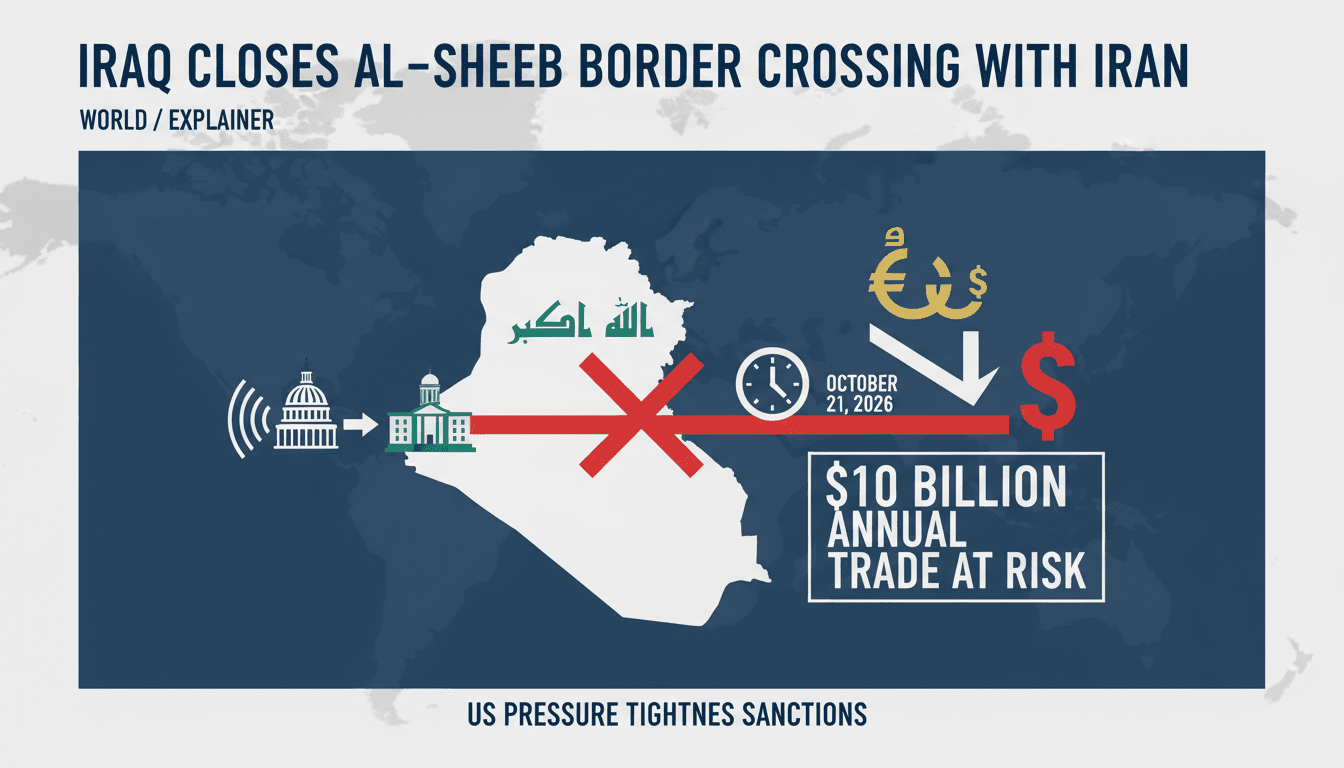
- On October 21, 2026, Iraq closed the Al-Sheeb border crossing with Iran, affecting all traffic.
- The closure follows US pressure on Baghdad to enforce stricter sanctions on Iran amid ongoing regional tensions.
- Iraqi officials cited security reviews and equipment upgrades as reasons, while Iranian authorities expressed surprise at the lack of notification.
The context you actually need
- Iraq and Iran share a lengthy border of over 1,400 km with multiple crossings, making trade and movement significant for both economies.
- The closure comes amid heightened US sanctions on Iran, which have intensified since the outbreak of a regional war in February 2026.
- Previous directives from Iraqi leadership had already indicated concerns over security at border crossings, particularly regarding drone smuggling.
What's really happening
The closure of the Al-Sheeb border crossing is a strategic maneuver influenced by external geopolitical pressures, particularly from the United States. Following the outbreak of a regional war in February 2026, the US has intensified its sanctions on Iran, aiming to limit its economic interactions with neighboring countries. The Al-Sheeb crossing, a vital link for trade between Iraq and Iran, has now been shut down, affecting not only passenger traffic but also commercial exchanges.
Iraqi Prime Minister Ali al-Zaidi's office ordered the closure, citing security reviews and the need for equipment upgrades. However, multiple sources indicate that this decision was heavily influenced by discussions during al-Zaidi's visit to New York for the UN General Assembly, where US Treasury officials reportedly urged Iraq to limit its border crossings with Iran. This aligns with a broader strategy to isolate Iran economically and politically, as the US seeks to curb its influence in the region.
The implications of this closure are significant. The annual bilateral trade volume between Iraq and Iran was approximately $10 billion prior to this decision. With the Al-Sheeb crossing now closed, and potential further closures on the horizon, this trade is likely to face substantial disruptions. Iraqi officials have attempted to downplay the closure by stating that trade will continue through other crossings, but the reality is that limiting crossings will complicate logistics and increase costs for businesses reliant on this route.
Iranian officials have expressed surprise at the abrupt nature of the closure, highlighting a lack of prior notification, which is typically required under bilateral agreements. This unexpected move could strain Iraq-Iran relations further, especially as both countries have historically maintained close political and economic ties.
As the situation evolves, the potential for additional border closures looms, which could exacerbate the economic fallout for both nations. The Iraqi government has framed the closure as a technical issue rather than a politically motivated action, but the underlying pressures from the US cannot be ignored. This scenario illustrates the complex interplay of local governance, international relations, and economic dependencies in the region.
Who feels it first (and how)
- Traders and businesses in Iraq and Iran relying on cross-border commerce will face immediate disruptions and increased costs.
- Logistics companies operating in the Gulf region may need to reroute shipments, affecting delivery times and expenses.
- Local economies in border areas will likely suffer from reduced trade activity, impacting jobs and livelihoods.
What to watch next
- Further border closures: Monitor announcements from Iraqi authorities regarding additional crossings that may be affected, as this could escalate trade disruptions.
- US sanctions developments: Keep an eye on any new sanctions or policy changes from the US that could influence Iraq's economic decisions regarding Iran.
- Iran's response: Watch for potential retaliatory measures or diplomatic responses from Iran, which could affect regional stability and trade dynamics.
The Al-Sheeb border crossing is currently closed, affecting all traffic.
Additional border crossings may be closed as the situation develops, impacting trade further.
The long-term effects on Iraq-Iran relations and the broader regional economic landscape remain uncertain.
Frequently Asked Questions
- Why it matters?
- This closure signals a tightening of economic relations in the region, influenced by external pressures, which could reshape trade dynamics.
- What happened (in 30 seconds)?
- On October 21, 2026, Iraq closed the Al-Sheeb border crossing with Iran, affecting all traffic. The closure follows US pressure on Baghdad to enforce stricter sanctions on Iran amid ongoing regional tensions. Iraqi officials cited security reviews and equipment upgrades as reasons, while Iranian authorities expressed surprise at the lack of notification.
- What's really happening?
- The closure of the Al-Sheeb border crossing is a strategic maneuver influenced by external geopolitical pressures, particularly from the United States. Following the outbreak of a regional war in February 2026, the US has intensified its sanctions on Iran, aiming to limit its economic interactions with neighboring countries. The Al-Sheeb crossing, a vital link for trade between Iraq and Iran, has now been shut down, affecting not only passenger traffic but also commercial exchanges. Iraqi Prime
- Who feels it first (and how)?
- Traders and businesses in Iraq and Iran relying on cross-border commerce will face immediate disruptions and increased costs. Logistics companies operating in the Gulf region may need to reroute shipments, affecting delivery times and expenses. Local economies in border areas will likely suffer from reduced trade activity, impacting jobs and livelihoods.
- What to watch next?
- Further border closures: Monitor announcements from Iraqi authorities regarding additional crossings that may be affected, as this could escalate trade disruptions. US sanctions developments: Keep an eye on any new sanctions or policy changes from the US that could influence Iraq's economic decisions regarding Iran. Iran's response: Watch for potential retaliatory measures or diplomatic responses from Iran, which could affect regional stability and trade dynamics.
English-language news from Qatar covering domestic and regional affairs.
"Gulf Times reflects Qatari perspectives on regional developments."
— A47 Editor
Baghdad closes border crossing with Iran under US pressure: Iraqi sources
Iraqi authorities have closed a border crossing with Iran indefinitely, following pressure from the United States. This decision reflects ongoing tensions in the region and highlights the influence of U.S. foreign policy on Iraqi governance.
UAE-based English-language newspaper covering regional politics, economics, and global affairs.
"The National reflects Emirati policy perspectives while maintaining international editorial standards."
— A47 Editor
Iraq closes major border crossing with Iran over 'security arrangements', says official
Iraq has closed a major border crossing with Iran, citing 'security arrangements' as the reason for this decision. This move reflects ongoing tensions between the two nations and highlights Iraq's efforts to manage its security landscape amid regiona...
Arabic-language coverage of political affairs and current events.
"Okaz political coverage typically follows mainstream Saudi framing on national and regional affairs."
— A47 Editor
العراق: إغلاق معبر رئيسي مع إيران لـ«أسباب أمنية»
Iraqi authorities have closed the Shib border crossing with Iran for travelers, vehicles, and commercial trucks until further notice, citing a need to reassess security arrangements at the crossing. Reports indicate that the government may also close...