
DRC Ebola Bundibugyo Outbreak Surpasses 5000 Deaths and Spreads Across East Africa
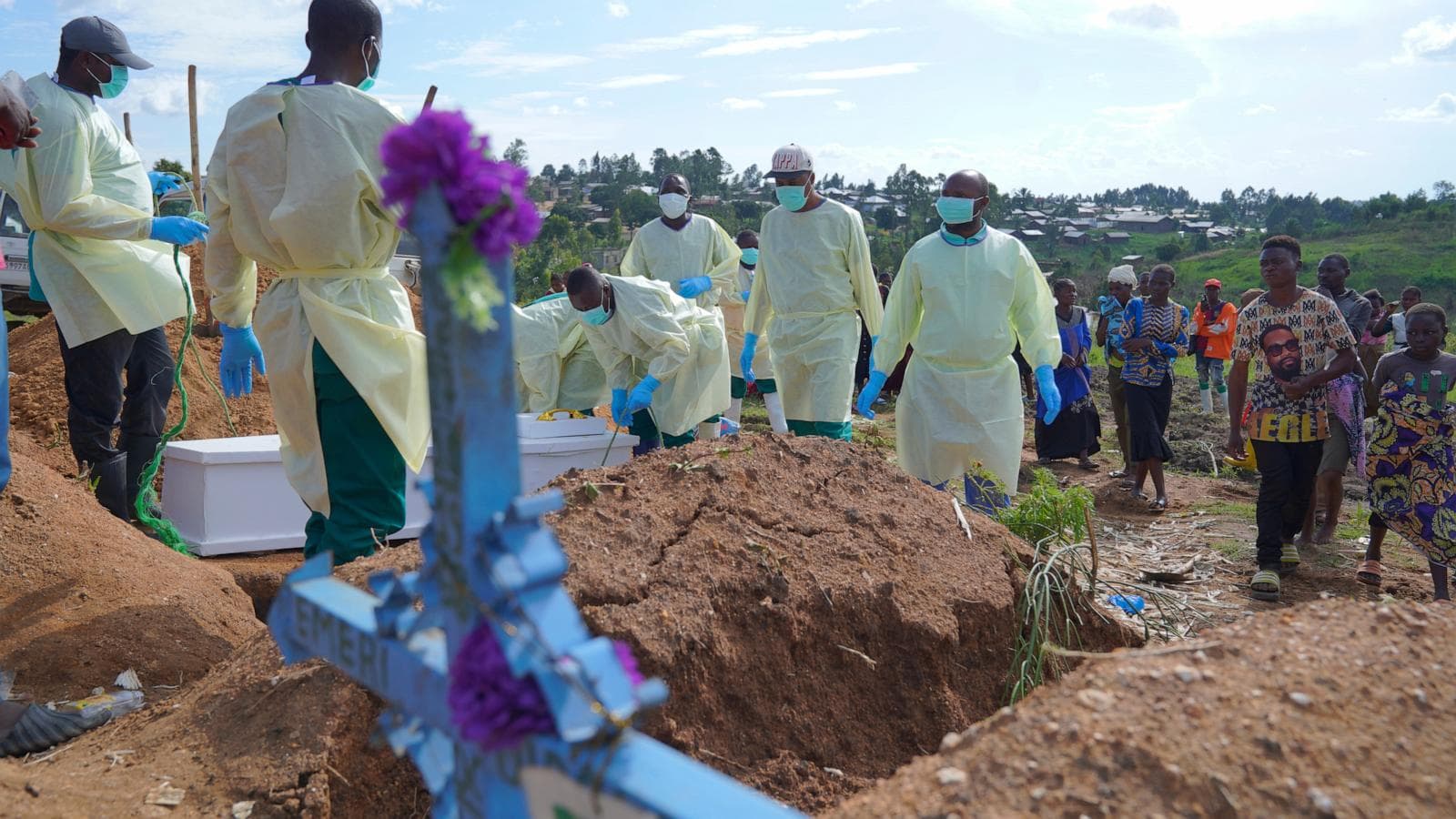
Why it matters
The progression of the Bundibugyo Ebola outbreak past 5,000 fatalities marks the second-deadliest occurrence on record and tests international public health surveillance as cases migrate beyond primary containment zones into cross-border logistics networks.
What happened (in 30 seconds)
- Fatality milestone reached: The Democratic Republic of Congo reported 5,026 deaths out of 10,351 confirmed infections on October 31, 2026, establishing a fatality rate of nearly 50%.
- Cross-border transmission confirmed: Active infections have surfaced outside the primary epicenter, with confirmed cases recorded in Uganda, Kenya (8 cases, 2 deaths), and Nigeria (1 case).
- Containment infrastructure compromised: Over 80% of newly identified infections originate outside established contact-tracing networks, with one-third of all fatalities occurring entirely outside clinical treatment centers.
The context you actually need
- A rare viral variant without countermeasures: Unlike the Zaire strain, the Bundibugyo strain driving this epidemic possesses no approved prophylactic vaccine or specialized therapeutic protocol, restricting clinical intervention entirely to supportive care.
- Operating in an active conflict environment: The outbreak centers on Ituri and North Kivu—provinces encompassing active operations by armed factions including M23 and the Allied Democratic Forces—severely restricting physical access for epidemiological teams.
- Incentive breakdown in frontline operations: Clinical facilities face significant operational friction resulting from delayed wage disbursements to local healthcare workers, facility arson, and widespread community resistance.
What's really happening
The trajectory of this outbreak reflects structural breakdowns in disease interception rather than simple biological transmission. When an epidemic of this scale features an 80% rate of new infections originating outside active monitoring chains, the standard containment paradigm—identify, trace contacts, isolate, and ring-vaccinate—ceases to function as designed. In this instance, the absence of an authorized vaccine for the Bundibugyo strain eliminates the protective buffer that containment operations relied upon during the 2018–2020 Zaire strain outbreak in the same geography.
The primary operational constraint is institutional capacity under severe friction. The eastern provinces of the Democratic Republic of Congo function under dual pressures: sustained armed conflict and deteriorating administrative trust. Security actors, including M23 and the Allied Democratic Forces, control or contest transit corridors, cutting off health zones from systematic surveillance. Consequently, cases remain undetected until late-stage symptomatic expression. This accounts for why one-third of all recorded fatalities occur outside specialized isolation facilities, directly sustaining unmonitored community transmission chains.
Economic incentives on the ground compound the biological risk. Frontline clinical personnel in multiple health zones have staged work stoppages driven by unpaid compensation. When health workers withdraw labor or operate under direct security threats—including facility attacks and physical intimidation—the primary barrier against nosocomial transmission collapses. The systemic result is an expanding reproduction rate inside urban and semi-urban transit corridors.
The geographic migration to Kenya and Nigeria signals that the event is no longer an isolated, rural health crisis. Because commercial transit and air routes connect regional hubs like Nairobi and Lagos to global logistical corridors, public health responses across central and eastern Africa must pivot from localized field containment to defensive port-of-entry screening. This shift introduces friction into commercial passenger travel and freight movement across central African supply lines. Furthermore, because standard supportive management is the only operational recourse for the Bundibugyo strain, medical infrastructure in secondary transit markets faces immediate resource allocation strain without dedicated international countermeasures.
Who feels it first (and how)
- Regional transport and aviation operators: Airlines and transit hubs connecting the Democratic Republic of Congo, Kenya, Uganda, and Nigeria face immediate passenger health-screening requirements, quarantine mandates, and crew-movement protocols.
- Frontline clinical staff and field NGOs: Medical personnel in eastern DRC confront high personal risk, operational disruption from ongoing facility attacks, and resource deficits caused by delayed compensation.
- International logistics managers: Freight corridors moving raw materials and industrial supplies out of eastern DRC face border transit delays and heightened cross-border regulatory scrutiny.
- Global health procurement teams: Organizations providing emergency clinical supplies experience supply chain pressure for generic supportive hydration, protective equipment, and field diagnostic infrastructure.
What to watch next
- Secondary transmission metrics in major transit hubs: Track whether confirmed cases in Nairobi or Lagos generate local transmission clusters outside initial travel contacts; sustained secondary spread would signal a shift from imported cases to systemic urban outbreaks.
- Resolution of frontline healthcare compensation disputes: Watch for institutional wage stabilization agreements between the Congolese Ministry of Health and local medical workers, which serves as the leading indicator for reopening closed triage zones.
- International regulatory screening updates: Monitor port-of-entry health directives and travel advisories issued by regional authorities across East and West Africa, which dictate border friction levels for business transit.
As of October 31, 2026, the outbreak has generated 5,026 deaths across 10,351 cases, with active transmission registered in 50 of 67 affected health zones and documented international spread to Uganda, Kenya, and Nigeria.
Global supply chains for basic clinical supportive care and personal protective equipment will experience localized allocation pressure as central and regional health agencies step up prepositioning efforts.
It remains uncertain whether regional surveillance infrastructure can suppress unmonitored transmission chains in the absence of an approved Bundibugyo vaccine or targeted antiviral therapies.
Frequently Asked Questions
- Why it matters?
- The progression of the Bundibugyo Ebola outbreak past 5,000 fatalities marks the second-deadliest occurrence on record and tests international public health surveillance as cases migrate beyond primary containment zones into cross-border logistics networks.
- What happened (in 30 seconds)?
- Fatality milestone reached: The Democratic Republic of Congo reported 5,026 deaths out of 10,351 confirmed infections on October 31, 2026, establishing a fatality rate of nearly 50%. Cross-border transmission confirmed: Active infections have surfaced outside the primary epicenter, with confirmed cases recorded in Uganda, Kenya (8 cases, 2 deaths), and Nigeria (1 case). Containment infrastructure compromised: Over 80% of newly identified infections originate outside established contact-tracing n
- What's really happening?
- The trajectory of this outbreak reflects structural breakdowns in disease interception rather than simple biological transmission. When an epidemic of this scale features an 80% rate of new infections originating outside active monitoring chains, the standard containment paradigm—identify, trace contacts, isolate, and ring-vaccinate—ceases to function as designed. In this instance, the absence of an authorized vaccine for the Bundibugyo strain eliminates the protective buffer that containment op
- Who feels it first (and how)?
- Regional transport and aviation operators: Airlines and transit hubs connecting the Democratic Republic of Congo, Kenya, Uganda, and Nigeria face immediate passenger health-screening requirements, quarantine mandates, and crew-movement protocols. Frontline clinical staff and field NGOs: Medical personnel in eastern DRC confront high personal risk, operational disruption from ongoing facility attacks, and resource deficits caused by delayed compensation. International logistics managers: Freight
- What to watch next?
- Secondary transmission metrics in major transit hubs: Track whether confirmed cases in Nairobi or Lagos generate local transmission clusters outside initial travel contacts; sustained secondary spread would signal a shift from imported cases to systemic urban outbreaks. Resolution of frontline healthcare compensation disputes: Watch for institutional wage stabilization agreements between the Congolese Ministry of Health and local medical workers, which serves as the leading indicator for reopeni
English-language news from Qatar covering domestic and regional affairs.
"Gulf Times reflects Qatari perspectives on regional developments."
— A47 Editor
Ebola death toll in DR Congo rises to 5,340
The Ministry of Public Health, Hygiene and Social Welfare of the Democratic Republic of the Congo reported that as of October 29 the Ebola outbreak had caused 5,340 deaths out of 10,351 confirmed cases, according to Gulf Times.
International coverage of politics, culture, and current affairs.
"BBC News is widely regarded as a reputable international news organization, known for its impartial tone and public service mandate."
— A47 Editor
More than 5,000 die from Ebola in DR Congo's deadliest outbreak
The Democratic Republic of Congo's Ebola outbreak has become its deadliest on record, with government data showing more than 5,000 deaths and over 10,000 people infected with the rare virus, according to BBC News. Reports indicate there are no approv...
English-language reporting on Saudi politics, policy, and society.
"Saudi Gazette reflects mainstream Saudi institutional perspectives."
— A47 Editor
Ebola death toll in DR Congo surpasses 5,000 as outbreak spreads across eight provinces
Ebola deaths in the Democratic Republic of Congo have surpassed 5,000, with 10,351 cumulative cases reported by the Health Ministry since the outbreak was declared in mid-May, spreading across eight provinces in what is the country's largest and dead...
Medical headlines, wellness tips, and public health guidance.
"ABC News delivers broad national coverage with a mainstream editorial stance, focusing on accessibility and balanced reporting."
— A47 Editor
Congo's Ebola deaths top 5,000 as fear of continent-wide spread mounts
Congo's Ebola outbreak has surpassed 5,000 deaths, according to ABC News, as the disease continues to spread and fears of a continent-wide epidemic grow. Health authorities describe the outbreak as among the fastest-growing on record.
Global news coverage with extensive reporting on Middle Eastern conflicts and geopolitics.
"Al Jazeera is a Qatar-based broadcaster known for wide regional coverage and alternative perspectives."
— A47 Editor
Ebola death toll in DR Congo passes 5,000
Ebola deaths in the Democratic Republic of Congo have passed 5,000, according to Al Jazeera, as authorities struggle to control an outbreak for which no approved treatments or vaccines exist.
Comprehensive coverage of Middle Eastern and global issues.
"Al Jazeera is a prominent voice from the Global South, especially the Middle East, with an emphasis on underreported stories."
— A47 Editor
Ebola death toll in DR Congo passes 5,000
Ebola deaths in the Democratic Republic of Congo have passed 5,000, according to Al Jazeera, as authorities struggle to control an outbreak for which no approved treatments or vaccines exist.
International news, politics, and culture.
"Sky News is a UK-based 24-hour channel known for fast-breaking news and political coverage."
— A47 Editor
Ebola outbreak kills more than 5,000 people in Democratic Republic of Congo
Ebola deaths in the Democratic Republic of Congo (DRC) have surpassed 5,000, according to government data, with cases recorded in eight of the country's 26 provinces. The base report, published by Sky News citing Reuters, frames the outbreak as a sev...