
U.S. Pushes Resumption of Russian Gas Transit Through Ukraine as Energy Ceasefire Component
Why it matters
The diplomatic initiative reconfigures global natural gas balances by leveraging frozen pipeline corridors to establish an infrastructure truce, altering the risk premium across winter fuel supplies.
What happened (in 30 seconds)
- The proposal introduced: On November 2, 2026, reports revealed that the Trump administration is advocating for the resumption of Russian natural gas transit through Ukrainian pipelines as part of an energy ceasefire framework.
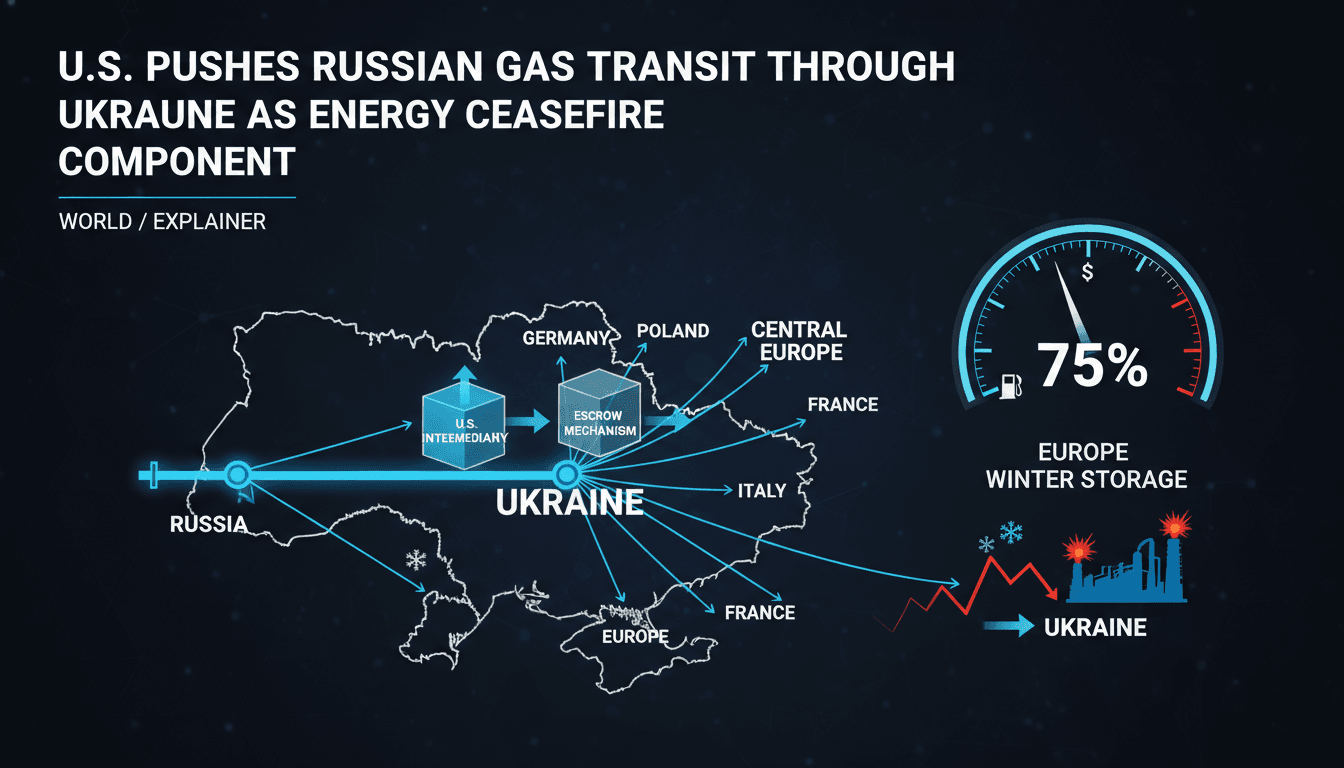
- The operational structure: The mechanism utilizes a U.S. commercial intermediary for pipeline gas sales and an escrow account for revenues, designed to halt infrastructure strikes while providing transit revenue to Kyiv.
- The diplomatic venue: Envoys Jared Kushner and Steve Witkoff advanced the framework during September meetings in Moscow and Kyiv, establishing scheduled three-way discussions in Abu Dhabi for mid-November.
The context you actually need
- The regulatory timeline: European Union member states operate under binding mandates to eliminate all purchases of Russian natural gas by the end of 2027, creating structural resistance to long-term pipeline commitments.
- The transit vacuum: Russian gas transit across Ukrainian territory historically stabilized regional balances until the formal expiration of the bilateral five-year transit contract in January 2025.
- The storage deficit: European underground gas storage entered the cold season at 75 percent capacity, trailing behind the historical nine-year average and amplifying vulnerability to liquefied natural gas cargo diversions.
What's really happening
The mechanics of this initiative reflect structural economic incentives rather than a standard diplomatic settlement. By introducing a U.S. entity as the intermediary buyer at the entry points of the Ukrainian pipeline network, the architecture seeks to bypass direct contractual exposure between European end-users and Russian state suppliers. Gas volumes moving through this structure would generate transit fees paid directly to Ukraine to fund budgetary requirements, while sale revenues flow into restricted escrow accounts. This arrangement aims to deter continued military strikes against electrical substations, gas distribution hubs, and processing units by tying physical pipeline security to ongoing revenue flows.
The timing aligns with severe seasonal pressures across continental energy systems. With European gas inventories sitting at 75 percent of aggregate capacity—materially below nine-year seasonal baselines—the broader market faces high sensitivity to unplanned delivery interruptions. Recent disruptions in global liquefied natural gas (LNG) deliveries have elevated the cost of replacement cargoes, compounding price volatility for European industrial consumers. Reopening the Ukrainian transit route would introduce steady pipeline volumes into Central and Eastern European interconnectors, offsetting storage draws in landlocked systems that lack direct regasification infrastructure.
However, the proposal exposes a clear strategic friction between short-term market balance and long-term regulatory frameworks. European Union officials, led by Energy Commissioner Dan Jorgensen, remain committed to the 2027 statutory phase-out of Russian gas imports. European policy views renewed pipeline dependency as an operational vulnerability that compromises multi-year investments in LNG import infrastructure and alternative transit routes. Concurrently, Kremlin spokesman Dmitry Peskov noted that current ground operational realities complicate an immediate restart, while maintaining openness to future transactional structures.
The planned mid-November summit in Abu Dhabi expands the dialogue into a broader energy security theater. By hosting these trilateral talks in the Gulf, the initiative intersects directly with wider crude and gas pricing stability. For international operators, this dynamic transforms what appeared to be a regional infrastructure conflict into a multilateral negotiation over transport security, gas basis differentials, and global energy supply balances.
Who feels it first (and how)
- European utility operators and power generators: Face potential downward pressure on spot gas prices if pipeline capacity resumes, directly affecting winter inventory valuation and hedging strategies.
- Central and Eastern European industrial consumers: Obtain access to lower-basis pipeline deliveries, alleviating production curtailments driven by elevated international LNG parity costs.
- Global LNG traders and vessel operators: Encounter shifted arbitrage margins if piped supply displaces spot regasification demand in European coastal terminals.
- Gulf energy market strategists: Observe the diplomatic sessions in Abu Dhabi for broader signals on commercial corridor protections and stability across interconnected regional energy benchmarks.
What to watch next
- The Abu Dhabi trilateral talks: Monitor whether delegations in mid-November formalize terms for the U.S. intermediary mechanism or yield structural deadlocks between European compliance rules and proposed escrow terms.
- European legislative confirmation: Track statements from the European Commission regarding whether a U.S.-brokered escrow purchase model complies with or breaches the mandatory 2027 Russian gas import phase-out.
- Infrastructure targeting patterns: Observe refinery and utility strike tempos following the late October strikes on Russian refineries, which signal whether an operational pause on energy assets is taking hold.
The Trump administration proposed using a U.S. intermediary and escrow accounts to restore gas flows; EU policy legally targets zero Russian gas by late 2027; European gas storage holds at 75 percent heading into winter.
European policymakers will maintain institutional resistance against committing to long-dated pipeline supply contracts that reverse decoupling policies.
Whether physical pipeline equipment on the ground across active combat lines remains structurally functional for immediate pressurized gas transport.
Frequently Asked Questions
- Why it matters?
- The diplomatic initiative reconfigures global natural gas balances by leveraging frozen pipeline corridors to establish an infrastructure truce, altering the risk premium across winter fuel supplies.
- What happened (in 30 seconds)?
- The proposal introduced: On November 2, 2026, reports revealed that the Trump administration is advocating for the resumption of Russian natural gas transit through Ukrainian pipelines as part of an energy ceasefire framework. The operational structure: The mechanism utilizes a U.S. commercial intermediary for pipeline gas sales and an escrow account for revenues, designed to halt infrastructure strikes while providing transit revenue to Kyiv. The diplomatic venue: Envoys Jared Kushner and Steve
- What's really happening?
- The mechanics of this initiative reflect structural economic incentives rather than a standard diplomatic settlement. By introducing a U.S. entity as the intermediary buyer at the entry points of the Ukrainian pipeline network, the architecture seeks to bypass direct contractual exposure between European end-users and Russian state suppliers. Gas volumes moving through this structure would generate transit fees paid directly to Ukraine to fund budgetary requirements, while sale revenues flow int
- Who feels it first (and how)?
- European utility operators and power generators: Face potential downward pressure on spot gas prices if pipeline capacity resumes, directly affecting winter inventory valuation and hedging strategies. Central and Eastern European industrial consumers: Obtain access to lower-basis pipeline deliveries, alleviating production curtailments driven by elevated international LNG parity costs. Global LNG traders and vessel operators: Encounter shifted arbitrage margins if piped supply displaces spot reg
- What to watch next?
- The Abu Dhabi trilateral talks: Monitor whether delegations in mid-November formalize terms for the U.S. intermediary mechanism or yield structural deadlocks between European compliance rules and proposed escrow terms. European legislative confirmation: Track statements from the European Commission regarding whether a U.S.-brokered escrow purchase model complies with or breaches the mandatory 2027 Russian gas import phase-out. Infrastructure targeting patterns: Observe refinery and utility strik
Global business headlines with AI angles.
"General business outlet that frequently covers AI."
— A47 Editor
Trump Reportedly Pushes Return of Russian Gas to Europe Through Ukraine as Part of Energy Ceasefire
The Trump administration reportedly proposed returning Russian gas to Europe via Ukraine as part of an energy ceasefire, using an American intermediary to sell the gas. The initiative could create business opportunities for U.S. investors and offers ...
U.S. business news, corporate developments, and economy.
"The Wall Street Journal is respected for deep financial and economic reporting with a center-right editorial perspective."
— A47 Editor
U.S. Pushes to Restore Russian Gas Sales to Europe Via Ukraine
The U.S. is pushing to restore Russian gas sales to Europe via Ukraine's transit network, an idea intended to unlock an energy ceasefire between Moscow and Kyiv, according to The Wall Street Journal. The proposal faces resistance in European capitals...
Global political, business, and cultural coverage from WSJ international desks.
"The Wall Street Journal offers extensive international reporting with a reputation for financial insight and a center-right editorial stance."
— A47 Editor
U.S. Pushes to Restore Russian Gas Sales to Europe Via Ukraine
The U.S. is pushing to restore Russian gas sales to Europe via Ukraine's transit network, a move intended to unlock an energy ceasefire between Moscow and Kyiv, according to The Wall Street Journal. The proposal faces resistance in European capitals.
Business, investment, entrepreneurship, leadership, and innovation.
"Forbes is known for its coverage of business leaders, market trends, and entrepreneurial ventures with a pro-business editorial stance."
— A47 Editor
Trump Pushes For Peace As U.S. Leads New Russia-Ukraine Talks
U.S. President Donald Trump is pushing for renewed peace talks between Russia and Ukraine, with Washington leading the new round of negotiations after earlier efforts to secure a ceasefire failed to produce a lasting agreement.