
US Confirms Iran Conflict Funding Through January 2027 as Saudi-Houthi Strikes Escalate Across Yemen and Gulf Infrastructure
Heightened regional security alerts, airspace risks, and energy infrastructure targeting directly compress corporate transit schedules, travel itineraries, and insurance calculations across the Gulf.
Why it matters
A fixed funding window through January 2027 introduces an operational timeline where military actions and retaliatory proxy strikes across maritime and logistics corridors face imminent fiscal recalibration.
What happened (in 30 seconds)
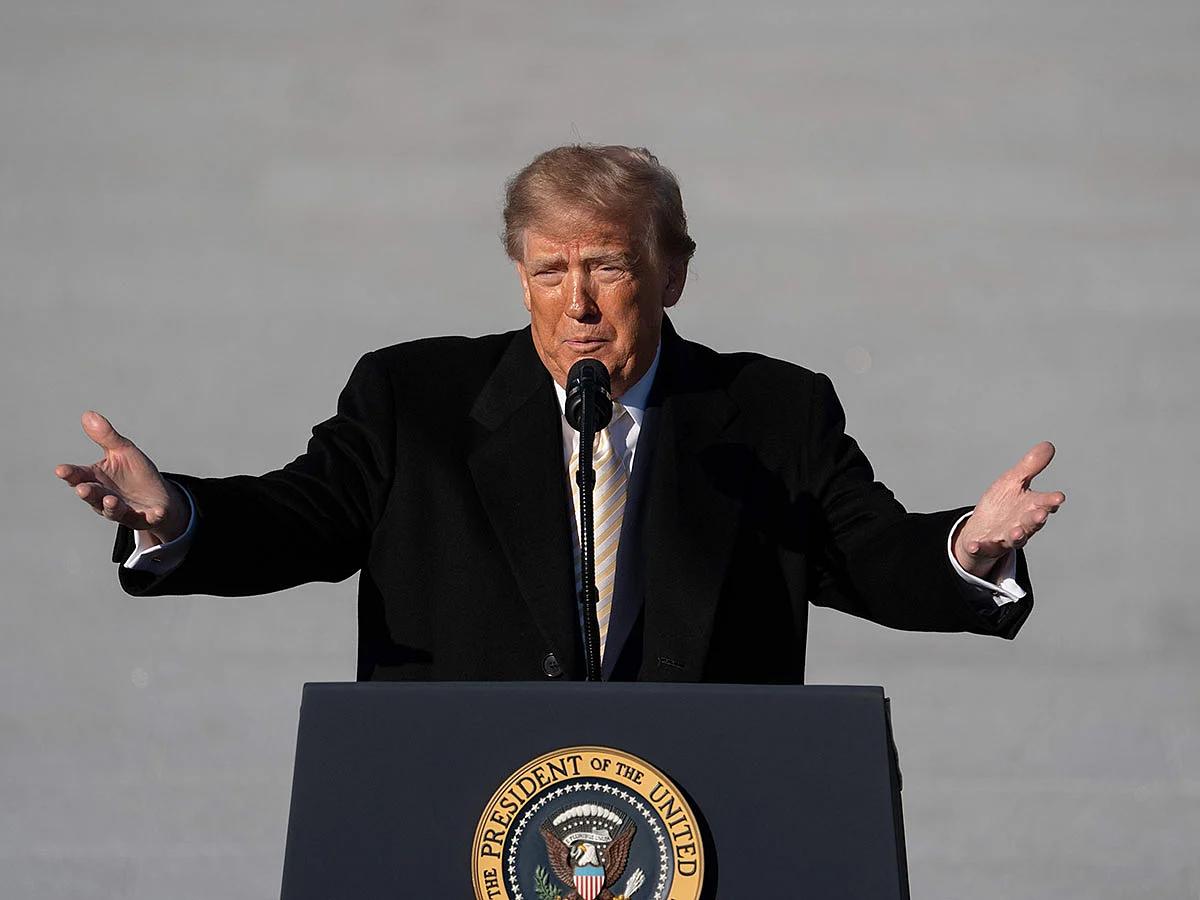
- President Trump stated that US funding for the Iran campaign is secured through the end of January 2027. In remarks to the New York Post on November 24–25, 2026, he asserted a clear military advantage while warning that shifts in legislative oversight could limit future resource allocations.
- Cross-border strikes expanded across the Saudi-Yemeni theater. The Saudi-led coalition intercepted unmanned aerial vehicles over the Ras Tanura oil complex and launched strikes against Houthi targets in Hodeidah, Saada, and Amran.
- Regional proxy claims targeted primary logistical and commercial hubs. Houthi forces claimed attacks on commercial ports in Jazan and Jeddah, the Ras Tanura refinery, and the financial district of Riyadh, alongside reports of an oil tanker incident near the Strait of Hormuz.
The context you actually need
- The campaign follows nine months of active military operations. The United States and Israel launched coordinated operations on February 28, 2026, aimed at degrading Iranian military and nuclear facilities, punctuated by a brief April ceasefire and a June memorandum of understanding that subsequently collapsed.
- Diplomatic missions have issued active regional warnings. The US Mission to the UAE directed American personnel and travelers across the Middle East to maintain heightened vigilance against potential missile, drone, and airspace disruptions affecting commercial travel.
- International assets and civilian personnel have taken direct collateral impact. The government of India confirmed that two of its nationals sustained injuries during strikes impacting infrastructure in Riyadh, underscoring the exposure of regional expatriate labor forces.
What's really happening
The November 2026 announcement of a hard fiscal ceiling for US operations against Iran signals a definitive transition from open-ended deterrence to an incentive-driven sprint against a legislative clock. By stating that military expenditures are secured precisely through the end of January 2027, the US executive branch has delineated a narrow two-month operational horizon. The primary structural constraint is legislative: incoming congressional leadership creates an immediate incentive for military planners to extract maximum strategic leverage before current appropriations lapse and authorization battles begin.
Simultaneously, the broader regional battlespace is experiencing horizontal escalation. Rather than absorbing pressure exclusively within Iranian borders, the conflict has widened across adjacent energy and maritime vectors. The Saudi-led coalition's coordinated airstrikes across Hodeidah port, Saada, and Amran represent a direct counter-offensive against Iran-aligned Houthi forces who have systematically targeted key Saudi commercial infrastructure. The reported targeting of the Ras Tanura refinery—one of the world's most critical crude stabilization and export facilities—alongside the commercial ports of Jazan and Jeddah, demonstrates an asymmetrical attempt to impose immediate economic costs on Gulf logistics networks.
This multi-front operational model relies heavily on geographic pressure points. The targeting of Riyadh’s financial district and the parallel tanker disruption near the Strait of Hormuz demonstrate an operational doctrine engineered to challenge maritime transit stability and commercial confidence. While energy markets have not yet displayed sharp, uncontained shifts, the tactical posture creates an environment where physical operating security and commercial maritime insurance must price in sustained disruption.
Concurrently, external enforcement actions are accelerating. Iraqi authorities have initiated interdiction measures against cross-border fuel and crude smuggling networks that provide critical alternative revenue channels to circumvent Iran sanctions. When combined with accusations regarding non-conventional escalation and the United Nations highlighting severe humanitarian distress in Gaza and the West Bank, the regional architecture is undergoing acute stress across political, operational, and physical supply lines. The end-of-January fiscal window forces all participants—coalition militaries, sovereign states, and regional proxy actors—to calculate their next moves around an explicit expiration date.
Who feels it first (and how)
- Aviation and Logistics Directors: Regional flight planners and cargo dispatchers navigating security alerts, adjusted flight paths, and potential airspace restrictions across the Gulf and the Arabian Peninsula.
- Energy Infrastructure and Maritime Operators: Tanker fleets and terminal operators near the Strait of Hormuz, Ras Tanura, Jazan, and Jeddah facing amplified physical security protocols and maritime surveillance.
- Expatriate Workforces and Corporate Employers: Multinational firms managing foreign nationals across Saudi Arabia and the UAE responding to active consular alerts following confirmed foreign national injuries in Riyadh.
- Trade and Commodity Compliance Officers: Regional trading houses operating adjacent to Iraqi and Iranian borders dealing with intensified interdiction campaigns against illicit crude transit.
What to watch next
- Congressional Budgetary Determinations in Washington: The political response and appropriation reviews as the January funding threshold approaches, determining whether military operations face funding continuation or curtailment.
- Interdiction Efficacy Along the Red Sea and Gulf Coasts: The operational readiness of Saudi air defense networks around critical export assets like Ras Tanura and Western Province ports against recurring unmanned systems.
- Strait of Hormuz Commercial Transit Rates: Changes in maritime tracking data and transit insurance costs for crude tankers traversing waters near Iranian territorial operations.
US military funding for the campaign targeting Iranian capabilities is secured through the end of January 2027; strikes have directly affected sites in Hodeidah, Saada, Amran, and critical infrastructure locations in Saudi Arabia; two Indian nationals were injured in Riyadh.
Cross-border unmanned system launches and maritime tracking incidents will persist through January as regional actors attempt to maximize strategic positioning prior to changes in US congressional oversight.
Whether legislative shifts in Washington will result in a hard cut-off of operational funds in February 2027 or whether alternate emergency authorities will be deployed to extend regional deployments.
Frequently Asked Questions
- Why it matters?
- A fixed funding window through January 2027 introduces an operational timeline where military actions and retaliatory proxy strikes across maritime and logistics corridors face imminent fiscal recalibration.
- What happened (in 30 seconds)?
- President Trump stated that US funding for the Iran campaign is secured through the end of January 2027. In remarks to the New York Post on November 24–25, 2026, he asserted a clear military advantage while warning that shifts in legislative oversight could limit future resource allocations. Cross-border strikes expanded across the Saudi-Yemeni theater. The Saudi-led coalition intercepted unmanned aerial vehicles over the Ras Tanura oil complex and launched strikes against Houthi targets in Hode
- What's really happening?
- The November 2026 announcement of a hard fiscal ceiling for US operations against Iran signals a definitive transition from open-ended deterrence to an incentive-driven sprint against a legislative clock. By stating that military expenditures are secured precisely through the end of January 2027, the US executive branch has delineated a narrow two-month operational horizon. The primary structural constraint is legislative: incoming congressional leadership creates an immediate incentive for mili
- Who feels it first (and how)?
- Aviation and Logistics Directors: Regional flight planners and cargo dispatchers navigating security alerts, adjusted flight paths, and potential airspace restrictions across the Gulf and the Arabian Peninsula. Energy Infrastructure and Maritime Operators: Tanker fleets and terminal operators near the Strait of Hormuz, Ras Tanura, Jazan, and Jeddah facing amplified physical security protocols and maritime surveillance. Expatriate Workforces and Corporate Employers: Multinational firms managing f
- What to watch next?
- Congressional Budgetary Determinations in Washington: The political response and appropriation reviews as the January funding threshold approaches, determining whether military operations face funding continuation or curtailment. Interdiction Efficacy Along the Red Sea and Gulf Coasts: The operational readiness of Saudi air defense networks around critical export assets like Ras Tanura and Western Province ports against recurring unmanned systems. Strait of Hormuz Commercial Transit Rates: Chang
UAE-based English-language newspaper covering regional politics, economics, and global affairs.
"The National reflects Emirati policy perspectives while maintaining international editorial standards."
— A47 Editor
Trump warns of war funding fight as tanker attacks raise Hormuz tension
The Trump administration has warned of a looming fight over war funding as tanker attacks in the Strait of Hormuz heighten tensions in the Gulf, amid a roughly nine-month-old US-Israel war with Iran. Reports indicate Iran says four tankers struck nav...
UAE-based newspaper covering Gulf politics, society, and international developments.
"Gulf News is one of the UAE’s most prominent English-language publications."
— A47 Editor
Middle East conflict: Trump says Iran war funded through January amid Saudi, Yemen escalation
Trump said the US war with Iran, now about nine months old, will be funded through January, as Saudi Arabia faces escalating Houthi missile attacks on Riyadh, including strikes that damaged floors of the Public Investment Fund Tower, and Yemen's Saud...
A curated Gulf News feed featuring major stories across news, business, opinion, and lifestyle.
"Gulf News is a major UAE newspaper whose featured stories feed reflects a broad editorial mix shaped for a Gulf audience."
— A47 Editor
Middle East conflict: Trump says Iran war funded through January amid Saudi, Yemen escalation
Trump said the US war with Iran, now about nine months old, will be funded through January, as Saudi Arabia faces escalating Houthi missile attacks on Riyadh, including strikes that damaged floors of the Public Investment Fund Tower, and Yemen's Saud...
UAE-based newspaper covering Gulf politics, society, and international developments.
"Gulf News is one of the UAE’s most prominent English-language publications."
— A47 Editor
Trump threatens to sink Iranian vessels as US strikes oil tanker, Ghalibaf calls for lasting security
The United States struck an oil tanker and US President Donald Trump threatened to sink Iranian vessels, while Iranian parliament speaker Ghalibaf called for lasting security, amid a months-long conflict between Washington, Israel and Iran that has s...
A curated Gulf News feed featuring major stories across news, business, opinion, and lifestyle.
"Gulf News is a major UAE newspaper whose featured stories feed reflects a broad editorial mix shaped for a Gulf audience."
— A47 Editor
Trump threatens to sink Iranian vessels as US strikes oil tanker, Ghalibaf calls for lasting security
The United States struck an oil tanker and US President Donald Trump threatened to sink Iranian vessels, while Iranian parliament speaker Ghalibaf called for lasting security, amid a months-long conflict between Washington, Israel and Iran that has s...