
Ebola Outbreak in Democratic Republic of Congo Surpasses 12,000 Confirmed Cases as Armed Conflict Hampers Containment
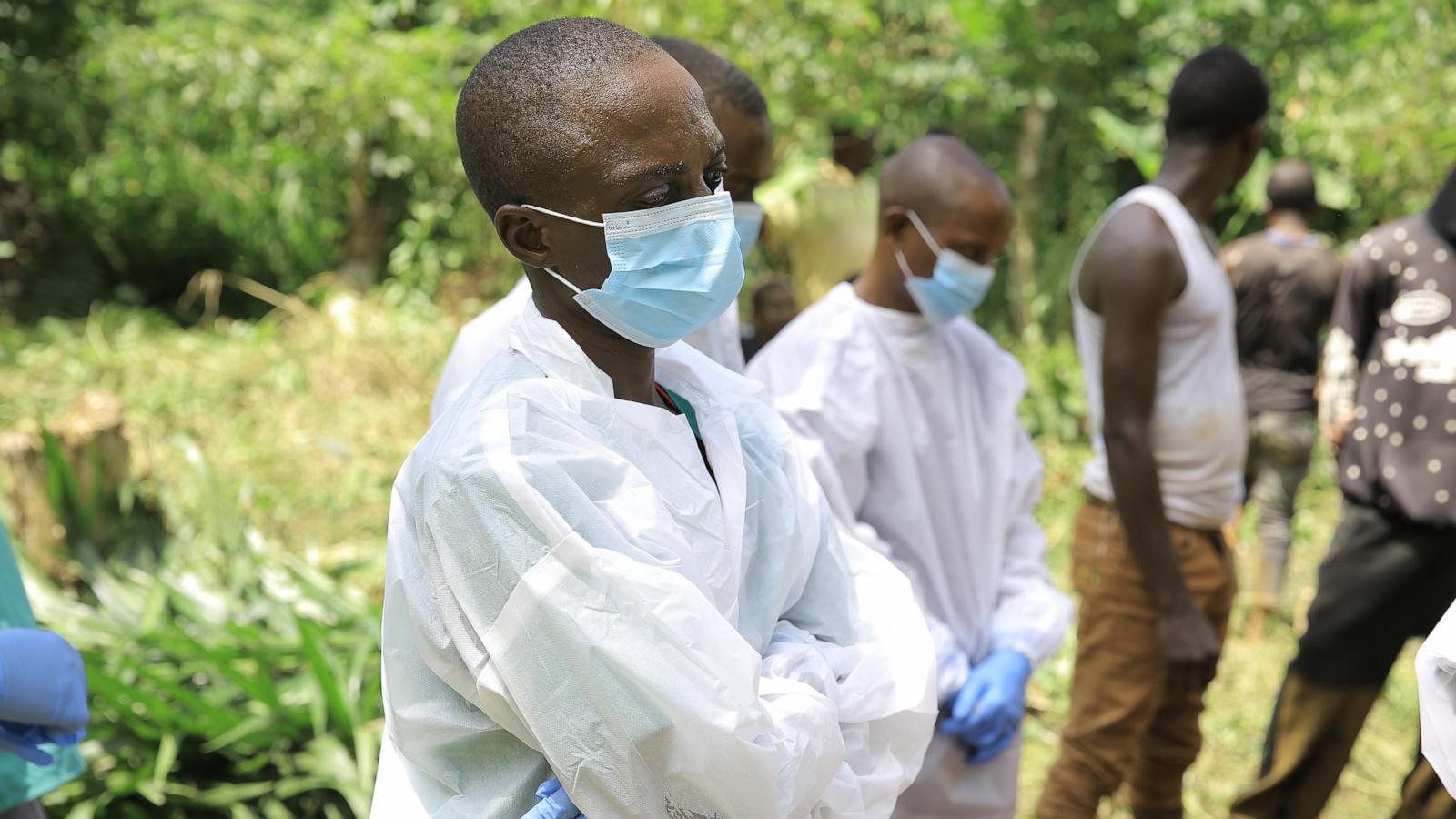
Why it matters
The convergence of active armed conflict and zero approved medical countermeasures creates an uncontrolled epidemiological blind spot with regional transmission potential.
What happened (in 30 seconds)
- Caseload crosses critical threshold: On November 26, 2026, the Democratic Republic of Congo recorded 12,021 confirmed cases and approximately 5,904 fatalities across eight provinces.
- Insecurity halts frontline operations: Clashes between Congolese armed forces and Convention pour la révolution populaire (CRP) rebels forced health responders and World Health Organization personnel to evacuate field sites near Bunia.
- Surveillance lines are severed: Only 15% of newly identified infections trace back to registered contacts, confirming that the remaining 85% emerge from unmonitored transmission chains.
The context you actually need
- A strain without countermeasures: Unlike the Zaire strain from previous interventions, this epidemic is driven by the Bundibugyo virus strain, which lacks approved vaccines or targeted antiviral therapeutics.
- Historical scale: Declared in mid-May 2026 in eastern Ituri province, this constitutes the deadliest of Congo's 17 recorded outbreaks and the fastest-spreading documented event.
- Structural containment deficit: Prolonged armed conflict involving over 100 non-state armed groups intersects with deteriorated transport infrastructure and institutional mistrust, driving an urgent international appeal for $1.6 billion over six months.
What's really happening
The operational model for international epidemic containment requires physical access, contact tracing precision, and biological countermeasures. In the eastern Democratic Republic of Congo, all three mechanisms have decoupled simultaneously.
The Bundibugyo virus strain presents a fundamental biological friction: standard medical countermeasures deployed in earlier outbreaks do not apply. Without an approved vaccine or validated therapeutic protocol, transmission management relies entirely on classic barrier nursing, rapid isolation, and systematic contact tracing. Yet contact tracing requires stable geographic perimeters. In Ituri province, ongoing hostilities between state forces and the Convention pour la révolution populaire (CRP) around logistics nodes like Iga-Barrière have converted healthcare installations into active conflict zones.
When international responders, including World Health Organization teams, are trapped in crossfire or forced to evacuate, contact monitoring collapses. The data reflects this operational void: tracking systems currently account for only 15% of new infections from known chains. The remaining 85% circulate outside institutional sight lines, meaning primary healthcare facilities only encounter cases at late-stage transmission.
This structural gap creates distinct institutional incentives on the ground. For local populations navigating acute civil instability, compliance with external isolation protocols often yields high personal security risks and operational friction, compounding community resistance. For international agencies and the DRC Ministry of Health, requesting $1.6 billion in emergency capital addresses structural logistics deficits, but financial deployment cannot clear transport corridors blocked by armed factions.
Furthermore, poor regional infrastructure slows laboratory validation and patient isolation. As the pathogen moves beyond Ituri into seven adjacent provinces, the logistics footprint required to enforce containment expands exponentially. While short-term daily caseload reporting shows marginal deceleration in isolated sectors, the aggregate system operates without an active biological buffer or reliable physical security cordon.
Who feels it first (and how)
- Frontline humanitarian and clinical operators: Field epidemiologists, international staff, and local healthcare workers face direct physical risks from armed crossfire, forced evacuations, and unmitigated exposure to the Bundibugyo strain.
- Cross-border trade and regional logistics networks: Freight operators and transport hubs connecting eastern DRC to neighboring Great Lakes economies face elevated screening frictions, route diversions, and border containment measures.
- Resource extraction and regional supply chain enterprises: Mining operations and secondary supply contractors operating across northeastern provinces absorb security premiums, operational delays, and labor availability bottlenecks.
- Global health funding institutions: Multilateral agencies and donor finance bodies encounter an immediate reallocation demand to address the $1.6 billion containment requirement amid competing global crisis budgets.
What to watch next
- Contact traceability ratios: Watch whether the percentage of cases from known contacts shifts from 15% toward the 80% baseline needed to confirm containment control.
- Displacement of the $1.6 billion response funding: Track whether international donor pledges meet the six-month capital requirement set by the WHO and Africa CDC to establish field labs and isolation capacity.
- Cross-border transmission confirmation: Monitor surveillance data at eastern transit corridors for confirmed Bundibugyo strain cases entering neighboring jurisdictions.
The outbreak has reached 12,021 confirmed cases, caused 5,904 deaths across eight provinces, features zero approved vaccines for the Bundibugyo strain, and currently isolates only 15% of new cases from registered contact lists.
Armed clashes between state armed forces and CRP rebels will continue to interrupt containment corridors, forcing periodic humanitarian evacuations and prolonging geographic spread.
Whether international donors will fulfill the $1.6 billion funding mechanism, and whether cross-border transit corridors will institute formal regional travel restrictions.
Frequently Asked Questions
- Why it matters?
- The convergence of active armed conflict and zero approved medical countermeasures creates an uncontrolled epidemiological blind spot with regional transmission potential.
- What happened (in 30 seconds)?
- Caseload crosses critical threshold: On November 26, 2026, the Democratic Republic of Congo recorded 12,021 confirmed cases and approximately 5,904 fatalities across eight provinces. Insecurity halts frontline operations: Clashes between Congolese armed forces and Convention pour la révolution populaire (CRP) rebels forced health responders and World Health Organization personnel to evacuate field sites near Bunia. Surveillance lines are severed: Only 15% of newly identified infections trace bac
- What's really happening?
- The operational model for international epidemic containment requires physical access, contact tracing precision, and biological countermeasures. In the eastern Democratic Republic of Congo, all three mechanisms have decoupled simultaneously. The Bundibugyo virus strain presents a fundamental biological friction: standard medical countermeasures deployed in earlier outbreaks do not apply. Without an approved vaccine or validated therapeutic protocol, transmission management relies entirely on c
- Who feels it first (and how)?
- Frontline humanitarian and clinical operators: Field epidemiologists, international staff, and local healthcare workers face direct physical risks from armed crossfire, forced evacuations, and unmitigated exposure to the Bundibugyo strain. Cross-border trade and regional logistics networks: Freight operators and transport hubs connecting eastern DRC to neighboring Great Lakes economies face elevated screening frictions, route diversions, and border containment measures. Resource extraction and r
- What to watch next?
- Contact traceability ratios: Watch whether the percentage of cases from known contacts shifts from 15% toward the 80% baseline needed to confirm containment control. Displacement of the $1.6 billion response funding: Track whether international donor pledges meet the six-month capital requirement set by the WHO and Africa CDC to establish field labs and isolation capacity. Cross-border transmission confirmation: Monitor surveillance data at eastern transit corridors for confirmed Bundibugyo stra
24/7 international news from a French perspective in multiple languages.
"France 24 is viewed as a globally focused outlet with balanced coverage and a European perspective."
— A47 Editor
Fighting in eastern Congo forces Ebola workers to evacuate, disrupts outbreak response
Fighting in eastern Congo has forced Ebola response workers to evacuate affected areas, disrupting efforts to contain the country's deadliest outbreak, health officials and humanitarian workers said. Government data shows the outbreak has infected mo...
International stories from NPR’s global desk.
"NPR is an American public media organization known for thoughtful reporting and a slightly left-leaning editorial tone."
— A47 Editor
Congo Ebola outbreak reaches 12,000 cases as some responders evacuate
Congo's Ebola outbreak has reached roughly 12,000 cases, according to reporting that cites the government and Al Jazeera, making it the country's deadliest on record. Fighting between rebels and the army in eastern Congo is disrupting containment eff...
Medical headlines, wellness tips, and public health guidance.
"ABC News delivers broad national coverage with a mainstream editorial stance, focusing on accessibility and balanced reporting."
— A47 Editor
Ebola outbreak in Congo reaches 12,000 cases; violence forces responders to evacuate
The Democratic Republic of Congo's Ebola outbreak in the east has topped 12,000 confirmed cases according to government data, while violence has forced responders to evacuate affected areas, as reported by ABC News.
Global news coverage with extensive reporting on Middle Eastern conflicts and geopolitics.
"Al Jazeera is a Qatar-based broadcaster known for wide regional coverage and alternative perspectives."
— A47 Editor
DR Congo Ebola cases surpass 12,000 as fighting disrupts response in east
DR Congo's Ebola outbreak has surpassed 12,000 cases, making it the country's worst on record, according to Al Jazeera, as authorities struggle to contain the spread amid fighting in the east that has displaced health workers and civilians.
Comprehensive coverage of Middle Eastern and global issues.
"Al Jazeera is a prominent voice from the Global South, especially the Middle East, with an emphasis on underreported stories."
— A47 Editor
DR Congo Ebola cases surpass 12,000 as fighting disrupts response in east
DR Congo's Ebola outbreak has surpassed 12,000 cases, making it the country's worst on record, according to Al Jazeera, as authorities struggle to contain the spread amid fighting in the east that has displaced health workers and civilians.