
Ukrainian Naval Drone Strike Sinks Russian Corvette at Benghazi Port Triggering Italian Diplomatic Rebuke
Why it matters
Ukraine's decision to conduct naval strikes deep inside North Africa exports the theater of war directly into Italy's primary energy and maritime corridor, creating friction among key European allies.
What happened (in 30 seconds)
- Ukrainian naval drones targeted Benghazi: On November 22, 2026, Ukrainian uncrewed vessels sank the Russian corvette Merkury and hit the cargo ship MV Angara while docked in eastern Libya.
- Rome issued an immediate diplomatic rebuke: Italian Prime Minister Giorgia Meloni and Foreign Minister Antonio Tajani criticized the uncoordinated operation as an infringement on Libyan sovereignty that risks escalating conflict in the Mediterranean basin.
- Kyiv confirmed no prior allied consultation: During a November 28 call, President Volodymyr Zelenskyy acknowledged the strike occurred without warning European partners, while Russian naval convoys altered their Mediterranean routes in response.
The context you actually need
- Russia's Mediterranean footprint relies on eastern Libya: Moscow maintains maritime logistics access via agreements with Khalifa Haftar's Libyan National Army (LNA), using ports like Benghazi to stage assets and military cargo.
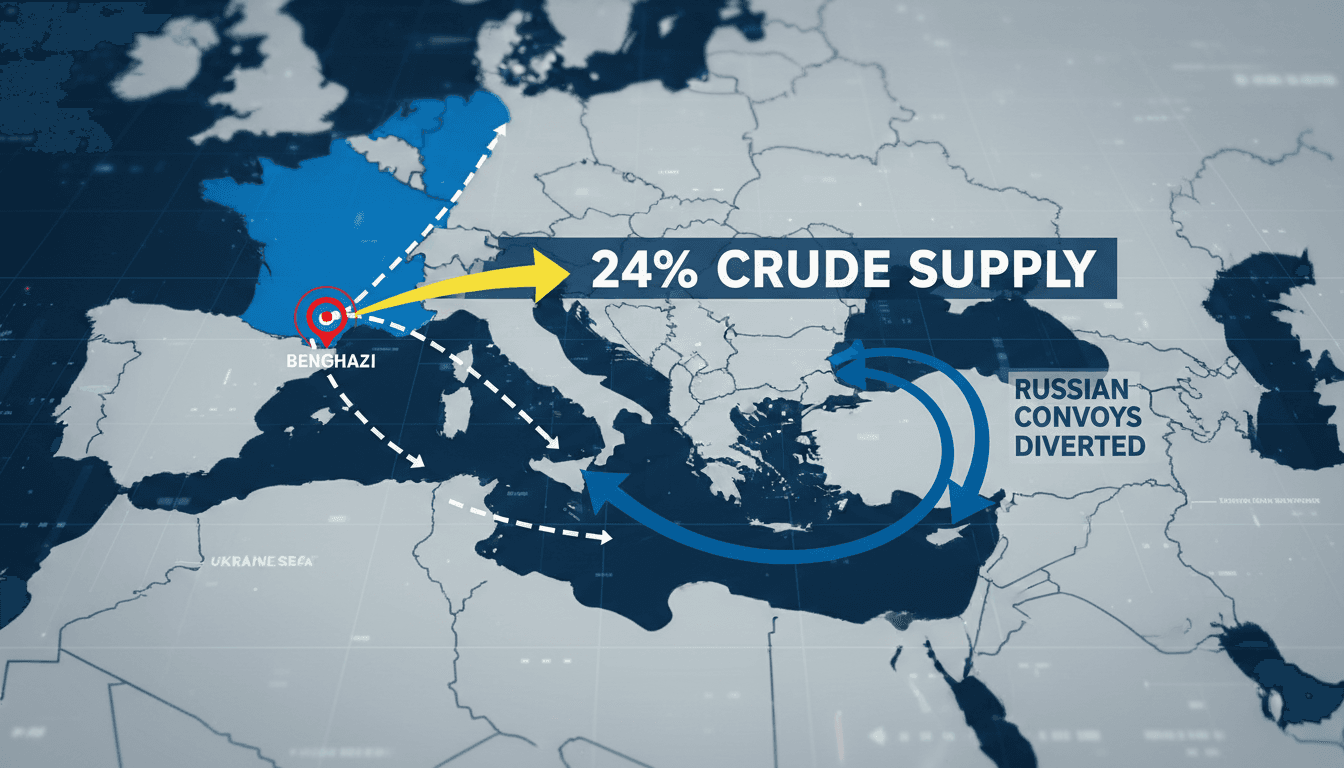
- Italy relies directly on Libyan stability for baseline energy: Libyan fields supply 24% of Italy's crude oil imports as of 2025, alongside major infrastructure operations run by Italian energy firm Eni.
- Rome balances Ukraine support against southern border vulnerabilities: While Italy remains a central backer of Kyiv in Europe, it also deploys roughly 200 military personnel in Libya and prioritizes maritime stability to manage energy transit and migration flows.
What's really happening
The Benghazi strike illustrates an escalating divergence in strategic imperatives between Kyiv and Rome. For Ukraine, every Russian naval asset—regardless of whether it operates in the Black Sea or docks across the Mediterranean—represents a legitimate military target in an existential war of attrition. By striking the Merkury and MV Angara in North Africa, Kyiv proved its uncrewed strike capabilities can reach across closed seas to disrupt Russian logistics hubs.
For Italy, the incentive structure is inverted. Rome views North Africa not as a peripheral theater, but as its immediate strategic perimeter. Italy imports 24% of its crude oil from Libya, and Italian energy group Eni maintains active extractive operations that depend entirely on delicate local pacts with regional factions, including the LNA. When strikes occur inside Benghazi harbor, the operational risk does not stay confined to Russian hulls. It destabilizes port operations, introduces combat operations to critical commercial lanes, and risks retaliatory measures in maritime passages near the Strait of Sicily.
This tension is compounded by direct physical exposure. Italy maintains roughly 200 military personnel stationed in Libya. Introducing active hostilities into eastern Libyan territory without alerting Italian authorities elevates the baseline threat profile for those deployed forces. Furthermore, political friction inside Rome has intensified. The League party and other coalition elements have pushed back on unconditional alignment with Kyiv when actions threaten Mediterranean stability.
The operational consequence was immediate: Russian naval assets, including a supply convoy escorted by the frigate Golovko, paused operations and diverted transit routes near the Strait of Sicily. Kyiv demonstrated technical range and operational independence, but the friction cost was immediate: strained communication channels with an essential European partner and heightened threat pricing across Mediterranean shipping.
Who feels it first (and how)
- Mediterranean maritime shippers and freight forwarders: Routes through the central Mediterranean and near the Strait of Sicily face increased scrutiny, route adjustments, and defensive posturing from active military escorts.
- Italian energy procurement teams and industrial users: Relying on Libya for nearly a quarter of imported crude means any disruption to Libyan port stability immediately increases supply security premiums for Rome.
- Italian defense and diplomatic planners: Officials managing roughly 200 deployed troops in Libya must re-evaluate security postures against sudden, uncoordinated external strikes.
- European defense policy coordinators: Western capitals must reconcile Kyiv’s asymmetric, cross-theater operational doctrine with the local security red lines of Mediterranean member states.
What to watch next
- Russian Mediterranean convoy routing: Track whether Russian auxiliary vessels and escort frigates like the Golovko resume standard dockings at Benghazi or shift logistics toward alternate ports.
- Italian defense posture in North Africa: Watch for official force-protection adjustments or deployment revisions regarding Italy's 200 personnel currently operating within Libya.
- Allied coordination protocols: Observe whether European defense ministers formally demand operational pre-notification channels from Kyiv to prevent strikes within their economic exclusive zones or key trade waters.
Ukrainian naval drones sank the Russian warship Merkury and hit the MV Angara in Benghazi on November 22, 2026, without informing European allies; Italy relies on Libya for 24% of its crude imports.
Russian naval assets will adopt wider standoff distances and reroute logistics convoys around the central Mediterranean to avoid vulnerable port berths.
Whether Rome's diplomatic pushback will constrain future Ukrainian uncrewed operations targeting Russian assets in secondary theaters across North Africa or the Middle East.
Frequently Asked Questions
- Why it matters?
- Ukraine's decision to conduct naval strikes deep inside North Africa exports the theater of war directly into Italy's primary energy and maritime corridor, creating friction among key European allies.
- What happened (in 30 seconds)?
- Ukrainian naval drones targeted Benghazi: On November 22, 2026, Ukrainian uncrewed vessels sank the Russian corvette Merkury and hit the cargo ship MV Angara while docked in eastern Libya. Rome issued an immediate diplomatic rebuke: Italian Prime Minister Giorgia Meloni and Foreign Minister Antonio Tajani criticized the uncoordinated operation as an infringement on Libyan sovereignty that risks escalating conflict in the Mediterranean basin. Kyiv confirmed no prior allied consultation: During a
- What's really happening?
- The Benghazi strike illustrates an escalating divergence in strategic imperatives between Kyiv and Rome. For Ukraine, every Russian naval asset—regardless of whether it operates in the Black Sea or docks across the Mediterranean—represents a legitimate military target in an existential war of attrition. By striking the Merkury and MV Angara in North Africa, Kyiv proved its uncrewed strike capabilities can reach across closed seas to disrupt Russian logistics hubs. For Italy, the incentive struc
- Who feels it first (and how)?
- Mediterranean maritime shippers and freight forwarders: Routes through the central Mediterranean and near the Strait of Sicily face increased scrutiny, route adjustments, and defensive posturing from active military escorts. Italian energy procurement teams and industrial users: Relying on Libya for nearly a quarter of imported crude means any disruption to Libyan port stability immediately increases supply security premiums for Rome. Italian defense and diplomatic planners: Officials managing r
- What to watch next?
- Russian Mediterranean convoy routing: Track whether Russian auxiliary vessels and escort frigates like the Golovko resume standard dockings at Benghazi or shift logistics toward alternate ports. Italian defense posture in North Africa: Watch for official force-protection adjustments or deployment revisions regarding Italy's 200 personnel currently operating within Libya. Allied coordination protocols: Observe whether European defense ministers formally demand operational pre-notification channel
UAE-based English-language newspaper covering regional politics, economics, and global affairs.
"The National reflects Emirati policy perspectives while maintaining international editorial standards."
— A47 Editor
Italy-Ukraine relations grow tense over attack on Russian warship in Libya
Ukraine has claimed responsibility for a suspected sea-drone attack on Russian navy vessels docked at the Benghazi naval base in eastern Libya, with President Volodymyr Zelenskyy saying the Russian corvette Merkury was sunk. Libyan officials reported...
International news, politics, and culture.
"Sky News is a UK-based 24-hour channel known for fast-breaking news and political coverage."
— A47 Editor
Italy issues warning to Zelenskyy after Ukrainian attack on Russian ships in Libya
Italy's prime minister has warned Ukraine not to allow its conflict with Russia to spill over into the Mediterranean, after Kyiv claimed a sea-drone attack on two Russian ships docked at the Benghazi naval base in eastern Libya. Ukrainian President V...
RT is a Russian state-funded network covering global events from a Russian perspective.
"RT is widely criticized for promoting pro-Kremlin narratives and is considered by many to be a state propaganda outlet."
— A47 Editor
Zelensky walks back claim about Libya attack after rebuke from Italy
Ukrainian President Volodymyr Zelensky said Kyiv carried out a surprise sea-drone attack on Russian navy vessels docked at the Benghazi naval base in eastern Libya, claiming seven domestically made drones sank the corvette Merkury; Zelensky later wal...
Global news coverage with extensive reporting on Middle Eastern conflicts and geopolitics.
"Al Jazeera is a Qatar-based broadcaster known for wide regional coverage and alternative perspectives."
— A47 Editor
Why is Italy angry with Ukraine for striking Russian ships off Libya?
Italy has expressed anger toward Ukraine after Kyiv claimed sea-drone strikes on two Russian vessels docked at the Benghazi naval base in eastern Libya, reportedly sinking the Russian navy corvette Merkury; Libyan officials reported injuries and Ukra...
Comprehensive coverage of Middle Eastern and global issues.
"Al Jazeera is a prominent voice from the Global South, especially the Middle East, with an emphasis on underreported stories."
— A47 Editor
Why is Italy angry with Ukraine for striking Russian ships off Libya?
Italy has expressed anger toward Ukraine after Kyiv claimed sea-drone strikes on two Russian vessels docked at the Benghazi naval base in eastern Libya, reportedly sinking the Russian navy corvette Merkury; Libyan officials reported injuries and Ukra...