
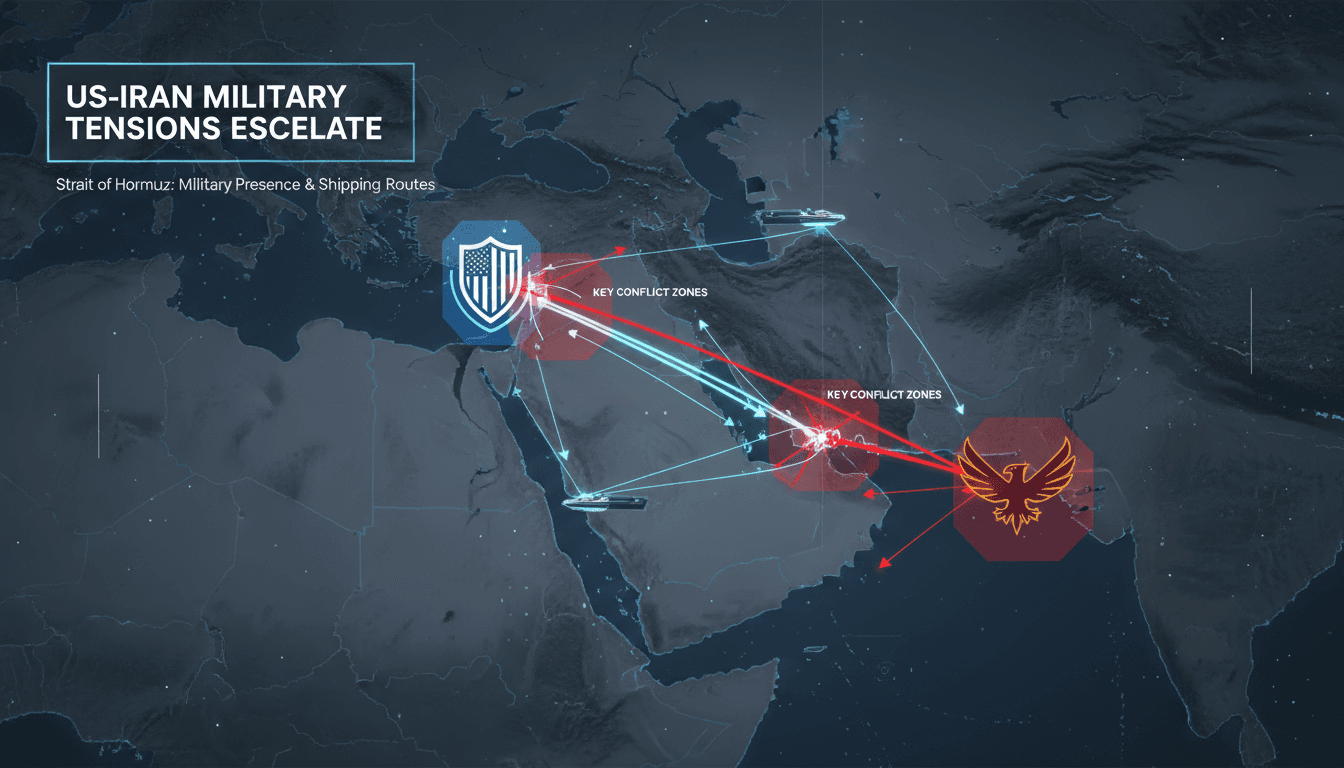
US-Iran military tensions escalate amid stalled diplomatic negotiations
Here's what it means for you.
The escalating military confrontation between the U.S. and Iran signals a precarious geopolitical landscape that could impact global markets and security policies. As military actions intensify, stakeholders must remain vigilant regarding potential disruptions in shipping routes, particularly in the strategically vital Strait of Hormuz. The ongoing conflict may also influence diplomatic relations and negotiations in the broader Middle East.
What happened
The military confrontation between the United States and Iran is intensifying, marked by recent airstrikes targeting Iranian military capabilities. These strikes are a direct response to ongoing attacks on shipping in the Strait of Hormuz, a critical maritime corridor. While the U.S. expresses openness to negotiations, Iran maintains that the current conditions are not suitable for talks, despite receiving messages indicating a willingness to engage.
The U.S. has bolstered its military presence in the region, deploying additional fighter jets to deter further Iranian threats. As tensions rise, both nations are navigating a complex web of military actions and diplomatic communications. The situation remains volatile, with the potential for further escalation looming.
The Context
The backdrop of this conflict involves a series of military engagements and diplomatic efforts through intermediaries. The U.S. has conducted airstrikes in response to Iranian actions that threaten shipping security, emphasizing the strategic importance of the Strait of Hormuz. Iran's leadership has signaled a desire to strengthen its position before resuming negotiations, complicating the diplomatic landscape.
The ongoing hostilities have resulted in a human cost, with 17 U.S. military fatalities reported since the conflict began. As both nations weigh their options, the implications of their actions extend beyond immediate military concerns, affecting regional stability and international relations. The current dynamics underscore the challenges of achieving a diplomatic resolution amid escalating tensions.
Takeaway
Looking ahead, the situation remains precarious, with both the U.S. and Iran likely to continue their current strategies. Observers should monitor further military engagements in the Strait of Hormuz, as well as any shifts in diplomatic communications between the two nations. The potential for escalation remains high, and the evolving geopolitical landscape will play a crucial role in shaping future interactions.
As military tensions rise, the uncertain potential for diplomatic engagement suggests that both sides may remain entrenched in their positions for the foreseeable future. Stakeholders should prepare for a range of outcomes as the situation develops.
Arabic-language coverage of international news and geopolitics.
"RT Arabic is a Russian state-funded outlet often criticized for promoting Kremlin-aligned narratives."
— A47 Editor
مساع للتهدئة بين واشنطن وطهران
U.S. Secretary of State Marco Rubio stated that the United States remains open to diplomatic dialogue with Tehran, despite ongoing military tensions between the two nations. This statement reflects an effort to seek a resolution amidst escalating hos...
Arabic-language coverage of political affairs and current events.
"Okaz political coverage typically follows mainstream Saudi framing on national and regional affairs."
— A47 Editor
أمريكا وإيران.. رسائل تفاوض تحت النار
The military confrontation between the United States and Iran is escalating, with ongoing exchanges of strikes in the region. Diplomatic efforts through intermediaries continue, as Washington maintains that the door to negotiations remains open, whil...
Jordanian news and regional updates.
"Roya News is a Jordanian outlet focused on breaking news and local affairs."
— A47 Editor
روبيو: الإيرانيون يرسلون إشارات برغبتهم في التفاوض
U.S. Secretary of State Marco Rubio stated that Iranians are sending signals indicating their desire to negotiate. This assertion highlights a potential shift in diplomatic relations and the willingness of Iran to engage in discussions.