
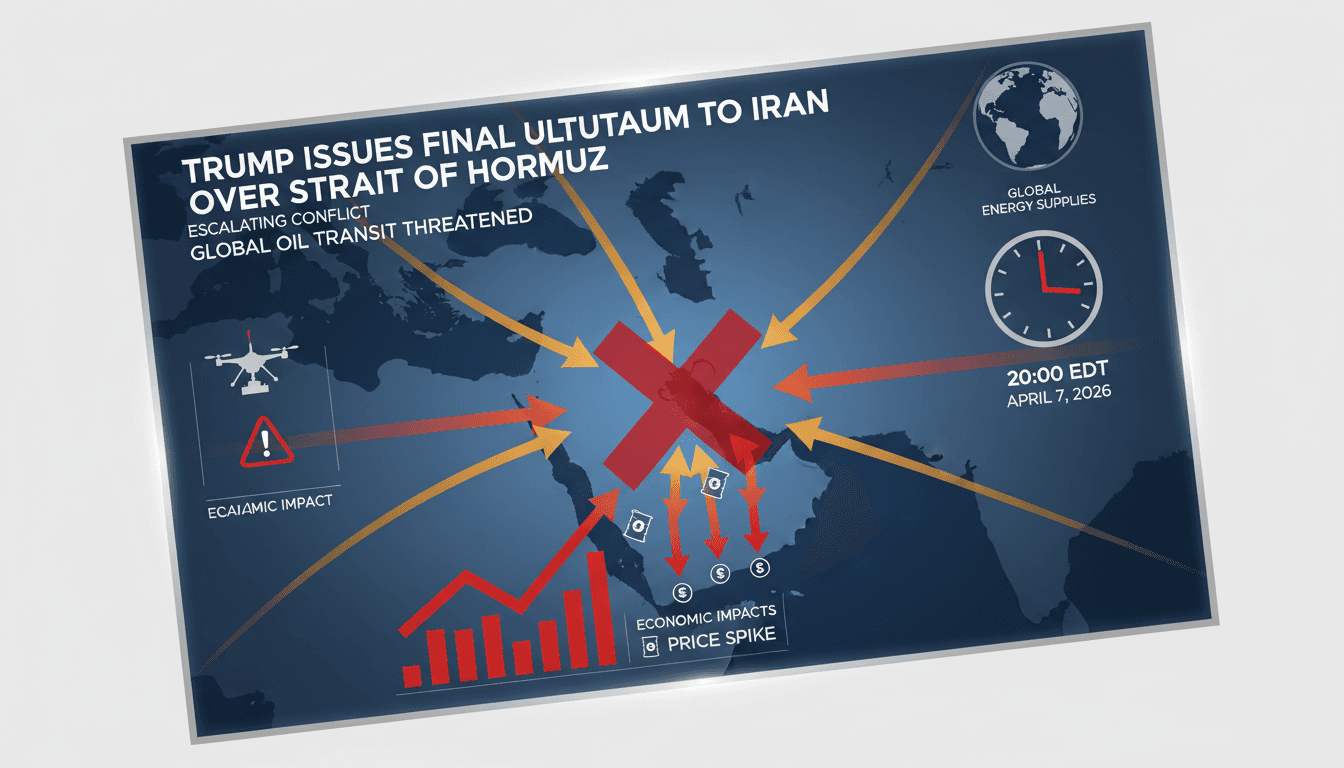
Trump Issues Final Ultimatum to Iran Over Strait of Hormuz Amid Escalating Conflict
Here's what it means for you.
If you rely on stable energy prices or work in industries tied to oil, the escalating conflict in the Strait of Hormuz could directly impact your costs and job security.
Why it matters
The Strait of Hormuz is a critical chokepoint for global oil transit, with 20% of the world's oil passing through it, making its stability vital for energy markets.
What happened (in 30 seconds)
- On April 7, 2026, President Trump issued a final ultimatum to Iran, demanding a deal for free oil transit through the Strait of Hormuz by 20:00 EDT.
- Iran has disrupted oil transit through the strait using mines and drones amid a five-week military conflict with the U.S. and Israel.
- Oil prices surged past $111 per barrel following the ultimatum, reflecting market anxiety over potential supply disruptions.
The context you actually need
- The conflict escalated after U.S. strikes on Iranian nuclear facilities and the capture of Venezuelan President Nicolas Maduro, prompting Iran's aggressive response.
- Iran's tactics include low-tech asymmetric warfare, such as using drones and water mines, complicating U.S. military dominance in the region.
- Dubai's economy is feeling the strain, with local authorities announcing a $270 million relief package for businesses and families affected by rising energy costs and supply shortages.
What's really happening
The ultimatum from President Trump comes at a time of heightened tensions in the Middle East, particularly following a series of U.S.-Israeli military operations targeting Iranian nuclear and oil infrastructure. The initial strikes, dubbed "Midnight Hammer," aimed to cripple Iran's military capabilities, but they have also led to significant retaliatory measures from Tehran. Iran's response has included mining the Strait of Hormuz, a strategic waterway through which approximately 20% of the world's oil supply flows.
As the deadline for compliance approaches, the stakes are rising. Trump has framed the ultimatum as a necessary step to ensure the free flow of oil, a critical resource for the global economy. However, Iran has rejected calls for ceasefires and has issued its own maximalist demands, indicating a willingness to escalate the conflict further. The Iranian government is mobilizing its youth to form human chains around key infrastructure, signaling a commitment to resist U.S. military pressure.
The implications of this conflict extend beyond immediate military concerns. With oil prices already surging past $111 per barrel, the potential for further disruptions could lead to widespread economic ramifications. Countries dependent on oil imports, particularly in Europe and Asia, may face increased energy costs, which could ripple through their economies. Additionally, Dubai's local economy is already feeling the impact, with authorities responding to rising energy costs and supply shortages by introducing a significant relief package.
As the situation develops, the likelihood of a broader conflict remains high. The U.S. has expressed confidence in its military superiority, but Iran's capacity for asymmetric warfare complicates the landscape. The potential for low-tech terrorism and continued disruptions in the Strait of Hormuz raises questions about the long-term stability of oil markets and regional security.
Who feels it first (and how)
- Energy sector professionals: Increased operational costs and market volatility could impact jobs and investments.
- Consumers: Higher fuel prices could lead to increased costs for transportation and goods.
- Dubai residents: Local businesses and families may experience financial strain due to rising energy prices and supply shortages.
What to watch next
- Iran's military response: Monitoring Iran's actions following the ultimatum will provide insights into potential escalations or de-escalations in the conflict.
- Oil price fluctuations: Continued volatility in oil prices will indicate market reactions to the unfolding situation and could affect global economic stability.
- U.S. diplomatic efforts: Observing any shifts in U.S. diplomatic strategy could signal attempts to negotiate a resolution or further military engagement.
The Strait of Hormuz is crucial for global oil transit, and disruptions will affect oil prices.
Increased military tensions between the U.S. and Iran will persist, potentially leading to further conflict.
The long-term impact on global energy markets and regional stability remains uncertain.
Frequently Asked Questions
- Why it matters?
- The Strait of Hormuz is a critical chokepoint for global oil transit, with 20% of the world's oil passing through it, making its stability vital for energy markets.
- What happened (in 30 seconds)?
- On April 7, 2026, President Trump issued a final ultimatum to Iran, demanding a deal for free oil transit through the Strait of Hormuz by 20:00 EDT. Iran has disrupted oil transit through the strait using mines and drones amid a five-week military conflict with the U.S. and Israel. Oil prices surged past $111 per barrel following the ultimatum, reflecting market anxiety over potential supply disruptions.
- What's really happening?
- The ultimatum from President Trump comes at a time of heightened tensions in the Middle East, particularly following a series of U.S.-Israeli military operations targeting Iranian nuclear and oil infrastructure. The initial strikes, dubbed "Midnight Hammer," aimed to cripple Iran's military capabilities, but they have also led to significant retaliatory measures from Tehran. Iran's response has included mining the Strait of Hormuz, a strategic waterway through which approximately 20% of the worl
- Who feels it first (and how)?
- Energy sector professionals: Increased operational costs and market volatility could impact jobs and investments. Consumers: Higher fuel prices could lead to increased costs for transportation and goods. Dubai residents: Local businesses and families may experience financial strain due to rising energy prices and supply shortages.
- What to watch next?
- Iran's military response: Monitoring Iran's actions following the ultimatum will provide insights into potential escalations or de-escalations in the conflict. Oil price fluctuations: Continued volatility in oil prices will indicate market reactions to the unfolding situation and could affect global economic stability. U.S. diplomatic efforts: Observing any shifts in U.S. diplomatic strategy could signal attempts to negotiate a resolution or further military engagement.
International coverage of politics, culture, and current affairs.
"BBC News is widely regarded as a reputable international news organization, known for its impartial tone and public service mandate."
— A47 Editor
Little sign of breakthrough as Trump's Iran deadline nears
As the deadline for Iran to reopen the Strait of Hormuz approaches, President Donald Trump has issued a stark ultimatum, threatening severe military action if Tehran does not comply. The deadline is set for Tuesday, and the situation remains tense wi...
Capitol Hill news, legislation, and policy insight.
"The Hill specializes in U.S. politics and policy, with a focus on Capitol Hill developments and a reputation for insider reporting."
— A47 Editor
Live updates: Trump warns all of Iran 'could be taken out in one night' as he sticks to deadline
President Trump, alongside key defense officials, held a news conference at the White House, reiterating his ultimatum to Iran to reopen the Strait of Hormuz by a self-imposed deadline. He warned that failure to comply could lead to severe military a...
Public radio coverage of American news and issues.
"NPR is an American public media organization known for thoughtful reporting and a slightly left-leaning editorial tone."
— A47 Editor
Iran rejects a U.S. ceasefire plan as Trump again threatens to bomb its infrastructure
Iran's top officials have firmly rejected a U.S. ceasefire plan and President Trump's ultimatum to reopen the Strait of Hormuz, amidst escalating tensions marked by missile exchanges between the two nations. This defiance underscores Iran's unwilling...
International stories from NPR’s global desk.
"NPR is an American public media organization known for thoughtful reporting and a slightly left-leaning editorial tone."
— A47 Editor
Iran rejects a U.S. ceasefire plan as Trump again threatens to bomb its infrastructure
Iran's top officials have firmly rejected a U.S. ceasefire plan and President Trump's ultimatum to reopen the Strait of Hormuz, amidst escalating tensions marked by missile exchanges between the two nations. This defiance underscores Iran's unwilling...