
Amazon Leo Satellite Internet Constellation Launches Enterprise Beta
Here's what it means for you.
If you're in a region with limited internet access, Amazon Leo's satellite service could soon provide you with faster, more reliable connectivity.
Why it matters
This launch signals a significant shift in the competitive landscape of satellite internet, potentially lowering costs and improving access for underserved communities worldwide.
What happened (in 30 seconds)
- Amazon Leo launched its enterprise beta on April 8, 2026, marking the operational testing phase of its satellite broadband service.
- Partnerships with major companies like Verizon and JetBlue aim to enhance high-speed connectivity, targeting commercial availability by mid-2026.
- Current status includes 210-241 satellites in orbit, competing directly with SpaceX's Starlink for market share.
The context you actually need
- Project Kuiper was established by Amazon in 2019, aiming to deploy a constellation of 3,236 low-Earth orbit satellites to provide broadband service to unserved areas.
- Rebranding to Amazon Leo in November 2025 reflects the project's maturation and readiness for commercial deployment, with a focus on tiered service offerings.
- Regulatory hurdles and launch dependencies have shaped the timeline, with an FCC extension request for additional satellite deployments highlighting the competitive pressure from existing players like Starlink.
What's really happening
The launch of Amazon Leo's enterprise beta is a pivotal moment in the satellite internet landscape, driven by the need for improved connectivity in underserved regions. The initiative began with Project Kuiper, which was established to address the global digital divide by providing high-speed internet access to areas lacking reliable service. The project received FCC approval for a constellation of 3,236 satellites in 2020, with the first satellites launched in April 2025.
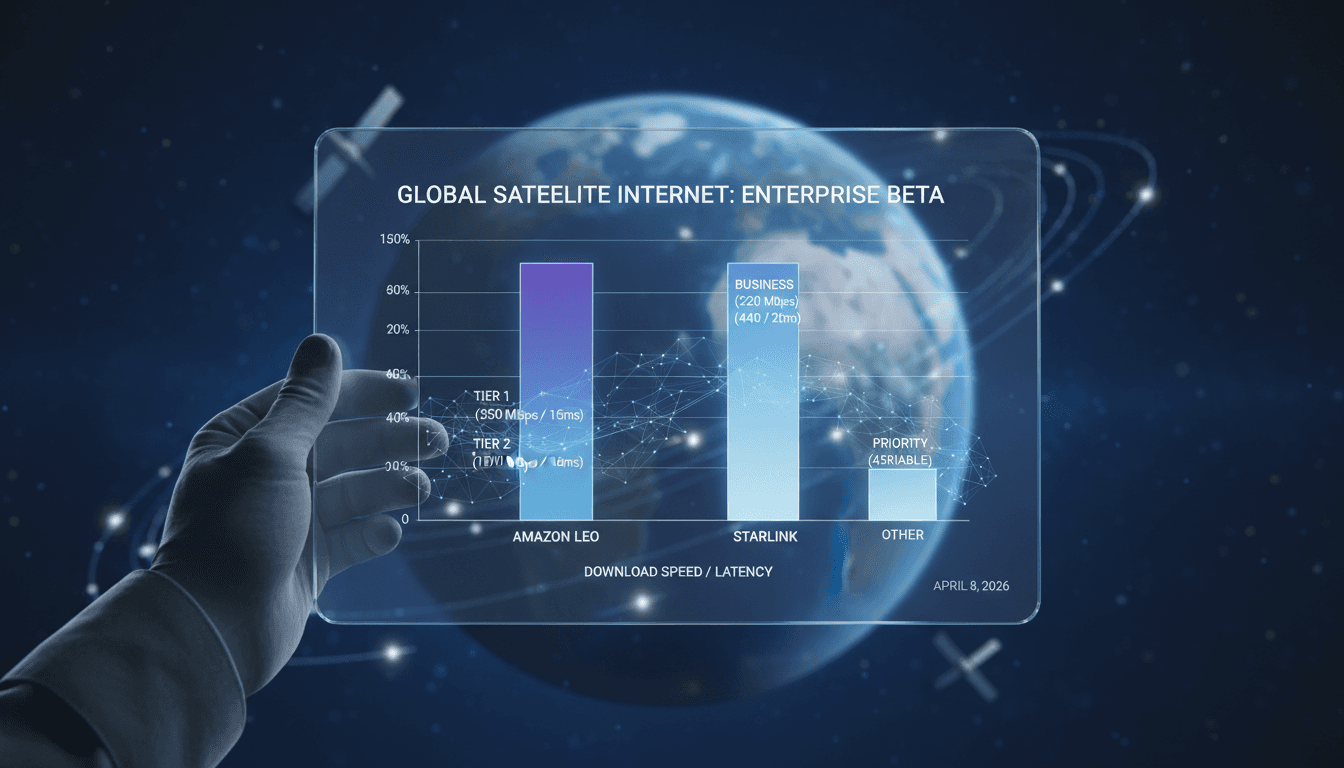
As of early April 2026, Amazon has successfully deployed between 210 and 241 satellites, a significant milestone in its operational capacity. The rebranding to Amazon Leo in late 2025 indicates a strategic shift towards commercial readiness, emphasizing the company's commitment to delivering competitive broadband services. The tiered service offerings—Leo Nano (100 Mbps), Pro (400 Mbps), and Ultra (1 Gbps)—are designed to cater to varying enterprise needs, providing up to 8 times better uplink performance compared to existing alternatives.
The partnerships with major telecom and aviation companies, including Verizon, AT&T, and JetBlue, are crucial for Amazon Leo's strategy. These collaborations not only enhance the service's credibility but also expand its market reach. The enterprise beta phase will allow Amazon to fine-tune its technology and service offerings based on real-world feedback, positioning it favorably against established competitors like SpaceX's Starlink, which currently boasts around 10 million subscribers.
However, the competitive landscape is not without challenges. Amazon is navigating regulatory requirements and launch delays, which have prompted it to seek an extension from the FCC for its deployment milestones. The company's proactive approach in contracting additional launch missions demonstrates its commitment to overcoming these hurdles and achieving its ambitious goals.
The implications of Amazon Leo's launch extend beyond mere connectivity; they signify a broader shift in how satellite internet services will be delivered and priced. As competition intensifies, consumers can expect more options and potentially lower prices, making high-speed internet access more attainable for a wider audience.
Who feels it first (and how)
- Businesses in underserved regions: They will benefit from improved connectivity, enabling better operations and customer engagement.
- Telecom companies: Partnerships with Amazon Leo will allow them to offer enhanced services and compete more effectively in the broadband market.
- Consumers in rural areas: They will gain access to high-speed internet, improving their quality of life and access to information.
What to watch next
- Commercial launch timeline: The mid-2026 target for full deployment will be critical in determining market dynamics and consumer access.
- Pricing strategies: How Amazon positions its service against competitors like Starlink will influence consumer adoption and market share.
- Regulatory developments: Ongoing interactions with the FCC and other regulatory bodies will shape the operational landscape for satellite internet services.
Amazon Leo has launched its enterprise beta and is operational with 210-241 satellites in orbit.
The commercial launch will occur by mid-2026, expanding access to underserved regions.
The long-term impact on pricing and market competition remains to be seen as the service scales.
Frequently Asked Questions
- Why it matters?
- This launch signals a significant shift in the competitive landscape of satellite internet, potentially lowering costs and improving access for underserved communities worldwide.
- What happened (in 30 seconds)?
- Amazon Leo launched its enterprise beta on April 8, 2026, marking the operational testing phase of its satellite broadband service. Partnerships with major companies like Verizon and JetBlue aim to enhance high-speed connectivity, targeting commercial availability by mid-2026. Current status includes 210-241 satellites in orbit, competing directly with SpaceX's Starlink for market share.
- What's really happening?
- The launch of Amazon Leo's enterprise beta is a pivotal moment in the satellite internet landscape, driven by the need for improved connectivity in underserved regions. The initiative began with Project Kuiper, which was established to address the global digital divide by providing high-speed internet access to areas lacking reliable service. The project received FCC approval for a constellation of 3,236 satellites in 2020, with the first satellites launched in April 2025. As of early April 20
- Who feels it first (and how)?
- Businesses in underserved regions: They will benefit from improved connectivity, enabling better operations and customer engagement. Telecom companies: Partnerships with Amazon Leo will allow them to offer enhanced services and compete more effectively in the broadband market. Consumers in rural areas: They will gain access to high-speed internet, improving their quality of life and access to information.
- What to watch next?
- Commercial launch timeline: The mid-2026 target for full deployment will be critical in determining market dynamics and consumer access. Pricing strategies: How Amazon positions its service against competitors like Starlink will influence consumer adoption and market share. Regulatory developments: Ongoing interactions with the FCC and other regulatory bodies will shape the operational landscape for satellite internet services.
Opinionated AI coverage for general audiences.
"TNW’s AI vertical covering tools, ethics, and trends."
— A47 Editor
Amazon Leo targets mid-2026 commercial launch as enterprise beta goes live
Amazon's satellite internet service, rebranded as Amazon Leo, has entered enterprise beta as of April 8, 2026, with a commercial launch expected by mid-2026. The service aims to deliver download speeds of up to 1 Gbps, targeting major enterprise clie...
UK and international business news, economics, and corporate coverage.
"The Guardian’s business section covers finance and markets with a progressive editorial tone."
— A47 Editor
Amazon to finally launch Leo satellite internet in ‘mid-2026’, says CEO
Amazon has announced that its long-anticipated satellite internet service, a competitor to Elon Musk's Starlink, is set to launch in mid-2026. CEO Andy Jassy informed shareholders that the company is on the verge of launching Amazon Leo and has secur...
Reports on science policy, discoveries, and public debate in the scientific realm.
"The Guardian’s science section is known for thoughtful and critical reporting on global research, ethics, and public understanding of science."
— A47 Editor
Amazon to finally launch Leo satellite internet in ‘mid-2026’, says CEO
Amazon has announced that its long-anticipated satellite internet service, a competitor to Elon Musk's Starlink, is set to launch in mid-2026. CEO Andy Jassy informed shareholders that the company is on the verge of launching Amazon Leo and has secur...
Top international stories selected by The Guardian editors.
"The Guardian is known for its progressive editorial stance and in-depth analysis."
— A47 Editor
Amazon to finally launch Leo satellite internet in ‘mid-2026’, says CEO
Amazon has announced that its long-anticipated satellite internet service, a competitor to Elon Musk's Starlink, is set to launch in mid-2026. CEO Andy Jassy informed shareholders that the company is on the verge of launching Amazon Leo and has secur...