
Christina Koch Highlights Earth’s Fragility from Lunar Distance During Artemis II Mission
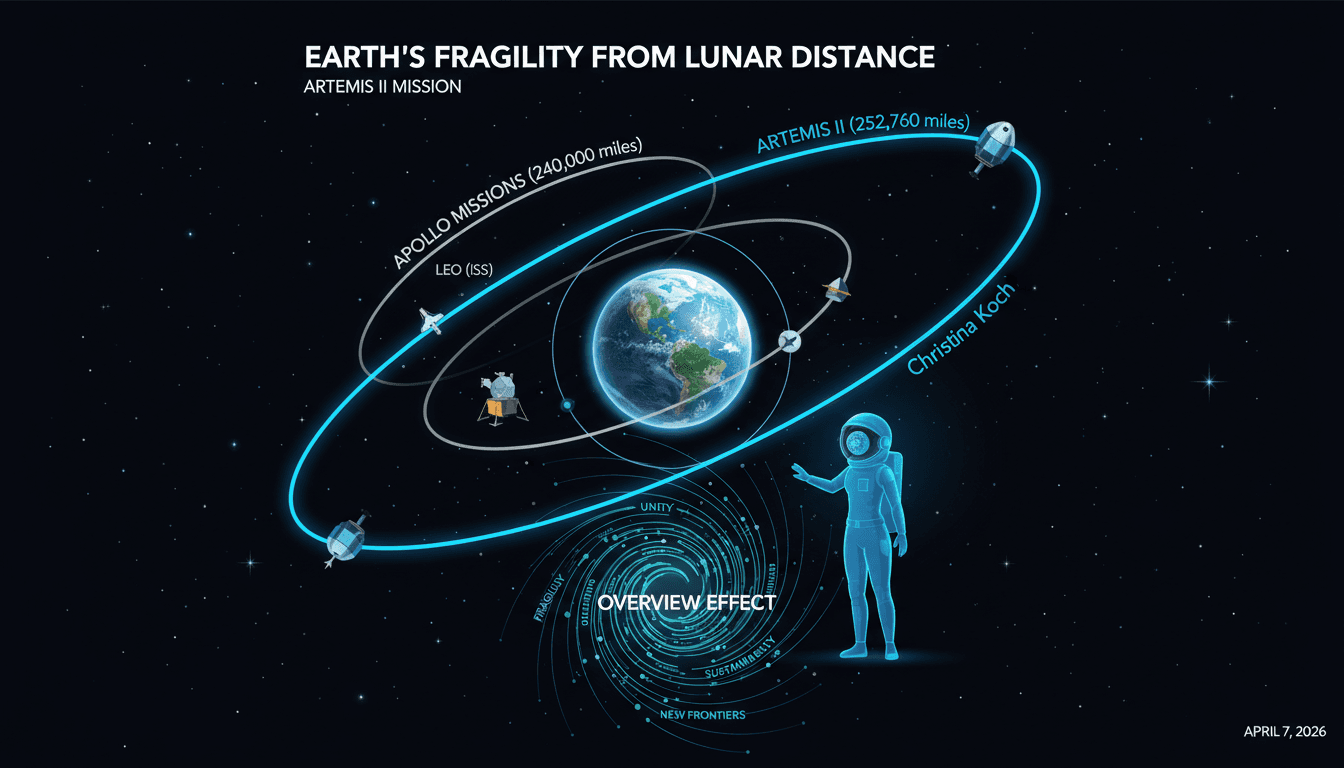
Here's what it means for you.
As humanity reaches farther into space, your connection to Earth and its fragility becomes increasingly relevant in discussions about sustainability and planetary stewardship.
Why it matters
The Artemis II mission exemplifies a pivotal moment in space exploration, reinforcing global unity and environmental consciousness as we push the boundaries of human presence beyond Earth.
What happened (in 30 seconds)
- Christina Koch, an astronaut on the Artemis II mission, shared her profound appreciation for Earth during a live interview, highlighting its fragility from the vastness of space.
- The Artemis II mission, NASA's first crewed deep space flight since Apollo 17, launched on April 1, 2026, and reached a record distance of 252,760 miles from Earth.
- NASA's Artemis program aims for a sustainable lunar presence and the first woman and person of color on the Moon, with Artemis II serving as a critical step toward these goals.
The context you actually need
- NASA's Artemis program, initiated in 2019, seeks to establish a sustainable human presence on the Moon, paving the way for future Mars exploration.
- The overview effect, a cognitive shift in awareness reported by astronauts, emphasizes the interconnectedness of humanity and the need for environmental stewardship.
- International partnerships, including collaborations with the Canadian Space Agency, enhance the mission's global significance and foster shared goals in space exploration.
What's really happening
The Artemis II mission represents a significant leap in human space exploration, marking the first crewed journey beyond low Earth orbit since the Apollo program. Launched on April 1, 2026, from Kennedy Space Center, the mission successfully executed a series of orbital maneuvers, culminating in a lunar flyby on April 6, where the crew reached a maximum distance of 252,760 miles from Earth. This distance not only sets a new record for human spaceflight but also underscores the technological advancements achieved since the Apollo era.
During a live interview on April 7, Christina Koch articulated a profound sense of appreciation for Earth, describing how the stark contrast of space blackness accentuated the planet's beauty and fragility. This phenomenon, known as the overview effect, has been reported by many astronauts and serves as a reminder of our shared responsibility to protect our home planet. Koch's insights resonate deeply in today's context, where climate change and environmental degradation are pressing global issues.
The Artemis II mission is not just a scientific endeavor; it is a cultural and philosophical statement about humanity's place in the universe. As astronauts venture farther into space, their reflections on Earth can inspire a renewed commitment to sustainability and global cooperation. The mission's success has already sparked optimism in the space economy, with stocks of companies like Lockheed Martin and Boeing seeing gains following the launch. This economic ripple effect highlights the potential for increased investment in space technologies and related industries.
Moreover, the Artemis program's emphasis on inclusivity—aiming to land the first woman and person of color on the Moon—reflects a broader cultural shift towards diversity in STEM fields. This focus not only enriches the narrative of space exploration but also encourages a new generation of scientists and engineers from varied backgrounds to participate in shaping our future in space.
As the mission progresses towards its splashdown on April 10, 2026, the implications of Koch's experience and the Artemis II mission extend beyond the realm of space exploration. They invite a global audience to reconsider their relationship with Earth and the importance of collective action in addressing environmental challenges.
Who feels it first (and how)
- Space industry professionals: Increased investment and job opportunities in aerospace and technology sectors.
- Environmental advocates: A renewed platform for discussing sustainability and planetary health.
- Students and educators: Inspiration to pursue careers in STEM fields, particularly among underrepresented groups.
- Global citizens: A heightened awareness of Earth's fragility, fostering a sense of shared responsibility for environmental stewardship.
What to watch next
- Artemis III preparations: Watch for updates on NASA's plans for docking tests in 2027, which will further advance lunar exploration.
- Space economy trends: Monitor stock performance and investment in space-related companies as optimism grows around lunar and Martian missions.
- Public engagement initiatives: Look for educational programs and outreach efforts aimed at inspiring the next generation of space explorers and environmental stewards.
The Artemis II mission successfully reached a record distance from Earth, enhancing the narrative of human space exploration.
Increased public interest in space exploration will lead to more educational initiatives and investment in STEM fields.
The long-term impact of the overview effect on global environmental policies and individual behaviors remains to be seen.
Frequently Asked Questions
- Why it matters?
- The Artemis II mission exemplifies a pivotal moment in space exploration, reinforcing global unity and environmental consciousness as we push the boundaries of human presence beyond Earth.
- What happened (in 30 seconds)?
- Christina Koch, an astronaut on the Artemis II mission, shared her profound appreciation for Earth during a live interview, highlighting its fragility from the vastness of space. The Artemis II mission, NASA's first crewed deep space flight since Apollo 17, launched on April 1, 2026, and reached a record distance of 252,760 miles from Earth. NASA's Artemis program aims for a sustainable lunar presence and the first woman and person of color on the Moon, with Artemis II serving as a critical
- What's really happening?
- The Artemis II mission represents a significant leap in human space exploration, marking the first crewed journey beyond low Earth orbit since the Apollo program. Launched on April 1, 2026, from Kennedy Space Center, the mission successfully executed a series of orbital maneuvers, culminating in a lunar flyby on April 6, where the crew reached a maximum distance of 252,760 miles from Earth. This distance not only sets a new record for human spaceflight but also underscores the technological adva
- Who feels it first (and how)?
- Space industry professionals: Increased investment and job opportunities in aerospace and technology sectors. Environmental advocates: A renewed platform for discussing sustainability and planetary health. Students and educators: Inspiration to pursue careers in STEM fields, particularly among underrepresented groups. Global citizens: A heightened awareness of Earth's fragility, fostering a sense of shared responsibility for environmental stewardship.
- What to watch next?
- Artemis III preparations: Watch for updates on NASA's plans for docking tests in 2027, which will further advance lunar exploration. Space economy trends: Monitor stock performance and investment in space-related companies as optimism grows around lunar and Martian missions. Public engagement initiatives: Look for educational programs and outreach efforts aimed at inspiring the next generation of space explorers and environmental stewards.
Space science news, astronomy updates, and spaceflight developments.
"Space.com delivers space science news, astronomy updates, and spaceflight developments with engaging coverage."
— A47 Editor
'It just made it even more special': Being so far from Earth makes you appreciate our planet even more, Artemis 2 astronaut says
Christina Koch, an astronaut on NASA's Artemis 2 mission, expressed that viewing Earth from beyond the Moon enhances appreciation for the planet, a phenomenon known as the 'overview effect.' This mission, which launched on April 1, 2026, marks a sign...
Regional and international reporting focused on Middle Eastern politics, diplomacy, and economics.
"Asharq Al-Awsat is a Saudi-owned international newspaper reflecting mainstream Gulf political perspectives."
— A47 Editor
'Pinprick of Light': Artemis Crew Witnesses Meteorite Impacts on Moon
The Artemis crew aboard NASA's Artemis II mission recently witnessed meteorite impacts on the Moon, providing a unique opportunity to observe these celestial events firsthand. This mission, launched on April 1, 2026, is significant as it marks the fi...