
Trump Announces No Uranium Enrichment in Iran Under New U.S. Agreement
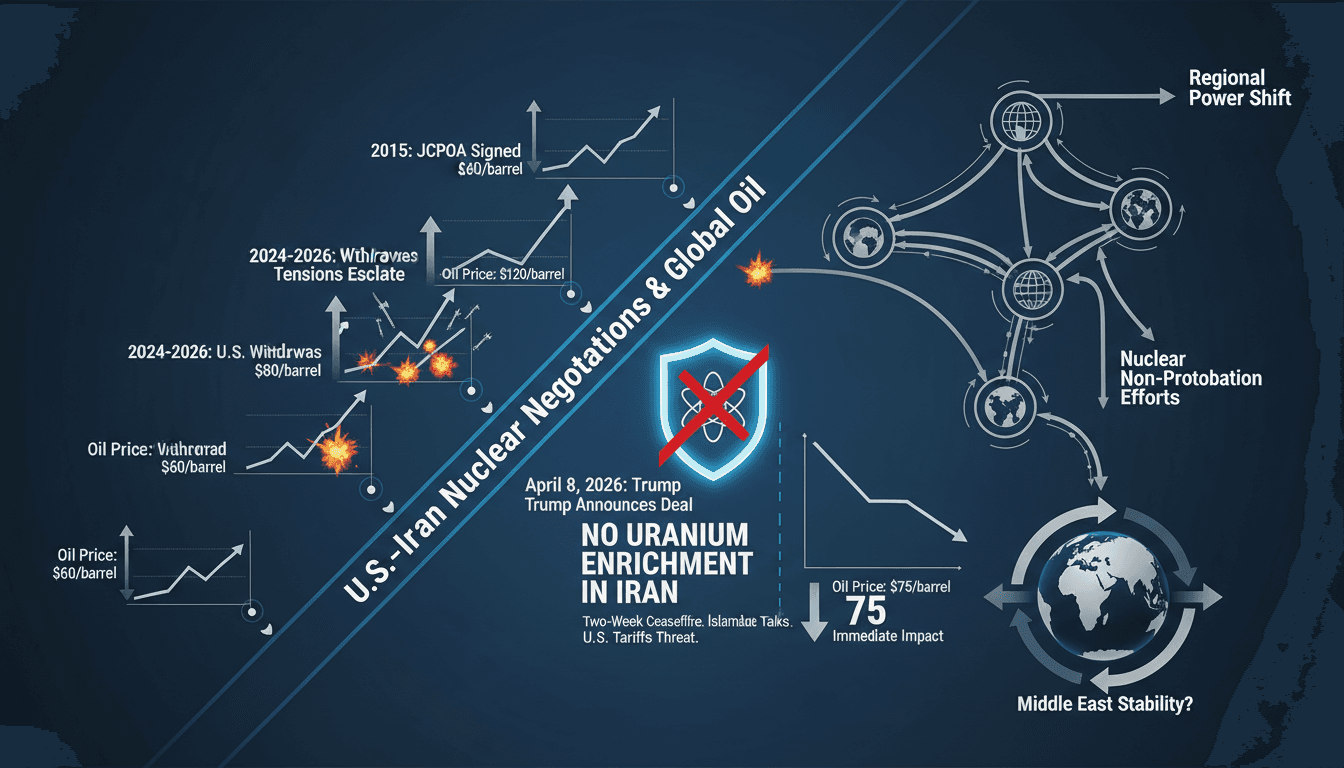
Here's what it means for you.
If you’re in the energy sector or rely on stable oil prices, this agreement could impact your costs and market strategies.
Why it matters
This agreement signals a potential stabilization of the Middle East, which could influence global oil markets and geopolitical alliances.
What happened (in 30 seconds)
- On April 8, 2026, President Trump announced via Truth Social that Iran will not enrich uranium under a new U.S.-Iran agreement.
- The agreement follows a two-week ceasefire and includes U.S. Space Force oversight of nuclear material removal.
- Oil prices dropped 15% to $95 per barrel following the announcement, easing fuel costs for consumers in Dubai.
The context you actually need
- U.S. strikes on Iranian nuclear sites in June 2025 delayed Iran's uranium enrichment program by 1-2 years, creating a more favorable negotiating environment.
- The 2026 Iran war, which began in February, escalated tensions and prompted Iran to propose a 10-point ceasefire, leading to this agreement.
- Iran's uranium stockpile had grown to 440 kilograms enriched to 60% U-235, near weapons-grade levels, following the U.S. withdrawal from the JCPOA in 2018.
What's really happening
The recent declaration by President Trump marks a significant pivot in U.S.-Iran relations, emerging from a backdrop of heightened military tension and economic sanctions. The U.S. has been adamant about preventing Iran from developing nuclear weapons, which has been a longstanding point of contention since the U.S. exited the Joint Comprehensive Plan of Action (JCPOA) in 2018. The previous escalation of U.S. strikes against Iranian nuclear facilities in mid-2025 had already set back Iran's nuclear ambitions, creating a window for negotiation.
The ceasefire proposal from Iran, which included multiple points aimed at de-escalation, was met with a strategic U.S. response that included additional prohibitions on uranium enrichment. This agreement is framed as a "productive regime change" in Iran, suggesting that the U.S. views the current Iranian leadership as more amenable to negotiation than previous administrations. The U.S. Space Force's involvement in monitoring the removal of nuclear materials adds a layer of oversight that aims to ensure compliance, reflecting a shift towards more direct military involvement in diplomatic agreements.
The implications of this agreement extend beyond just nuclear non-proliferation. The immediate economic impact is visible in the oil markets, with a notable 15% drop in oil prices following the announcement. This decline is crucial for regions like Dubai, where fuel costs directly affect consumer spending and economic stability. The UAE, having benefited from alternative oil supply routes, faces a complex economic landscape influenced by regional conflicts and fluctuating oil prices.
Moreover, the U.S. has threatened to impose 50% tariffs on nations supplying arms to Iran, which could reshape the arms market and influence global defense spending. The rejection of the agreement's terms by Israel highlights the ongoing geopolitical tensions in the region, suggesting that while this agreement may stabilize certain aspects, it does not eliminate the risk of conflict.
In summary, the U.S.-Iran agreement not only addresses nuclear concerns but also reflects a broader strategy to stabilize oil markets and mitigate regional conflicts, with significant implications for global energy dynamics.
Who feels it first (and how)
- Energy sector professionals: Fluctuations in oil prices directly impact profitability and operational costs.
- Consumers in Dubai: Lower fuel prices may ease living costs and influence spending behavior.
- Defense contractors: Potential shifts in arms sales due to U.S. tariffs could affect revenue streams.
What to watch next
- Negotiation outcomes in Islamabad: The scheduled talks on April 10 will reveal the extent of compliance and further agreements.
- Oil price trends: Continued fluctuations in oil prices will indicate market reactions to geopolitical developments.
- Iran's nuclear compliance: Monitoring Iran's adherence to the non-enrichment agreement will be crucial for long-term stability.
The U.S. has imposed tariffs on nations supplying arms to Iran.
Oil prices will remain volatile as geopolitical tensions evolve.
The long-term effectiveness of the U.S. Space Force's monitoring efforts on Iran's nuclear materials.
Frequently Asked Questions
- Why it matters?
- This agreement signals a potential stabilization of the Middle East, which could influence global oil markets and geopolitical alliances.
- What happened (in 30 seconds)?
- On April 8, 2026, President Trump announced via Truth Social that Iran will not enrich uranium under a new U.S.-Iran agreement. The agreement follows a two-week ceasefire and includes U.S. Space Force oversight of nuclear material removal. Oil prices dropped 15% to $95 per barrel following the announcement, easing fuel costs for consumers in Dubai.
- What's really happening?
- The recent declaration by President Trump marks a significant pivot in U.S.-Iran relations, emerging from a backdrop of heightened military tension and economic sanctions. The U.S. has been adamant about preventing Iran from developing nuclear weapons, which has been a longstanding point of contention since the U.S. exited the Joint Comprehensive Plan of Action (JCPOA) in 2018. The previous escalation of U.S. strikes against Iranian nuclear facilities in mid-2025 had already set back Iran's nucl
- Who feels it first (and how)?
- Energy sector professionals: Fluctuations in oil prices directly impact profitability and operational costs. Consumers in Dubai: Lower fuel prices may ease living costs and influence spending behavior. Defense contractors: Potential shifts in arms sales due to U.S. tariffs could affect revenue streams.
- What to watch next?
- Negotiation outcomes in Islamabad: The scheduled talks on April 10 will reveal the extent of compliance and further agreements. Oil price trends: Continued fluctuations in oil prices will indicate market reactions to geopolitical developments. Iran's nuclear compliance: Monitoring Iran's adherence to the non-enrichment agreement will be crucial for long-term stability.
Capitol Hill news, legislation, and policy insight.
"The Hill specializes in U.S. politics and policy, with a focus on Capitol Hill developments and a reputation for insider reporting."
— A47 Editor
Trump: There will be no enrichment of uranium in Iran
President Trump announced that Iran will not enrich uranium as part of a new agreement, emphasizing U.S. cooperation with Iran to recover B-2 bombers. This statement reflects ongoing negotiations aimed at stabilizing relations between the two nations...
English-language reporting on Saudi politics, policy, and society.
"Saudi Gazette reflects mainstream Saudi institutional perspectives."
— A47 Editor
Trump signals US-Iran engagement after ‘regime change,’ rules out uranium enrichment
US President Donald Trump announced a two-week ceasefire with Iran, indicating a willingness to engage with Tehran following a period of heightened military tensions and threats regarding the Strait of Hormuz. The ceasefire aims to facilitate diploma...
Global business headlines with AI angles.
"General business outlet that frequently covers AI."
— A47 Editor
Trump Says U.S. Will Work To Retrieve Enriched Uranium With Iran, Which Has Gone Through 'Productive Regime Change'
President Donald Trump announced that the U.S. will collaborate with Iran to retrieve enriched uranium, emphasizing that Iran has undergone a 'productive regime change.' This statement reflects ongoing diplomatic efforts amid a complex relationship b...