
European Stock Indices Fall as US-Iran Ceasefire Faces Doubts and Energy Crisis Continues
Here's what it means for you.
Your investment strategies may need recalibration as geopolitical tensions impact market stability.
Why it matters
Investor sentiment is heavily influenced by geopolitical events, particularly in energy markets, which can lead to volatility in European stock indices.
What happened (in 30 seconds)
- Major European indices declined on April 9, 2026, reversing gains from a recent relief rally.
- Concerns over the US-Iran ceasefire's fragility and ongoing energy crisis drove investor caution.
- Energy prices rebounded, signaling continued volatility in the market.
The context you actually need
- The 2026 US-Iran conflict escalated from late February, disrupting global energy supplies and causing oil prices to surge.
- A brief ceasefire on April 8 initially eased tensions, leading to a sharp rally in European stocks, but fears of violations quickly emerged.
- European markets are particularly sensitive to energy price fluctuations due to their reliance on imported energy, making them vulnerable to geopolitical instability.
What's really happening
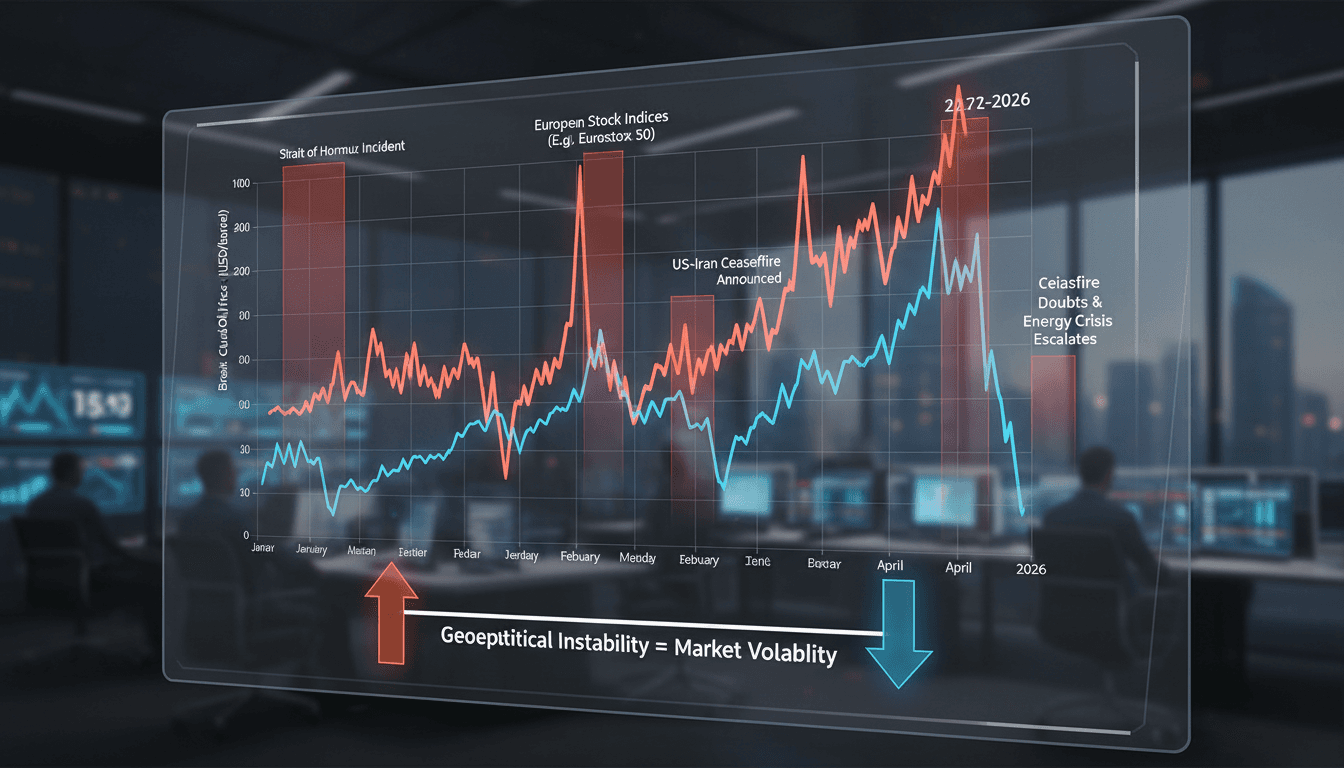
The recent decline in European stock indices is a direct response to the fragile ceasefire between the US and Iran, which was established on April 8, 2026. This ceasefire followed a period of intense conflict that began in late February, disrupting global energy supplies, particularly through the vital Strait of Hormuz. The initial announcement of the ceasefire led to a significant rally in European markets, with the pan-European STOXX 600 index rising by 3.88%, Germany's DAX increasing by 5.06%, and France's CAC 40 climbing by 4.49%. Oil prices also fell below $100 per barrel, providing temporary relief to investors.
However, this optimism was short-lived. Reports of potential ceasefire violations and ongoing regional tensions quickly reignited fears of supply disruptions, leading to a reversal in market performance. On April 9, the STOXX 600 fell by 0.2%, the DAX dropped by 1.14%, and the FTSE 100 declined by 0.3%. The energy sector, however, showed resilience, with prices rebounding as traders reacted to the uncertainty surrounding the ceasefire.
The underlying mechanism at play is the interconnectedness of geopolitical events and market performance. European economies are heavily reliant on energy imports, making them particularly sensitive to fluctuations in oil prices. The recent conflict and its implications have highlighted this vulnerability, leading to increased caution among investors. Central banks are now reassessing their monetary policies in light of these developments, with inflation risks becoming a significant concern.
Moreover, the situation is compounded by the fact that European markets had already experienced significant declines in March, with the STOXX 600 suffering weekly drops exceeding 5%. The current volatility reflects a broader trend of cautious trading as investors grapple with the potential for renewed conflict and its impact on energy supplies.
In the context of the Gulf region, Dubai has seen its own market fluctuations. Despite a 6.2% surge in the Dubai Financial Market General Index (DFMGI) following the ceasefire announcement, the overall sentiment remains cautious due to elevated petrol and diesel prices amid ongoing energy volatility. The UAE exchanges, which had previously experienced significant losses due to the conflict, are now navigating the complexities of regional spillovers and the potential for renewed energy shocks.
Who feels it first (and how)
- Investors in European markets: They are directly impacted by stock price fluctuations and energy price volatility.
- Energy sector companies: These firms may experience increased operational costs and fluctuating revenues based on oil price changes.
- Consumers in Dubai and the UAE: Elevated fuel prices affect daily expenses and overall economic sentiment.
What to watch next
- Ceasefire developments: Continued reports on the US-Iran ceasefire will be critical; any violations could lead to further market declines.
- Energy prices: Watch for fluctuations in oil prices, as they will directly affect European stock indices and consumer costs.
- Central bank responses: Monitor how European central banks adjust their monetary policies in response to inflation risks stemming from energy volatility.
European stock indices are sensitive to geopolitical events, particularly those affecting energy supplies.
Continued volatility in energy prices will affect market performance in the short term.
The long-term stability of the US-Iran ceasefire and its implications for global energy markets remain uncertain.
Frequently Asked Questions
- Why it matters?
- Investor sentiment is heavily influenced by geopolitical events, particularly in energy markets, which can lead to volatility in European stock indices.
- What happened (in 30 seconds)?
- Major European indices declined on April 9, 2026, reversing gains from a recent relief rally. Concerns over the US-Iran ceasefire's fragility and ongoing energy crisis drove investor caution. Energy prices rebounded, signaling continued volatility in the market.
- What's really happening?
- The recent decline in European stock indices is a direct response to the fragile ceasefire between the US and Iran, which was established on April 8, 2026. This ceasefire followed a period of intense conflict that began in late February, disrupting global energy supplies, particularly through the vital Strait of Hormuz. The initial announcement of the ceasefire led to a significant rally in European markets, with the pan-European STOXX 600 index rising by 3.88%, Germany's DAX increasing by 5.06%
- Who feels it first (and how)?
- Investors in European markets: They are directly impacted by stock price fluctuations and energy price volatility. Energy sector companies: These firms may experience increased operational costs and fluctuating revenues based on oil price changes. Consumers in Dubai and the UAE: Elevated fuel prices affect daily expenses and overall economic sentiment.
- What to watch next?
- Ceasefire developments: Continued reports on the US-Iran ceasefire will be critical; any violations could lead to further market declines. Energy prices: Watch for fluctuations in oil prices, as they will directly affect European stock indices and consumer costs. Central bank responses: Monitor how European central banks adjust their monetary policies in response to inflation risks stemming from energy volatility.
Arabic-language digital news outlet covering UAE, regional, and international developments with broad general-news coverage.
"Al Ain News coverage typically blends UAE-focused reporting with wider Arab regional and international news."
— A47 Editor
الأسهم الأوروبية تتراجع متأثرة بمخاوف «هشاشة الهدنة» وأزمة الطاقة
European stocks declined on Thursday following their largest rise in four years, amid ongoing investor concerns regarding the fragile ceasefire between the United States and Iran, and its implications for oil prices and global inflation.
Arabic-language UAE newspaper coverage focused on domestic affairs, public institutions, business, society, and regional developments.
"Al Khaleej coverage generally reflects a mainstream UAE editorial lens with strong attention to public affairs, institutions, and regional developments."
— A47 Editor
«وول ستريت» تهبط بمخاوف «هشاشة» الهدنة
U.S. stocks declined on Thursday, reversing some of the sharp gains made in the previous session, amid ongoing concerns regarding the fragility of the ceasefire. The downturn reflects investor anxiety over the stability of the current geopolitical si...
Arabic-language UAE newspaper coverage focused on domestic affairs, public institutions, business, society, and regional developments.
"Al Khaleej coverage generally reflects a mainstream UAE editorial lens with strong attention to public affairs, institutions, and regional developments."
— A47 Editor
أسهم أوروبا تتراجع مع توتر الهدنة بين الولايات المتحدة وإيران
European stocks declined on Thursday as signs emerged of heightened tensions in the fragile truce agreed upon between the United States and Iran. This development reflects growing uncertainty in the geopolitical landscape, which can significantly imp...
Pan-Arab news coverage spanning politics, business, sports, and regional affairs.
"Asharq Al-Awsat reflects a broad Arab editorial perspective with strong attention to regional geopolitics."
— A47 Editor
الأسهم الأوروبية تتراجع بضغط من مخاوف «الهدنة الهشة»
European stocks declined on Thursday following a strong rally the previous week, amid investor concerns regarding the sustainability of the fragile truce between the United States and Iran.