
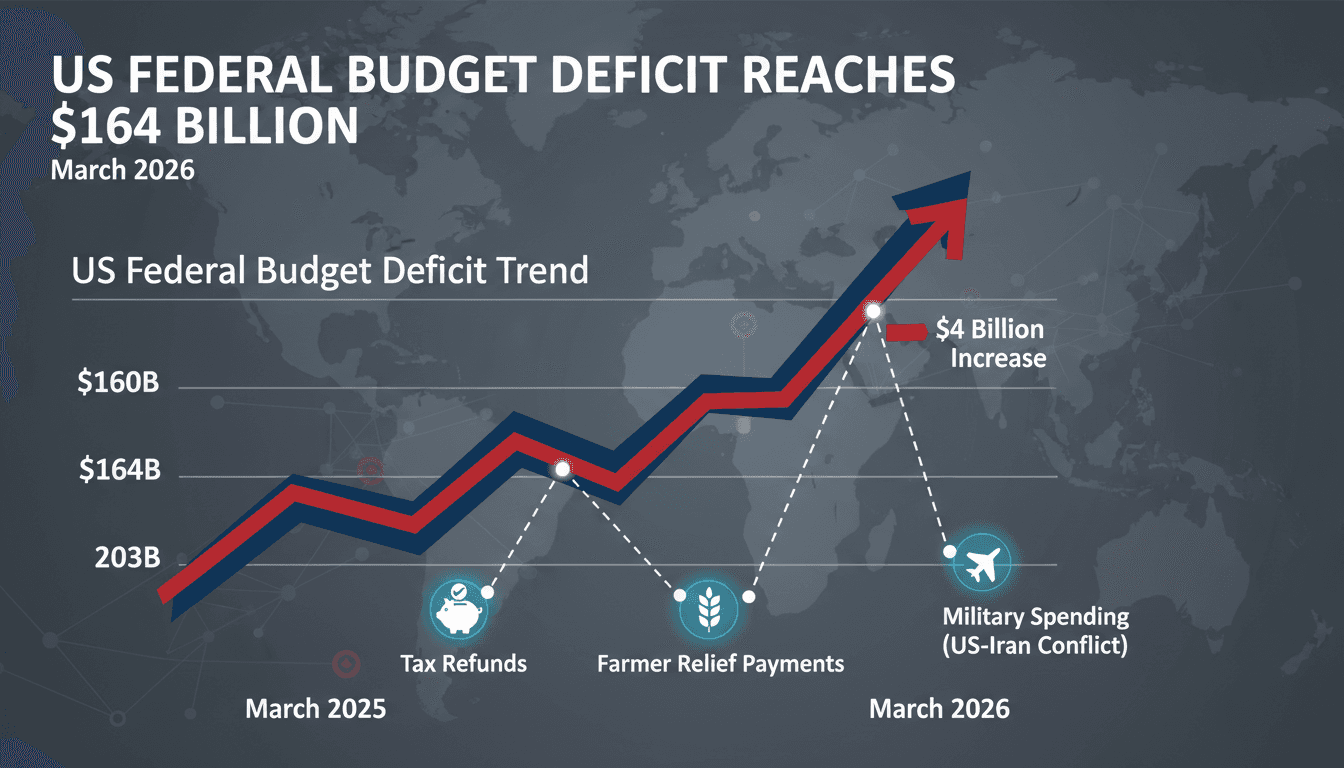
US Federal Budget Deficit Reaches $164 Billion in March 2026
Here's what it means for you.
As a global professional, understanding shifts in U.S. fiscal health can impact investment strategies and economic forecasts.
What happened
The U.S. federal budget deficit for March 2026 rose to $164 billion, reflecting a 2% increase from the previous year.
The Context
- Higher outlays: Total expenditures reached $549 billion, driven by increased tax refunds and military spending amid geopolitical tensions.
- Declining revenues: Receipts totaled $385 billion, influenced by reduced customs duties following a Supreme Court ruling and elevated agricultural support.
- Year-to-date deficit: The first half of fiscal year 2026 recorded a cumulative deficit of $1.17 trillion, highlighting ongoing fiscal challenges.
The Number
— This figure represents the federal budget deficit for March 2026, underscoring the ongoing fiscal pressures that could influence market stability and investment decisions.
Takeaway
Future budget reports will likely reflect continued fiscal strain, particularly as military expenditures evolve with geopolitical developments.
Arabic-language UAE newspaper coverage focused on domestic affairs, public institutions, business, society, and regional developments.
"Al Khaleej coverage generally reflects a mainstream UAE editorial lens with strong attention to public affairs, institutions, and regional developments."
— A47 Editor
ارتفاع عجز الميزانية الأمريكية في مارس إلى 164 مليار دولار
The U.S. Treasury Department reported a budget deficit increase of $4 billion in March, bringing the total deficit to $164 billion. This rise reflects ongoing fiscal challenges faced by the federal government amid fluctuating economic conditions.
Macro commentary, policy analysis, growth/inflation themes, and global outlooks.
"Contextual macro coverage that complements day-to-day market headlines."
— A47 Editor
US March budget deficit rises slightly to $164 billion, war outlays delayed
The U.S. budget deficit for March has increased slightly to $164 billion, with delays in war-related expenditures contributing to this rise. This marks a continuation of fiscal challenges as the government navigates complex economic conditions.