
Israeli Airstrikes Target Iranian Infrastructure in Tehran and Karaj Amid Ongoing Conflict
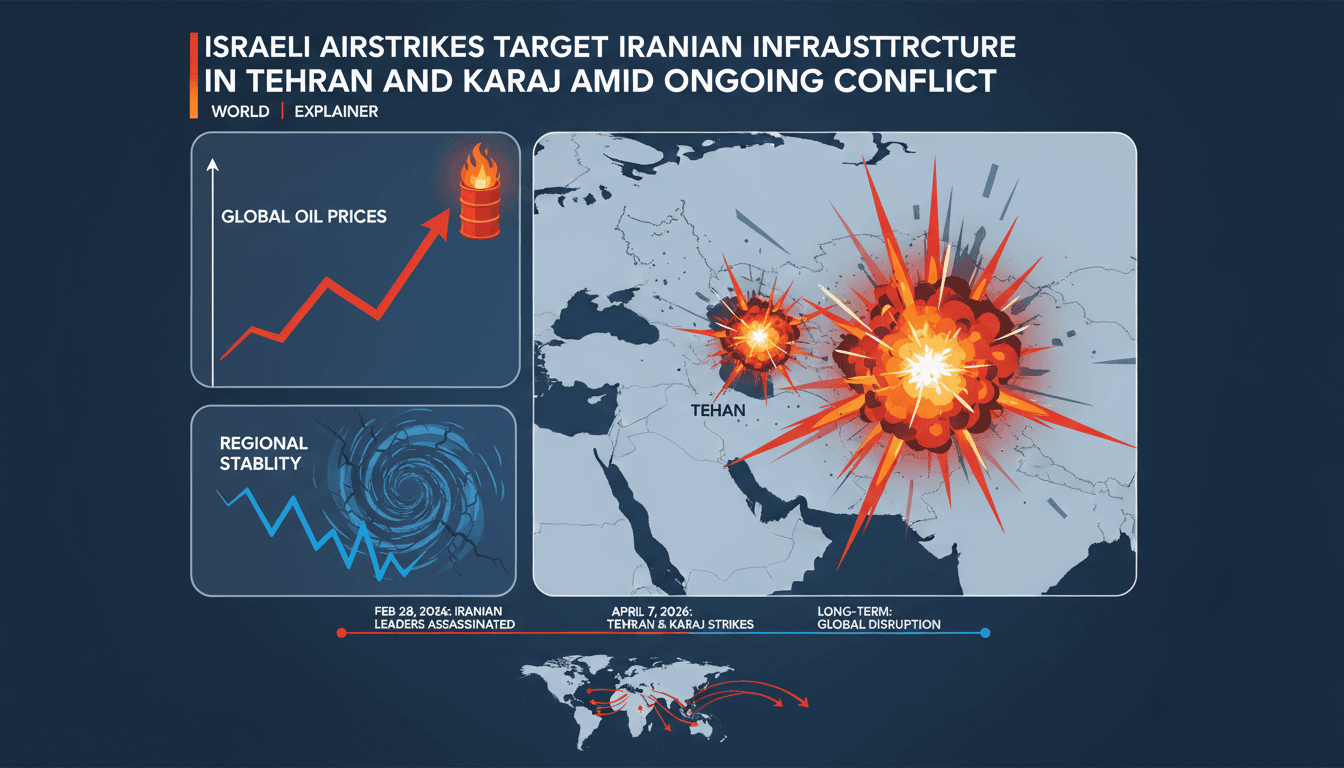
Here's what it means for you.
Rising tensions and military actions in the Middle East could lead to increased energy prices and economic volatility globally.
Why it matters
The ongoing conflict between Israel and Iran threatens to disrupt global energy supplies and escalate regional instability.
What happened (in 30 seconds)
- Explosions were reported in Tehran and Karaj on April 7, 2026, due to Israeli airstrikes targeting Iranian infrastructure.
- The Israeli Defense Forces (IDF) confirmed the strikes as part of a broader campaign that began on February 28, 2026, following the assassination of Iranian leaders.
- Global oil prices surged over 40% due to fears of supply disruptions, particularly through the strategic Strait of Hormuz.
The context you actually need
- The 2026 Iran War began with US-Israeli airstrikes aimed at crippling Iran's military and nuclear capabilities, following a series of regional provocations.
- Iran's retaliatory measures have included missile strikes on Israel and US bases, escalating the conflict and leading to widespread infrastructure damage.
- The ongoing conflict has resulted in over 2,076 reported fatalities in Iran, highlighting the war's severe human cost and its implications for regional stability.
What's really happening
On April 7, 2026, Iranian media reported multiple explosions in Tehran and Karaj, coinciding with an extensive wave of airstrikes conducted by the Israeli Air Force. This operation is part of a larger military strategy aimed at degrading Iran's capabilities following the assassination of Supreme Leader Ali Khamenei and other key officials in late February. The IDF's announcement of these strikes underscores a significant escalation in hostilities, with previous attacks already targeting critical infrastructure, including bridges, universities, and fuel depots.
The backdrop of this conflict is rooted in Iran's nuclear ambitions and its missile threats against Israel and Gulf states. The 2026 Iran War was precipitated by a series of regional tensions, including the Twelve-Day War in 2025, which heightened fears of Iranian aggression. The strategic importance of the Strait of Hormuz, through which a significant portion of the world's oil supply is transported, adds another layer of complexity to the situation. The closure of this waterway by Iranian forces has already led to substantial disruptions in global energy markets, with Brent crude prices rising sharply.
As the conflict continues, Iranian authorities have reported power fluctuations and initiated searches for the impacts of the airstrikes, indicating a growing sense of urgency and instability within the country. The IDF has confirmed its strikes but has not disclosed specific targets, leaving room for speculation about the extent of the damage and the potential for further military actions.
The ramifications of this conflict extend beyond the immediate region. Global markets are reacting to the uncertainty, with oil prices surging over 40% in response to fears of supply chain interruptions. This volatility is likely to affect consumers worldwide, particularly in regions heavily reliant on oil imports. The ongoing military operations are expected to further strain Iran's already fragile economy, potentially leading to internal unrest and a more aggressive stance in foreign policy.
Who feels it first (and how)
- Consumers in Dubai: Increased oil prices will directly impact fuel costs and living expenses.
- Travelers: Flight cancellations and heightened security alerts at airports due to regional instability.
- Investors: Economic volatility in petrochemical markets could affect stock prices and investment strategies.
What to watch next
- Oil price trends: Continued fluctuations in oil prices will indicate the severity of supply disruptions and their impact on global markets.
- Iranian military responses: Monitoring Iran's retaliatory actions will provide insight into the potential for further escalation in the conflict.
- US foreign policy shifts: Changes in the US stance towards Iran and Israel could influence the trajectory of the conflict and regional stability.
Israeli airstrikes have targeted Iranian infrastructure, leading to explosions and increased military tensions.
Global oil prices will remain volatile as the conflict continues and supply disruptions are anticipated.
The long-term implications of the conflict on regional stability and Iran's internal political landscape remain uncertain.
Frequently Asked Questions
- Why it matters?
- The ongoing conflict between Israel and Iran threatens to disrupt global energy supplies and escalate regional instability.
- What happened (in 30 seconds)?
- Explosions were reported in Tehran and Karaj on April 7, 2026, due to Israeli airstrikes targeting Iranian infrastructure. The Israeli Defense Forces (IDF) confirmed the strikes as part of a broader campaign that began on February 28, 2026, following the assassination of Iranian leaders. Global oil prices surged over 40% due to fears of supply disruptions, particularly through the strategic Strait of Hormuz.
- What's really happening?
- On April 7, 2026, Iranian media reported multiple explosions in Tehran and Karaj, coinciding with an extensive wave of airstrikes conducted by the Israeli Air Force. This operation is part of a larger military strategy aimed at degrading Iran's capabilities following the assassination of Supreme Leader Ali Khamenei and other key officials in late February. The IDF's announcement of these strikes underscores a significant escalation in hostilities, with previous attacks already targeting critical
- Who feels it first (and how)?
- Consumers in Dubai: Increased oil prices will directly impact fuel costs and living expenses. Travelers: Flight cancellations and heightened security alerts at airports due to regional instability. Investors: Economic volatility in petrochemical markets could affect stock prices and investment strategies.
- What to watch next?
- Oil price trends: Continued fluctuations in oil prices will indicate the severity of supply disruptions and their impact on global markets. Iranian military responses: Monitoring Iran's retaliatory actions will provide insight into the potential for further escalation in the conflict. US foreign policy shifts: Changes in the US stance towards Iran and Israel could influence the trajectory of the conflict and regional stability.
Arabic-language digital news outlet covering UAE, regional, and international developments with broad general-news coverage.
"Al Ain News coverage typically blends UAE-focused reporting with wider Arab regional and international news."
— A47 Editor
انفجارات في طهران وكرج.. غارات إسرائيلية جديدة على إيران
A new wave of Israeli airstrikes targeted Iranian sites in Tehran and Karaj early Tuesday morning, resulting in significant explosions. These attacks mark a continuation of escalating military actions in the region.
Arabic-language political and world news coverage for UAE readers.
"Emarat Al Youm world coverage usually presents international developments through a UAE and Arab audience lens."
— A47 Editor
انفجارات تهز إيران.. وإسرائيل تعلن عن موجة غارات جديدة انفجارات تهز إيران.. وإسرائيل تعلن عن موجة غارات جديدة
Explosions were reported in various locations across Iran early Tuesday morning, as Iranian media outlets covered the incidents extensively. This development coincides with Israel announcing a new wave of airstrikes, indicating heightened tensions in...