
US-Iran Ceasefire Triggers Global Market Reactions with Oil and Dollar Declines
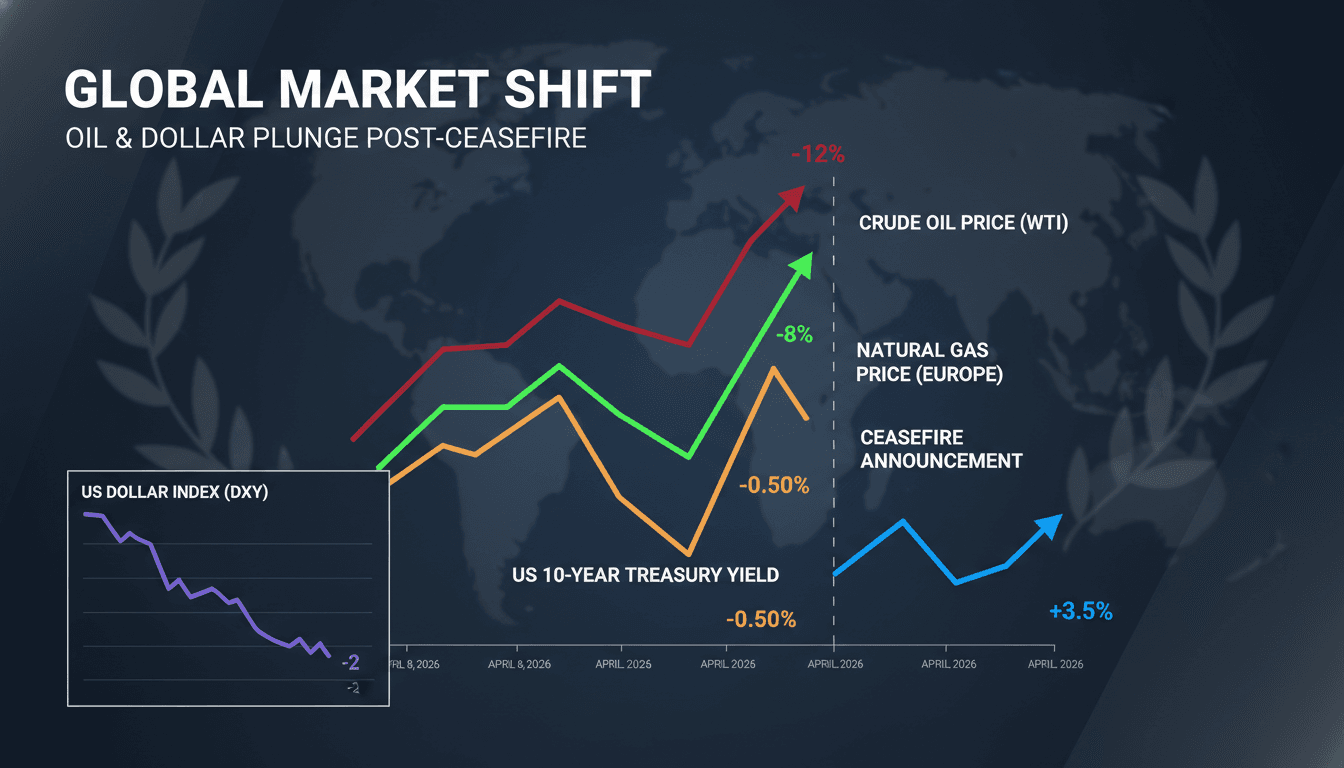
Here's what it means for you.
Your investment strategies may need recalibrating as global markets react to shifting energy prices and geopolitical stability.
Why it matters
The ceasefire has significant implications for inflation, energy costs, and investor confidence across multiple sectors.
What happened (in 30 seconds)
- April 8, 2026: A two-week US-Iran ceasefire announcement led to a sharp decline in oil and gas prices, alongside a rally in US Treasury bonds.
- Market Reaction: WTI crude oil prices plummeted 17.7% to $92.92 per barrel, while the US dollar index fell by 1.2%.
- Global Impact: Stock markets surged, with Gulf exchanges experiencing their largest gains in years, reflecting renewed investor optimism.
The context you actually need
- Conflict Background: The US-Iran conflict escalated in late February 2026, causing oil prices to double and raising inflation concerns.
- Market Dynamics: Prior to the ceasefire, safe-haven demand strengthened the dollar, while rising Treasury yields indicated investor anxiety over inflation.
- Ceasefire Effects: The announcement alleviated fears of energy supply disruptions, leading to a risk-on market rotation and stabilizing global financial conditions.
What's really happening
The recent ceasefire between the US and Iran marks a pivotal moment in global financial markets, primarily driven by the alleviation of geopolitical tensions that had previously spiked energy prices and inflation fears. The conflict, which began in late February 2026, saw oil prices soar past $119 per barrel due to concerns over potential disruptions in the Strait of Hormuz, a critical chokepoint for global oil shipments. As prices surged, market participants began to speculate on aggressive Federal Reserve rate hikes to combat inflation, leading to a selloff in bonds and a strengthening dollar as investors sought safe havens.
When President Donald Trump announced the ceasefire on April 7, just hours before a deadline that could have seen the Strait of Hormuz closed, it triggered an immediate market response. The announcement was perceived as a significant off-ramp from escalating conflict, allowing investors to recalibrate their expectations. The subsequent plunge in oil prices—17.7% for WTI crude—reflects a rapid shift in sentiment, as fears of supply disruptions dissipated. This decline in oil prices has a cascading effect on inflation expectations, which in turn influences the Federal Reserve's monetary policy decisions.
As oil and gas prices fell, the US dollar weakened, dropping 1.2% in value. This decline indicates a shift in investor confidence, as the immediate risks associated with the US-Iran conflict receded. Concurrently, US Treasury bonds rallied, with the 10-year yield easing to 4.26%. This suggests that investors are now more willing to seek the relative safety of government bonds, anticipating a potential pivot in monetary policy towards rate cuts, with the probability of a cut rising to 39% for 2026.
The implications of this ceasefire extend beyond immediate market reactions. For Gulf economies, particularly the UAE, lower fuel prices can reduce operational costs for businesses and consumers alike, supporting sectors like aviation and tourism that are critical for economic diversification. The Dubai Financial Market index experienced its largest intraday gain in six years, highlighting the localized benefits of reduced energy costs.
However, while the ceasefire provides temporary relief, markets remain vigilant regarding compliance and the potential for renewed tensions. The geopolitical landscape is inherently volatile, and any signs of escalation could quickly reverse the recent gains across various sectors.
Who feels it first (and how)
- Global Investors: Adjust portfolios in response to changing energy prices and inflation expectations.
- Energy Sector: Oil and gas companies face immediate impacts from price declines, affecting revenues and stock valuations.
- Consumers in the UAE: Residents benefit from lower fuel prices, which can reduce living costs and stimulate local economies.
- Airlines and Tourism: These sectors may see increased demand as travel becomes more affordable with lower fuel costs.
What to watch next
- Ceasefire Compliance: Continued adherence to the ceasefire will be crucial in maintaining market stability and investor confidence.
- Federal Reserve Policy Changes: Watch for signals from the Fed regarding potential rate cuts, which could further influence market dynamics.
- Global Oil Prices: Monitor trends in oil prices as they can impact inflation and economic growth forecasts globally.
The ceasefire has led to immediate declines in oil and gas prices and a rally in US Treasury bonds.
Continued market volatility as investors react to geopolitical developments and economic indicators.
The long-term sustainability of the ceasefire and its impact on global energy markets.
Frequently Asked Questions
- Why it matters?
- The ceasefire has significant implications for inflation, energy costs, and investor confidence across multiple sectors.
- What happened (in 30 seconds)?
- April 8, 2026: A two-week US-Iran ceasefire announcement led to a sharp decline in oil and gas prices, alongside a rally in US Treasury bonds. Market Reaction: WTI crude oil prices plummeted 17.7% to $92.92 per barrel, while the US dollar index fell by 1.2%. Global Impact: Stock markets surged, with Gulf exchanges experiencing their largest gains in years, reflecting renewed investor optimism.
- What's really happening?
- The recent ceasefire between the US and Iran marks a pivotal moment in global financial markets, primarily driven by the alleviation of geopolitical tensions that had previously spiked energy prices and inflation fears. The conflict, which began in late February 2026, saw oil prices soar past $119 per barrel due to concerns over potential disruptions in the Strait of Hormuz, a critical chokepoint for global oil shipments. As prices surged, market participants began to speculate on aggressive Fed
- Who feels it first (and how)?
- Global Investors: Adjust portfolios in response to changing energy prices and inflation expectations. Energy Sector: Oil and gas companies face immediate impacts from price declines, affecting revenues and stock valuations. Consumers in the UAE: Residents benefit from lower fuel prices, which can reduce living costs and stimulate local economies. Airlines and Tourism: These sectors may see increased demand as travel becomes more affordable with lower fuel costs.
- What to watch next?
- Ceasefire Compliance: Continued adherence to the ceasefire will be crucial in maintaining market stability and investor confidence. Federal Reserve Policy Changes: Watch for signals from the Fed regarding potential rate cuts, which could further influence market dynamics. Global Oil Prices: Monitor trends in oil prices as they can impact inflation and economic growth forecasts globally.
Arabic-language political and world news coverage for UAE readers.
"Emarat Al Youm world coverage usually presents international developments through a UAE and Arab audience lens."
— A47 Editor
انخفاض أسعار النفط والغاز والدولار.. وارتفاع سندات الخزانة الأميركية انخفاض أسعار النفط والغاز والدولار.. وارتفاع سندات الخزانة الأميركية
Oil prices fell below $100 per barrel following an announcement by U.S. President Donald Trump agreeing to halt military actions, which has contributed to a decline in oil and gas prices, as well as the dollar. Additionally, U.S. Treasury bonds have ...
Arabic-language digital news outlet covering UAE, regional, and international developments with broad general-news coverage.
"Al Ain News coverage typically blends UAE-focused reporting with wider Arab regional and international news."
— A47 Editor
خام برنت يهبط إلى 91 دولارا.. هدنة بين واشنطن وطهران تضغط على النفط
Oil prices have dropped below $100 per barrel, with Brent crude falling to $91 following U.S. President Donald Trump's announcement of a two-week ceasefire with Iran, contingent on the immediate and safe reopening of the Strait of Hormuz.
Arabic-language digital news outlet covering UAE, regional, and international developments with broad general-news coverage.
"Al Ain News coverage typically blends UAE-focused reporting with wider Arab regional and international news."
— A47 Editor
سعر النفط يهبط بنسبة 14% والبرميل يفقد أكثر من 15 دولارا.. أثر الهدنة
Oil prices have dropped by over 14%, nearing the $90 per barrel mark, following U.S. President Donald Trump's announcement of a two-week ceasefire with Iran. This significant decline represents a loss of more than $15 per barrel.