
BIS General Manager Warns of Financial Stability Risks from $320 Billion Stablecoin Market
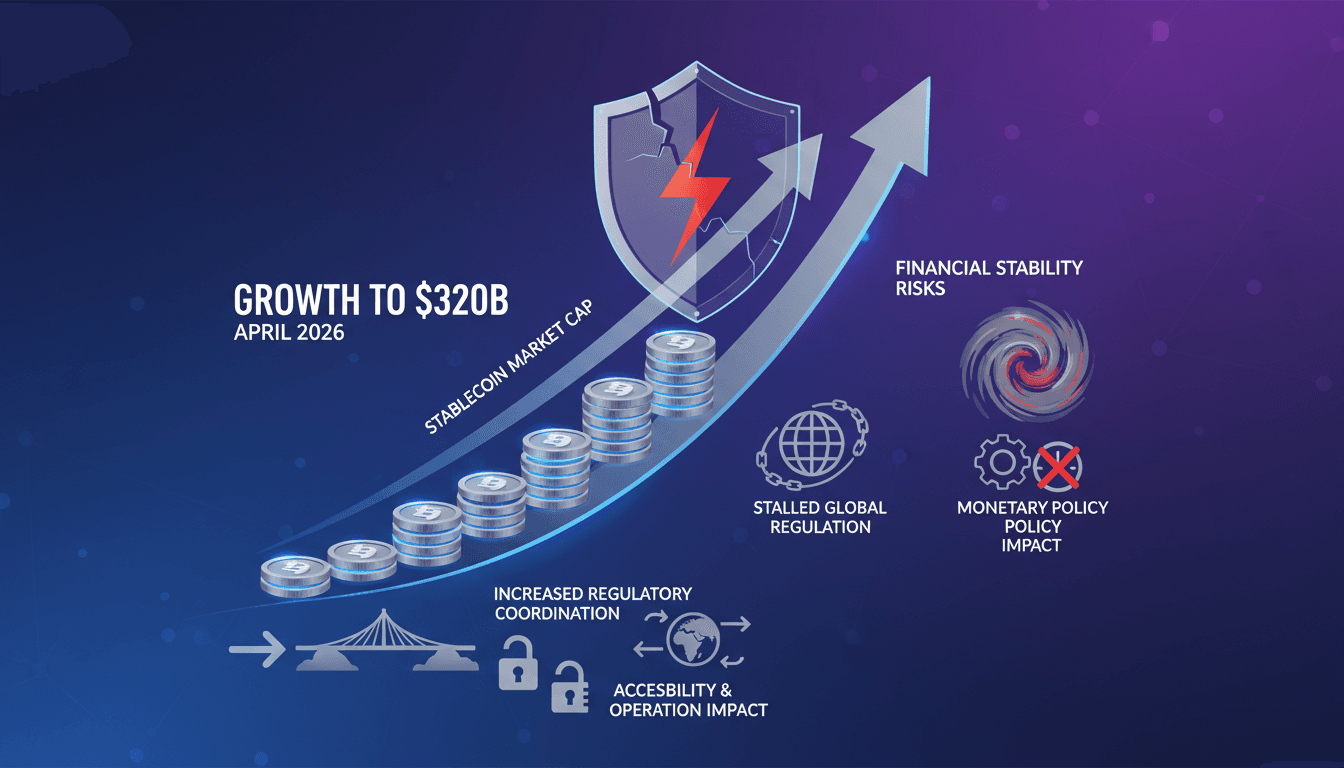
Here's what it means for you.
If you engage with stablecoins for transactions or investments, regulatory changes could impact your access and costs.
Why it matters
The stability of the $320 billion stablecoin market poses risks to global financial systems, potentially affecting monetary policy and consumer protections.
What happened (in 30 seconds)
- On April 20, 2026, BIS General Manager Pablo Hernández de Cos warned about the financial stability risks posed by the $320 billion stablecoin market during a speech in Tokyo.
- He highlighted concerns regarding stablecoins resembling securities, potential runs, and disruptions to monetary policy, urging for global regulatory coordination.
- The BIS's call for action comes amid stalled international rulemaking, raising fears of fragmentation and regulatory arbitrage.
The context you actually need
- Stablecoins, primarily USD-pegged tokens like USDT and USDC, make up 85% of the market and have surged in popularity for payments and decentralized finance (DeFi).
- Regulatory progress by the Bank for International Settlements (BIS) and Financial Stability Board (FSB) has stalled, increasing risks of fragmentation and impacts on emerging markets.
- De Cos's speech emphasized the need for reforms to mitigate risks associated with stablecoins, including access to central bank facilities and limits on interest payments.
What's really happening
The stablecoin market, currently valued at approximately $320.6 billion, has seen rapid growth due to increasing adoption for payments and DeFi applications. This growth has raised significant concerns among regulators, particularly the BIS, about the structural integrity of these financial instruments. Stablecoins are designed to maintain a stable value by pegging to fiat currencies, primarily the US dollar. However, their resemblance to securities rather than traditional money introduces complexities that could destabilize financial systems.
Pablo Hernández de Cos's speech at the Bank of Japan seminar highlighted several critical risks associated with stablecoins. One major concern is the potential for "runs," where a sudden demand for redemption could lead to liquidity crises. This risk is exacerbated by the nature of reserve assets backing these stablecoins, which may not be liquid enough to handle large-scale withdrawals. Additionally, the structural flaws in stablecoins can lead to deviations from their pegged value, undermining their intended purpose as stable mediums of exchange.
The BIS's call for global regulatory coordination is particularly pressing given the stalled progress in international rulemaking. Without a cohesive regulatory framework, there is a risk of fragmentation, where different jurisdictions adopt varying standards, leading to regulatory arbitrage. This could create an uneven playing field, particularly affecting emerging markets that rely on stablecoins for capital controls and monetary sovereignty.
Moreover, the BIS has raised alarms about the potential facilitation of illicit finance through stablecoins, which could undermine anti-money laundering (AML) and counter-terrorism financing (CFT) efforts. The lack of robust regulatory oversight could allow bad actors to exploit these digital assets, posing further risks to financial stability.
In response to these challenges, De Cos proposed several regulatory enhancements, including granting stablecoin issuers access to central bank facilities and imposing limits on interest payments. These measures aim to bolster the resilience of stablecoins and ensure they operate within a framework that prioritizes financial stability.
Who feels it first (and how)
- Investors in stablecoins: Potential changes in regulations could affect the value and accessibility of their investments.
- Financial institutions: Banks and payment processors may face new compliance requirements, impacting operational costs.
- Consumers using stablecoins: Individuals relying on stablecoins for remittances or payments may experience changes in transaction fees and availability.
- Emerging markets: Countries utilizing stablecoins for capital controls may see shifts in monetary policy and financial stability.
What to watch next
- Regulatory developments: Monitor announcements from the BIS and FSB regarding new frameworks for stablecoin regulation, as these will shape market dynamics.
- Market reactions: Watch for shifts in stablecoin usage and value in response to regulatory changes, particularly in regions heavily reliant on these assets.
- International cooperation: Keep an eye on global efforts to harmonize regulations, as successful coordination could mitigate fragmentation risks.
The stablecoin market is valued at approximately $320.6 billion.
Regulatory frameworks will evolve in response to BIS warnings, impacting stablecoin accessibility and usage.
The specific timeline and nature of regulatory changes remain uncertain, as international cooperation is still in progress.
Frequently Asked Questions
- Why it matters?
- The stability of the $320 billion stablecoin market poses risks to global financial systems, potentially affecting monetary policy and consumer protections.
- What happened (in 30 seconds)?
- On April 20, 2026, BIS General Manager Pablo Hernández de Cos warned about the financial stability risks posed by the $320 billion stablecoin market during a speech in Tokyo. He highlighted concerns regarding stablecoins resembling securities, potential runs, and disruptions to monetary policy, urging for global regulatory coordination. The BIS's call for action comes amid stalled international rulemaking, raising fears of fragmentation and regulatory arbitrage.
- What's really happening?
- The stablecoin market, currently valued at approximately $320.6 billion, has seen rapid growth due to increasing adoption for payments and DeFi applications. This growth has raised significant concerns among regulators, particularly the BIS, about the structural integrity of these financial instruments. Stablecoins are designed to maintain a stable value by pegging to fiat currencies, primarily the US dollar. However, their resemblance to securities rather than traditional money introduces compl
- Who feels it first (and how)?
- Investors in stablecoins: Potential changes in regulations could affect the value and accessibility of their investments. Financial institutions: Banks and payment processors may face new compliance requirements, impacting operational costs. Consumers using stablecoins: Individuals relying on stablecoins for remittances or payments may experience changes in transaction fees and availability. Emerging markets: Countries utilizing stablecoins for capital controls may see shifts in monetary policy
- What to watch next?
- Regulatory developments: Monitor announcements from the BIS and FSB regarding new frameworks for stablecoin regulation, as these will shape market dynamics. Market reactions: Watch for shifts in stablecoin usage and value in response to regulatory changes, particularly in regions heavily reliant on these assets. International cooperation: Keep an eye on global efforts to harmonize regulations, as successful coordination could mitigate fragmentation risks.
Covers Bitcoin plus altcoin news, market updates, and educational resources.
"Bitcoin.com provides news, market data, and guides focused on Bitcoin and the wider crypto industry."
— A47 Editor
BIS Official Flags $320 Billion Stablecoin Market as Financial Stability Concern
The Bank for International Settlements (BIS) has raised concerns regarding the $320 billion stablecoin market, particularly focusing on the financial stability risks associated with US dollar-pegged stablecoins like Tether's USDT. BIS General Manager...
News and analysis on Bitcoin, altcoins, and blockchain innovation.
"Bitcoinist delivers news and analysis on Bitcoin, altcoins, and blockchain innovation with a focus on market trends and industry updates."
— A47 Editor
Stablecoins Don’t Meet Core Requirements Of Money, BIS Says
The Bank for International Settlements (BIS) General Manager Pablo Hernández de Cos stated that existing stablecoins do not fulfill the essential requirements to be considered widely accepted payment instruments during a seminar in Tokyo. He emphasiz...
Covers blockchain, cryptocurrency news, project analysis, and market insights.
"Cointelegraph is a leading crypto-focused media outlet known for timely news, analysis, and educational content related to blockchain and digital assets."
— A47 Editor
BIS warns dollar stablecoins could strain banks and policy
The Bank for International Settlements (BIS) has issued a warning regarding the potential risks that US dollar stablecoins pose to financial stability, as articulated by general manager Pablo Hernández de Cos. The BIS emphasizes the need for stronger...