
UAE Minister Calls for Unconditional Reopening of Strait of Hormuz Amid Energy Crisis
Here's what it means for you.
If you're in the energy sector or rely on global oil markets, the reopening of the Strait of Hormuz could significantly impact prices and supply chains.
Why it matters
The Strait of Hormuz is a vital conduit for over 20% of the world's oil and LNG, making its accessibility crucial for global energy stability.
What happened (in 30 seconds)
- Dr. Sultan Al Jaber called for the unconditional reopening of the Strait of Hormuz amid a 40-day disruption in global energy flows.
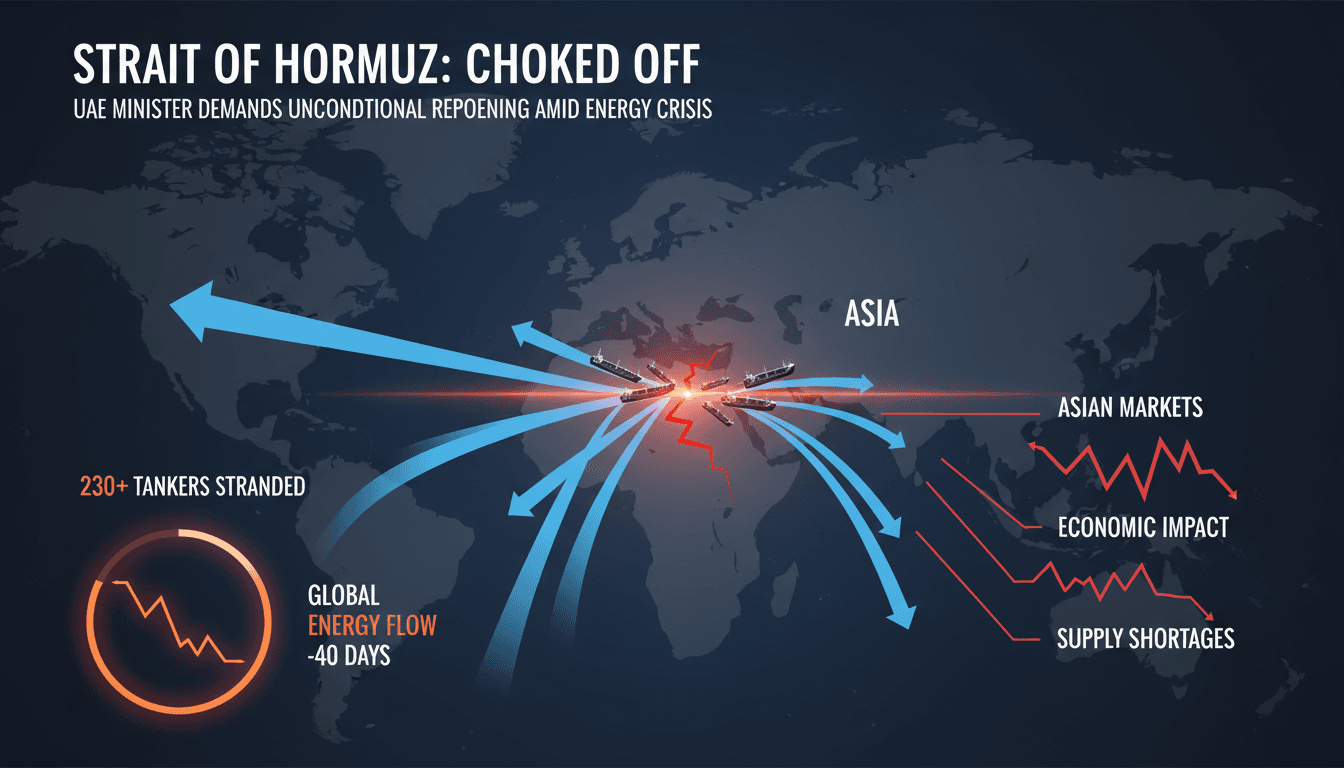
- Iran's conditional access to the strait has left nearly 230 oil tankers stranded, severely affecting Asian markets that depend on these shipments.
- Global oil prices surged, with Brent nearing $110 per barrel, as fears of prolonged closure escalate.
The context you actually need
- The Strait of Hormuz is bordered by Iran, Oman, and the UAE, and is crucial for the transit of oil and LNG, particularly for Asian economies.
- Recent conflicts involving Iran and Israel have led to military actions that disrupted energy flows, prompting Iran to impose restrictions on the strait.
- Dr. Al Jaber's statement highlights the legal framework under the UN Convention on the Law of the Sea, asserting that navigation should not be subject to coercion.
What's really happening
The Strait of Hormuz has become a focal point in the ongoing geopolitical tensions in the Middle East, particularly between Iran and Israel. Following a series of military engagements that began in late February 2026, Iranian forces targeted UAE energy infrastructure, leading to retaliatory strikes. By April 8, Iran had effectively closed the strait, demanding military coordination for passage, which contravenes international maritime law.
Dr. Sultan Al Jaber's LinkedIn post on April 9, 2026, was a direct response to these developments. He criticized Iran's conditional controls as coercive and called for the immediate and unconditional reopening of the strait. This statement was not just a diplomatic gesture but a critical appeal to avert further economic shocks that could ripple through global markets.
The implications of this closure are profound. With over 20% of the world's oil and LNG trade passing through the strait, the disruption has led to a backlog of nearly 230 loaded tankers, creating a significant supply gap. Asian markets, which receive about 80% of their shipments through this route, are particularly vulnerable. The energy crisis has already resulted in a record 33% surge in fuel prices in Dubai, affecting living costs and transportation expenses for residents.
The UAE's ADNOC has managed to sustain production levels despite these challenges, but the broader market remains volatile. The White House has labeled the closure "unacceptable," indicating potential diplomatic repercussions if the situation escalates further. Meanwhile, Iranian officials have maintained their stance on requiring coordination for passage, complicating the prospects for a swift resolution.
As the global energy landscape continues to shift, the call for an unconditional reopening of the Strait of Hormuz is not just about navigation rights; it's about stabilizing a critical artery for international trade and energy security.
Who feels it first (and how)
- Energy Traders: Immediate fluctuations in oil prices impact trading strategies and profit margins.
- Asian Markets: Countries relying on oil imports from the Gulf face rising costs and potential supply shortages.
- UAE Residents: Local consumers experience increased fuel prices and higher living costs due to supply chain disruptions.
What to watch next
- Iran's Response: Monitor if Iran will ease restrictions or continue to impose conditions on passage, as this will directly affect global oil supply.
- Global Oil Prices: Watch for fluctuations in Brent crude prices as market reactions to geopolitical developments unfold.
- Diplomatic Developments: Keep an eye on international diplomatic efforts aimed at resolving tensions in the region, as these could influence energy security.
The Strait of Hormuz is critical for global oil and LNG trade, with significant implications for energy prices.
Continued volatility in global oil markets as tensions persist and supply disruptions remain.
The timeline for a resolution to the Iranian restrictions and the potential for further military escalations in the region.
Frequently Asked Questions
- Why it matters?
- The Strait of Hormuz is a vital conduit for over 20% of the world's oil and LNG, making its accessibility crucial for global energy stability.
- What happened (in 30 seconds)?
- Dr. Sultan Al Jaber called for the unconditional reopening of the Strait of Hormuz amid a 40-day disruption in global energy flows. Iran's conditional access to the strait has left nearly 230 oil tankers stranded, severely affecting Asian markets that depend on these shipments. Global oil prices surged, with Brent nearing $110 per barrel, as fears of prolonged closure escalate.
- What's really happening?
- The Strait of Hormuz has become a focal point in the ongoing geopolitical tensions in the Middle East, particularly between Iran and Israel. Following a series of military engagements that began in late February 2026, Iranian forces targeted UAE energy infrastructure, leading to retaliatory strikes. By April 8, Iran had effectively closed the strait, demanding military coordination for passage, which contravenes international maritime law. Dr. Sultan Al Jaber's LinkedIn post on April 9, 2026, w
- Who feels it first (and how)?
- Energy Traders: Immediate fluctuations in oil prices impact trading strategies and profit margins. Asian Markets: Countries relying on oil imports from the Gulf face rising costs and potential supply shortages. UAE Residents: Local consumers experience increased fuel prices and higher living costs due to supply chain disruptions.
- What to watch next?
- Iran's Response: Monitor if Iran will ease restrictions or continue to impose conditions on passage, as this will directly affect global oil supply. Global Oil Prices: Watch for fluctuations in Brent crude prices as market reactions to geopolitical developments unfold. Diplomatic Developments: Keep an eye on international diplomatic efforts aimed at resolving tensions in the region, as these could influence energy security.
Arabic-language UAE newspaper coverage focused on domestic affairs, public institutions, business, society, and regional developments.
"Al Khaleej coverage generally reflects a mainstream UAE editorial lens with strong attention to public affairs, institutions, and regional developments."
— A47 Editor
سلطان الجابر: مضيق هرمز يجب أن يُفتح من دون شروط لسد الفجوة في الطاقة العالمية
Dr. Sultan Al Jaber, Minister of Industry and Advanced Technology and CEO of ADNOC, emphasized the necessity of opening the Strait of Hormuz unconditionally to address the global energy gap. This statement reflects the critical role of the strait in ...
UAE-based English-language newspaper covering regional politics, economics, and global affairs.
"The National reflects Emirati policy perspectives while maintaining international editorial standards."
— A47 Editor
Strait of Hormuz must open with 'no strings attached', says Dr Sultan Al Jaber
Dr. Sultan Al Jaber has emphasized the necessity for the Strait of Hormuz to remain open without conditions, underscoring its critical role in global oil transport and regional stability. This statement comes amid heightened tensions due to Iran's mi...