
Russian Urals Crude Prices Surge to 13-Year High Amid US-Iran Conflict
Here's what it means for you.
If you’re in the energy sector or rely on oil for transportation, expect rising costs and potential supply chain disruptions.
Why it matters
This price surge reflects geopolitical tensions that can significantly impact global oil markets and economic stability.
What happened (in 30 seconds)
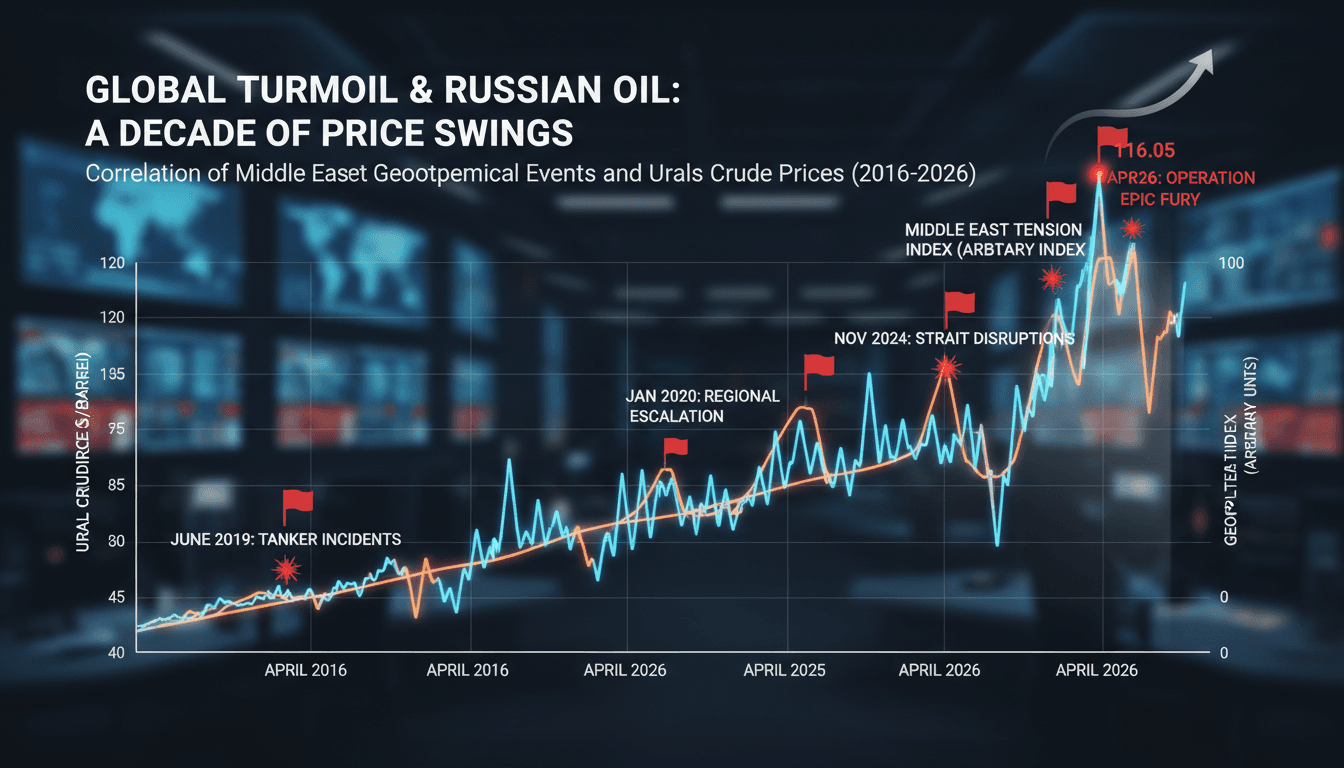
- On April 2, 2026, Russian Urals crude prices soared to $116.05 per barrel, the highest in 13 years.
- The increase was driven by the US-led Operation Epic Fury against Iran, disrupting about 20% of global oil supplies.
- Russia's fiscal position improved as the Urals commanded a $6.1 premium over Brent crude, providing unexpected revenue amid ongoing sanctions.
The context you actually need
- Operation Epic Fury, launched on February 28, 2026, targeted Iranian military infrastructure, escalating tensions in the Middle East.
- The Strait of Hormuz, a critical oil transit route, faced significant disruptions, pushing Brent crude prices above $110 per barrel.
- Russia's budget was based on a $59 per barrel projection, making the current prices a financial boon despite Western sanctions.
What's really happening
The recent spike in Russian Urals crude prices is a direct consequence of geopolitical instability in the Middle East, particularly due to the US-led Operation Epic Fury against Iran. This military campaign, which began on February 28, 2026, aimed to dismantle Iranian military capabilities, including naval forces and missile sites. As hostilities escalated, the Strait of Hormuz—a vital chokepoint for global oil transit—became increasingly threatened, leading to significant disruptions in oil supply.
With approximately one-fifth of the world's oil passing through this narrow strait, any conflict in the region has immediate repercussions on global oil prices. The surge in prices for Brent crude, which climbed above $110 per barrel, created a ripple effect, increasing demand for alternative oil supplies, including Russian Urals crude, which has been under sanctions since the Ukraine conflict began.
As a result, Russian Urals crude prices not only rose sharply but also commanded a premium over Brent crude, particularly in markets like India. The price differential narrowed significantly, indicating a shift in demand dynamics. The Urals crude's premium of $6.1 over Brent upon delivery to India, up from $3.9 just two weeks prior, underscores the changing landscape of oil markets where buyers are increasingly willing to pay more for non-Middle Eastern supplies.
This situation has provided Russia with a financial windfall, allowing it to alleviate some of the fiscal pressures stemming from its ongoing military expenditures related to the Ukraine conflict. With the 2026 budget initially projected at $59 per barrel, the current prices are advantageous, enabling Russia to secure enhanced revenues that surpass budget assumptions.
However, the implications extend beyond Russia. Countries dependent on oil imports, especially those in the Middle East and regions like Dubai, are beginning to feel the strain. The UAE, for instance, has seen its stock markets lose approximately $120 billion in value since late February 2026, reflecting investor concerns over energy supply chain disruptions and inflationary pressures.
Who feels it first (and how)
- Energy Sector Professionals: Increased operational costs and pricing pressures.
- Consumers in Oil-Dependent Regions: Higher fuel prices leading to increased transportation costs.
- Investors in UAE Markets: Losses due to stock market declines linked to energy supply disruptions.
- Global Oil Importers: Strained budgets and potential shifts in sourcing strategies.
What to watch next
- Global Oil Supply Levels: Monitor any further disruptions in the Strait of Hormuz and their impact on prices.
- Russian Fiscal Policy Changes: Watch for adjustments in Russia's budget or spending priorities in response to increased revenues.
- UAE Economic Indicators: Keep an eye on inflation rates and stock market performance as they react to ongoing geopolitical tensions.
Russian Urals crude prices have reached a 13-year high due to geopolitical tensions.
Continued volatility in global oil prices as conflicts persist in the Middle East.
The long-term impact on global energy supply chains and economic stability in oil-dependent regions.
Frequently Asked Questions
- Why it matters?
- This price surge reflects geopolitical tensions that can significantly impact global oil markets and economic stability.
- What happened (in 30 seconds)?
- On April 2, 2026, Russian Urals crude prices soared to $116.05 per barrel, the highest in 13 years. The increase was driven by the US-led Operation Epic Fury against Iran, disrupting about 20% of global oil supplies. Russia's fiscal position improved as the Urals commanded a $6.1 premium over Brent crude, providing unexpected revenue amid ongoing sanctions.
- What's really happening?
- The recent spike in Russian Urals crude prices is a direct consequence of geopolitical instability in the Middle East, particularly due to the US-led Operation Epic Fury against Iran. This military campaign, which began on February 28, 2026, aimed to dismantle Iranian military capabilities, including naval forces and missile sites. As hostilities escalated, the Strait of Hormuz—a vital chokepoint for global oil transit—became increasingly threatened, leading to significant disruptions in oil sup
- Who feels it first (and how)?
- Energy Sector Professionals: Increased operational costs and pricing pressures. Consumers in Oil-Dependent Regions: Higher fuel prices leading to increased transportation costs. Investors in UAE Markets: Losses due to stock market declines linked to energy supply disruptions. Global Oil Importers: Strained budgets and potential shifts in sourcing strategies.
- What to watch next?
- Global Oil Supply Levels: Monitor any further disruptions in the Strait of Hormuz and their impact on prices. Russian Fiscal Policy Changes: Watch for adjustments in Russia's budget or spending priorities in response to increased revenues. UAE Economic Indicators: Keep an eye on inflation rates and stock market performance as they react to ongoing geopolitical tensions.
Macro commentary, policy analysis, growth/inflation themes, and global outlooks.
"Contextual macro coverage that complements day-to-day market headlines."
— A47 Editor
Russian crude prices hit 13-year high amid Iran-linked oil rally
Russian crude oil prices have surged to a 13-year high, driven by a rally linked to the ongoing conflict in Iran, which has significantly impacted global oil supply dynamics. This increase reflects heightened market volatility amid geopolitical tensi...
Global markets, investing, and macroeconomics from a premier financial newsroom.
"Bloomberg is respected for in-depth financial reporting and data-driven analysis."
— A47 Editor
War in Iran Drives Russian Oil Prices to a 13-Year High
Russian crude oil prices have surged to a 13-year high, driven by a global oil rally linked to the ongoing conflict in Iran. This increase reflects Moscow's strategic positioning in the oil market amid geopolitical tensions.