
European Banking Consortium Chooses Fireblocks for Euro Stablecoin Initiative
Here's what it means for you.
If you're involved in finance or investment, this new euro stablecoin could reshape how transactions are conducted in Europe.
Why it matters
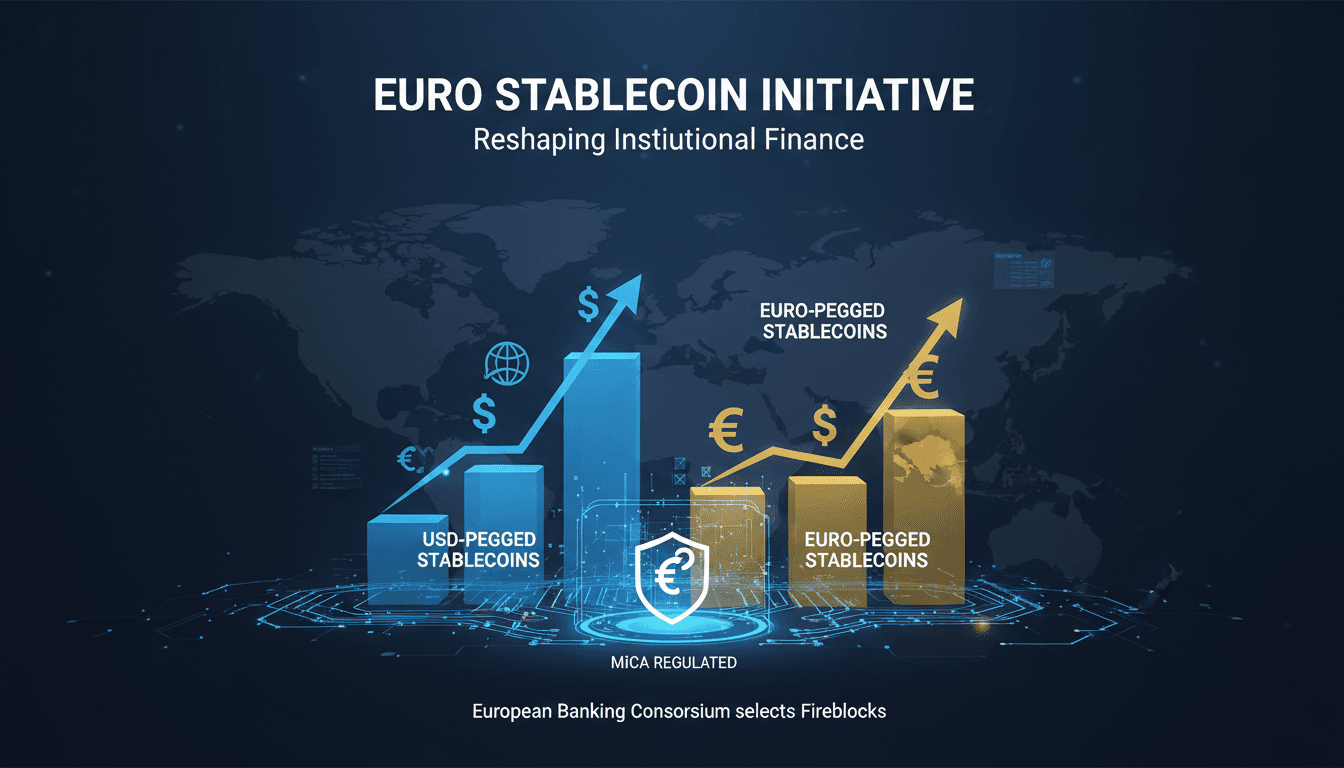
This initiative represents a significant shift in the European financial landscape, aiming to reduce reliance on USD-backed stablecoins.
What happened (in 30 seconds)
- On April 21, 2026, a consortium of 12 European banks led by Qivalis announced the selection of Fireblocks for a euro stablecoin project.
- The project aims to comply with the EU's Markets in Crypto-Assets (MiCA) regulation, targeting institutional use cases.
- A launch is planned for the second half of 2026, pending approval from De Nederlandsche Bank.
The context you actually need
- The euro stablecoin project is a response to the dominance of USD-backed stablecoins, which make up 99% of the $320 billion global market.
- Qivalis, formed in late 2025, is a joint venture of European banks, aiming to create a regulated framework for stablecoins in the EU.
- The Bank for International Settlements has warned about the risks posed by foreign-currency stablecoins, emphasizing the need for a euro-denominated alternative.
What's really happening
The selection of Fireblocks by the Qivalis consortium marks a pivotal moment in the evolution of stablecoins within Europe. As the global stablecoin market reaches a staggering $320 billion, with USD-backed tokens dominating, European banks are taking proactive steps to establish a euro-backed alternative. This initiative is not just about creating a new financial product; it’s about reshaping the landscape of digital finance in Europe.
The consortium, which includes major players like BNP Paribas and ING, is structured as an electronic money institution under the supervision of De Nederlandsche Bank. This regulatory framework is crucial, as it ensures compliance with the EU's Markets in Crypto-Assets (MiCA) regulation, which aims to provide a safe and transparent environment for digital assets. By adhering to these regulations, the consortium seeks to mitigate risks associated with stablecoins, particularly those tied to foreign currencies.
The decision to partner with Fireblocks is strategic. Fireblocks will provide the necessary infrastructure for tokenization, wallet management, and compliance tools, including identity verification and sanctions screening. This infrastructure is essential for ensuring that the euro stablecoin can be used effectively for institutional settlement and treasury operations, as well as for tokenized asset applications.
The implications of this project extend beyond just the banks involved. By offering a euro-denominated stablecoin, European institutions can reduce their reliance on USD-backed alternatives, which have been criticized for their potential to destabilize local markets and monetary policy. The Bank for International Settlements has raised concerns about the risks posed by foreign-currency stablecoins, making this initiative a timely response to those warnings.
As the project moves toward its targeted launch in the second half of 2026, it will be closely watched by financial institutions and regulators alike. The success of this euro stablecoin could set a precedent for other regions looking to establish their own regulated digital currencies, further influencing the global financial ecosystem.
Who feels it first (and how)
- European banks: They will directly benefit from a regulated framework for stablecoins, enhancing their operational capabilities.
- Institutional investors: They will gain access to a euro-backed stablecoin, providing a safer alternative for transactions.
- Regulators: They will have a clearer framework to oversee digital assets, potentially influencing future regulations.
What to watch next
- Regulatory approval: The timeline for De Nederlandsche Bank's approval will be crucial in determining the launch date and operational scope of the stablecoin.
- Market response: Watch how existing USD-backed stablecoins react to the announcement and whether they adjust their strategies in response.
- Adoption rates: Monitor the uptake of the euro stablecoin among institutional users once launched, as this will indicate its success and impact on the market.
The consortium of banks is committed to launching a euro stablecoin compliant with MiCA regulations.
The euro stablecoin will attract institutional interest, potentially reshaping transaction dynamics in Europe.
The long-term impact on USD-backed stablecoins and their market share remains uncertain.
Frequently Asked Questions
- Why it matters?
- This initiative represents a significant shift in the European financial landscape, aiming to reduce reliance on USD-backed stablecoins.
- What happened (in 30 seconds)?
- On April 21, 2026, a consortium of 12 European banks led by Qivalis announced the selection of Fireblocks for a euro stablecoin project. The project aims to comply with the EU's Markets in Crypto-Assets (MiCA) regulation, targeting institutional use cases. A launch is planned for the second half of 2026, pending approval from De Nederlandsche Bank.
- What's really happening?
- The selection of Fireblocks by the Qivalis consortium marks a pivotal moment in the evolution of stablecoins within Europe. As the global stablecoin market reaches a staggering $320 billion, with USD-backed tokens dominating, European banks are taking proactive steps to establish a euro-backed alternative. This initiative is not just about creating a new financial product; it’s about reshaping the landscape of digital finance in Europe. The consortium, which includes major players like BNP Pari
- Who feels it first (and how)?
- European banks: They will directly benefit from a regulated framework for stablecoins, enhancing their operational capabilities. Institutional investors: They will gain access to a euro-backed stablecoin, providing a safer alternative for transactions. Regulators: They will have a clearer framework to oversee digital assets, potentially influencing future regulations.
- What to watch next?
- Regulatory approval: The timeline for De Nederlandsche Bank's approval will be crucial in determining the launch date and operational scope of the stablecoin. Market response: Watch how existing USD-backed stablecoins react to the announcement and whether they adjust their strategies in response. Adoption rates: Monitor the uptake of the euro stablecoin among institutional users once launched, as this will indicate its success and impact on the market.
Real-time updates, analysis, and reports on the blockchain and cryptocurrency sectors.
"Crypto News delivers real-time updates, analysis, and reports on the blockchain and cryptocurrency sectors."
— A47 Editor
European banks pick Fireblocks for regulated euro stablecoin project
Twelve European banks have selected Fireblocks to develop a regulated euro stablecoin, compliant with the Markets in Crypto-Assets (MiCA) framework, with plans for a launch in the latter half of 2026. This initiative is part of a broader effort to en...
Covers blockchain, cryptocurrency news, project analysis, and market insights.
"Cointelegraph is a leading crypto-focused media outlet known for timely news, analysis, and educational content related to blockchain and digital assets."
— A47 Editor
European banks tap Fireblocks for MiCA-compliant euro stablecoin
A consortium of twelve European banks, led by Qivalis, has partnered with Fireblocks to develop a regulated euro stablecoin compliant with the Markets in Crypto-Assets (MiCA) framework, with plans for a launch in the latter half of 2026.