
Trump Administration Denies Aluminum Tariff Relief to Automakers Amid Supply Crisis
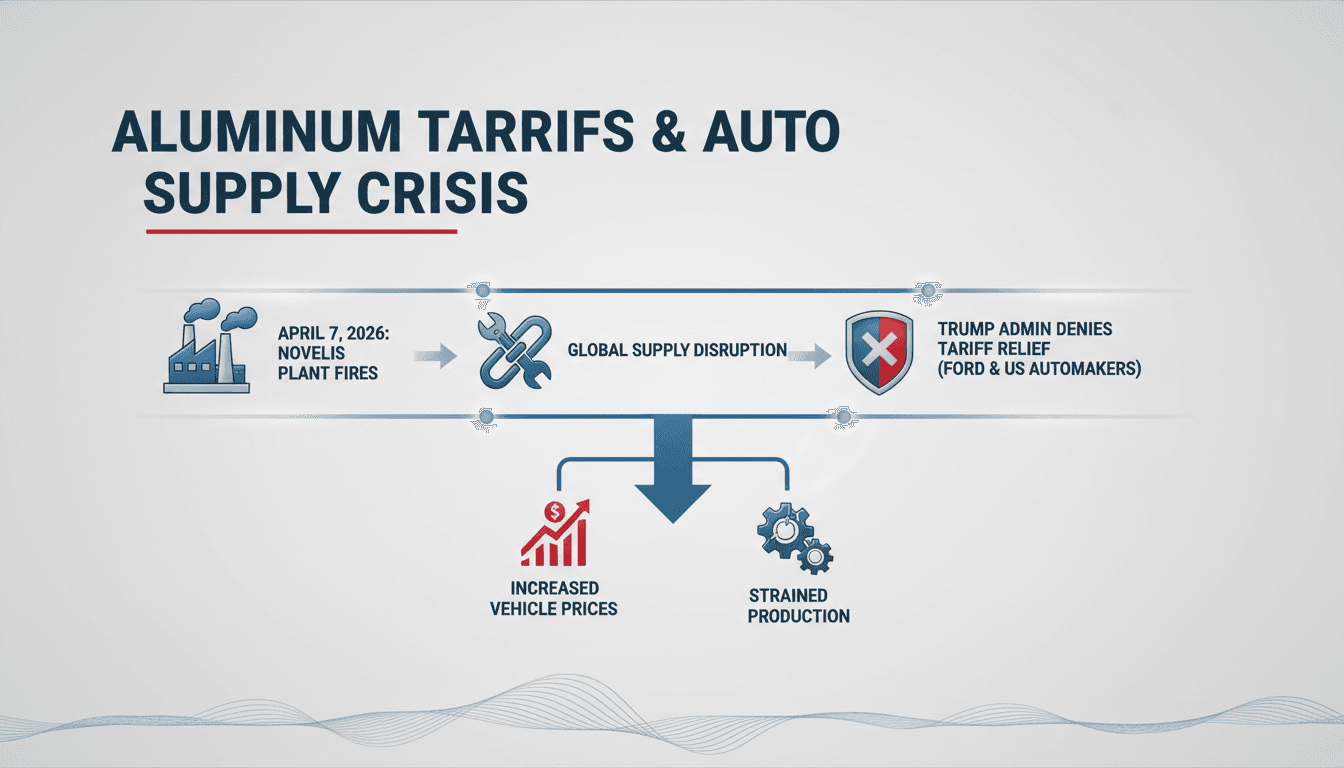
Here's what it means for you.
If you rely on the automotive industry, especially for vehicles like the Ford F-150, expect potential price increases and supply chain disruptions.
Why it matters
The denial of tariff relief amid aluminum shortages threatens the production capabilities of major U.S. automakers, impacting vehicle availability and pricing.
What happened (in 30 seconds)
- The Trump administration denied requests from Ford and other automakers for exemptions from aluminum tariffs as of April 7, 2026.
- Severe supply shortages arose from two fires at the Novelis Oswego aluminum plant, disrupting production of key vehicles.
- Ford disclosed potential profit impacts of up to $2 billion due to these production halts.
The context you actually need
- Aluminum tariffs were reinstated by the Trump administration to bolster domestic production and reduce reliance on foreign suppliers, particularly Canada.
- Novelis's Oswego plant is the largest U.S. supplier of automotive-grade aluminum sheets, accounting for approximately 40% of the market.
- Two catastrophic fires in late 2025 halted production, leading to a force majeure declaration and significant financial implications for automakers.
What's really happening
The recent denial of tariff exemptions by the Trump administration highlights a complex interplay between trade policy and domestic manufacturing capabilities. The administration's reinstatement of Section 232 tariffs on aluminum imports was initially designed to protect U.S. industries and reduce dependency on foreign aluminum, particularly from Canada. However, this policy has backfired in the face of unforeseen disruptions at Novelis's Oswego plant, which is critical for supplying automotive-grade aluminum.
The two fires at the Novelis facility in September and November 2025 not only halted production but also exposed the vulnerabilities in the supply chain for aluminum-intensive vehicles like the Ford F-150. With Novelis accounting for about 40% of the U.S. market for automotive aluminum sheets, the fires created an immediate and severe supply shortage. Ford's response included formal requests for temporary tariff relief to mitigate the impact of these shortages, but the administration's rebuff indicates a prioritization of long-term policy goals over short-term relief for manufacturers.
The financial ramifications for Ford are significant, with estimates suggesting a potential profit hit of up to $2 billion across 2025-2026. This situation is exacerbated by the sustained high premiums on U.S. aluminum, which have prompted discussions among automakers about diversifying their supply chains. The irony is palpable: tariffs intended to protect U.S. manufacturing are now compounding domestic shortages, leading to increased costs and potential production cuts.
As the situation unfolds, the broader market implications could include sustained high prices for aluminum and aluminum-intensive products, affecting not only automakers but also consumers. The ongoing discussions between automakers and the administration reflect a critical juncture where policy decisions will have lasting impacts on the automotive industry and its supply chains.
Who feels it first (and how)
- Automakers: Companies like Ford face production delays and increased costs, impacting profitability.
- Consumers: Buyers of aluminum-intensive vehicles may experience higher prices and limited availability.
- Suppliers: Companies reliant on aluminum supply chains will face disruptions and potential financial strain.
- Investors: Stakeholders in the automotive sector will monitor stock volatility and production forecasts closely.
What to watch next
- Production updates from Novelis: Monitoring the timeline for repairs and resumption of operations at the Oswego plant will be crucial.
- Tariff policy discussions: Any shifts in the administration's stance on tariffs could significantly impact supply chains and pricing.
- Market reactions: Watch for stock market responses from automakers and suppliers as production forecasts are adjusted.
The Novelis plant fires have severely disrupted aluminum supply for U.S. automakers.
Automakers will continue to lobby for tariff relief as production challenges persist.
The long-term impact of these disruptions on vehicle pricing and availability remains uncertain.
Frequently Asked Questions
- Why it matters?
- The denial of tariff relief amid aluminum shortages threatens the production capabilities of major U.S. automakers, impacting vehicle availability and pricing.
- What happened (in 30 seconds)?
- The Trump administration denied requests from Ford and other automakers for exemptions from aluminum tariffs as of April 7, 2026. Severe supply shortages arose from two fires at the Novelis Oswego aluminum plant, disrupting production of key vehicles. Ford disclosed potential profit impacts of up to $2 billion due to these production halts.
- What's really happening?
- The recent denial of tariff exemptions by the Trump administration highlights a complex interplay between trade policy and domestic manufacturing capabilities. The administration's reinstatement of Section 232 tariffs on aluminum imports was initially designed to protect U.S. industries and reduce dependency on foreign aluminum, particularly from Canada. However, this policy has backfired in the face of unforeseen disruptions at Novelis's Oswego plant, which is critical for supplying automotive-
- Who feels it first (and how)?
- Automakers: Companies like Ford face production delays and increased costs, impacting profitability. Consumers: Buyers of aluminum-intensive vehicles may experience higher prices and limited availability. Suppliers: Companies reliant on aluminum supply chains will face disruptions and potential financial strain. Investors: Stakeholders in the automotive sector will monitor stock volatility and production forecasts closely.
- What to watch next?
- Production updates from Novelis: Monitoring the timeline for repairs and resumption of operations at the Oswego plant will be crucial. Tariff policy discussions: Any shifts in the administration's stance on tariffs could significantly impact supply chains and pricing. Market reactions: Watch for stock market responses from automakers and suppliers as production forecasts are adjusted.
Market-moving headlines impacting equities, bonds, and related risk assets.
"Real-time catalysts and volatility drivers across indices and sectors."
— A47 Editor
Automakers did not strongly seek aluminium tariff relief, White House official says
A White House official stated that automakers did not strongly pursue relief from aluminium tariffs, indicating a lack of urgency or consensus among the industry regarding this issue. This remark comes amid ongoing discussions about trade policies af...
Market-moving headlines impacting equities, bonds, and related risk assets.
"Real-time catalysts and volatility drivers across indices and sectors."
— A47 Editor
Trump administration rejects Ford requests for tariff relief- WSJ
The Trump administration has rejected Ford's requests for tariff relief, a decision that could exacerbate the automaker's financial struggles amid ongoing challenges in the electric vehicle market and supply chain disruptions.
Social/economic commentary and analysis relevant to business and markets.
"WSJ blends data-driven economic insight with commentary on policy and society."
— A47 Editor
The Trump administration has rebuffed requests from Ford and other automakers for aluminum tariff relief after fires at a U.S. factory created supply bottlenecks, people familiar with the matter say
The Trump administration has denied requests from Ford and other automakers for relief from aluminum tariffs following supply disruptions caused by fires at a U.S. factory. This decision has left the automotive industry struggling to secure necessary...
Insights and news on social issues, policy, and political movements across the United States.
"The Wall Street Journal is known for its deep political coverage, especially at the intersection of policy, regulation, and social dynamics."
— A47 Editor
The Trump administration has rebuffed requests from Ford and other automakers for aluminum tariff relief after fires at a U.S. factory created supply bottlenecks, people familiar with the matter say
The Trump administration has denied requests from Ford and other automakers for relief from aluminum tariffs following supply disruptions caused by fires at a U.S. factory. This decision has left the automotive industry struggling to secure necessary...