
Trump Announces Transit of 34 Ships Through Strait of Hormuz Amid Iran Blockade
Here's what it means for you.
If you’re in the energy sector or rely on global trade, prepare for potential disruptions and rising costs.
Why it matters
The U.S. blockade of Iranian ports could significantly impact global oil prices and trade routes, affecting economies worldwide.
What happened (in 30 seconds)
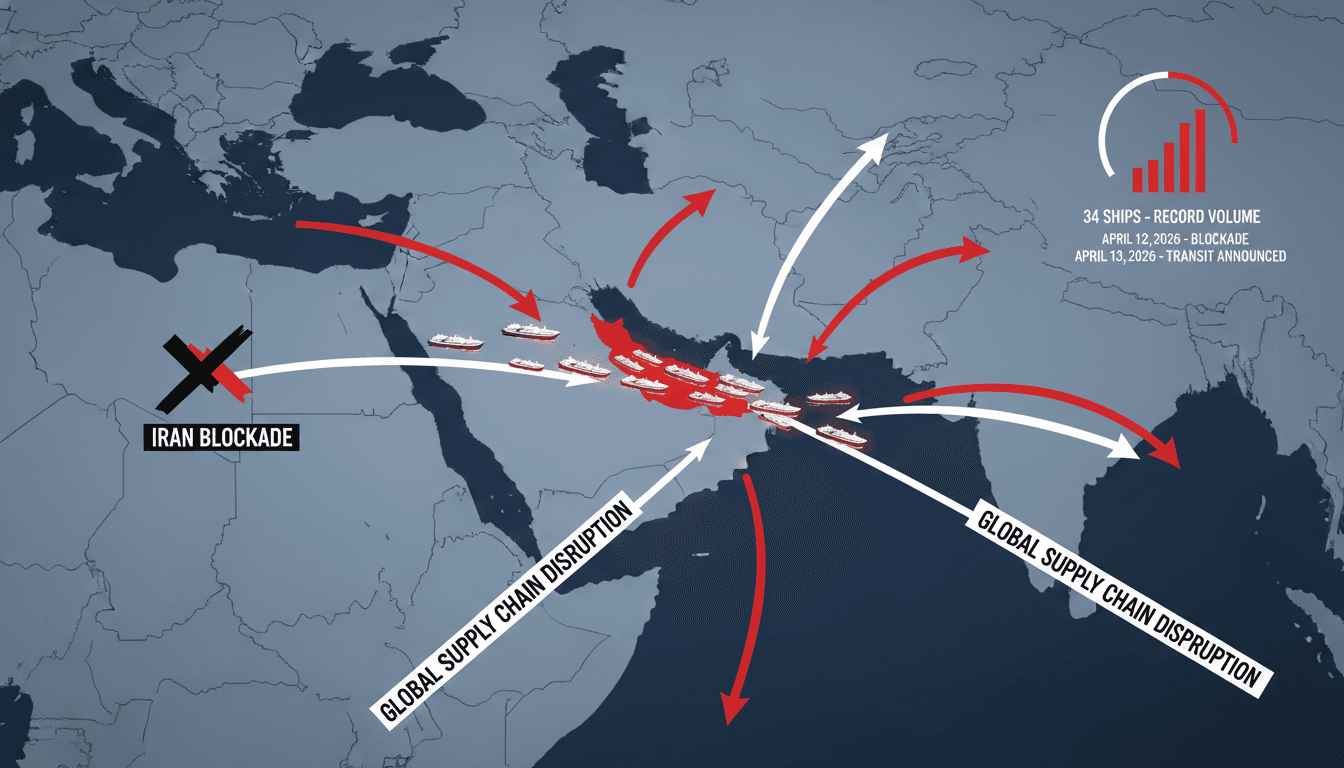
- On April 12, 2026, President Trump announced the transit of 34 ships through the Strait of Hormuz, the highest volume since maritime restrictions began.
- A U.S. naval blockade of Iranian ports commenced on April 13, following failed nuclear negotiations in Pakistan.
- Iran's response includes warnings of escalating tensions, while Saudi Arabia urges the U.S. to lift the blockade to prevent further regional instability.
The context you actually need
- The Strait of Hormuz is a critical chokepoint for global oil shipments, with approximately 20% of the world's oil passing through it.
- Iran's toll demands for passage through the strait initiated the crisis, reflecting escalating tensions over its nuclear program and U.S. sanctions.
- The blockade's enforcement aims to pressure Iran into renouncing its nuclear ambitions, but risks retaliation and broader conflict in the region.
What's really happening
The recent announcement by President Trump regarding the transit of 34 ships through the Strait of Hormuz marks a pivotal moment in the ongoing geopolitical tensions between the U.S. and Iran. This event is not merely a logistical maneuver; it is a calculated response to Iran's recent actions that have threatened maritime security and global oil supply chains.
Since February 28, 2026, when Iran began restricting traffic through the strait and demanding tolls for passage, the situation has escalated. The U.S. has responded with a naval blockade aimed at Iranian ports, which commenced on April 13, 2026. This blockade is designed to exert economic pressure on Iran, compelling it to abandon its nuclear weapons program. The U.S. demands a permanent renunciation of nuclear weapons, while Iran remains resistant, leading to a standoff that has significant implications for global markets.
The blockade allows for neutral transits, which means that while Iranian coastal traffic is restricted, other nations can still navigate the strait. However, the blockade's enforcement has already led to immediate consequences, including a surge in oil prices, with Brent crude exceeding $102 per barrel. This price increase reflects market fears over supply disruptions and the potential for further escalation in the region.
The U.S. administration's strategy hinges on leveraging economic sanctions and military presence to isolate Iran. However, this approach carries risks, as Iran has warned of potential retaliation, which could destabilize not only the Strait of Hormuz but also the Bab al-Mandeb Strait, another critical maritime route. The situation is further complicated by the involvement of Pakistan as a mediator in the stalled nuclear negotiations, indicating that regional dynamics are at play.
As the U.S. navigates this complex geopolitical landscape, the implications for global trade and energy markets are profound. Companies reliant on oil imports or exports may face increased costs and supply chain disruptions. Additionally, the ongoing tensions could lead to a reevaluation of energy strategies among nations dependent on Middle Eastern oil, prompting shifts towards alternative energy sources or increased domestic production.
Who feels it first (and how)
- Energy companies: Increased operational costs and potential supply chain disruptions.
- Shipping industries: Altered routes and heightened insurance costs due to increased risk.
- Consumers: Rising fuel prices impacting transportation and goods costs.
- Investors: Volatility in stock markets, particularly in energy sectors.
What to watch next
- Oil price fluctuations: Monitor Brent crude prices as they may indicate market reactions to ongoing tensions.
- Diplomatic negotiations: Watch for developments in U.S.-Iran talks mediated by Pakistan, as breakthroughs could alter the blockade's status.
- Regional military movements: Keep an eye on U.S. and Iranian military activities in the Gulf, which could signal escalation or de-escalation.
The U.S. has implemented a naval blockade of Iranian ports.
Oil prices will continue to rise due to supply chain concerns and geopolitical tensions.
The long-term effectiveness of the blockade in achieving U.S. diplomatic goals with Iran.
Frequently Asked Questions
- Why it matters?
- The U.S. blockade of Iranian ports could significantly impact global oil prices and trade routes, affecting economies worldwide.
- What happened (in 30 seconds)?
- On April 12, 2026, President Trump announced the transit of 34 ships through the Strait of Hormuz, the highest volume since maritime restrictions began. A U.S. naval blockade of Iranian ports commenced on April 13, following failed nuclear negotiations in Pakistan. Iran's response includes warnings of escalating tensions, while Saudi Arabia urges the U.S. to lift the blockade to prevent further regional instability.
- What's really happening?
- The recent announcement by President Trump regarding the transit of 34 ships through the Strait of Hormuz marks a pivotal moment in the ongoing geopolitical tensions between the U.S. and Iran. This event is not merely a logistical maneuver; it is a calculated response to Iran's recent actions that have threatened maritime security and global oil supply chains. Since February 28, 2026, when Iran began restricting traffic through the strait and demanding tolls for passage, the situation has esca
- Who feels it first (and how)?
- Energy companies: Increased operational costs and potential supply chain disruptions. Shipping industries: Altered routes and heightened insurance costs due to increased risk. Consumers: Rising fuel prices impacting transportation and goods costs. Investors: Volatility in stock markets, particularly in energy sectors.
- What to watch next?
- Oil price fluctuations: Monitor Brent crude prices as they may indicate market reactions to ongoing tensions. Diplomatic negotiations: Watch for developments in U.S.-Iran talks mediated by Pakistan, as breakthroughs could alter the blockade's status. Regional military movements: Keep an eye on U.S. and Iranian military activities in the Gulf, which could signal escalation or de-escalation.
Arabic-language coverage of political affairs and current events.
"Okaz political coverage typically follows mainstream Saudi framing on national and regional affairs."
— A47 Editor
أعلن مرور 34 سفينة.. ترمب: تلقيت اتصالات لإبرام صفقة مع إيران
U.S. President Donald Trump announced that 34 ships passed through the Strait of Hormuz, marking the highest number recorded since what he termed the 'foolish closure' of the shipping lane. He emphasized that the main point of contention with Iran is...
Arabic-language coverage of international news and geopolitics.
"RT Arabic is a Russian state-funded outlet often criticized for promoting Kremlin-aligned narratives."
— A47 Editor
ترامب: 34 سفينة عبرت مضيق هرمز أمس وهذا أكبر عدد منذ بدء الإغلاق
U.S. President Donald Trump announced that 34 ships crossed the Strait of Hormuz yesterday, marking the highest number since the onset of the closure. He praised his vice president's performance in negotiations and reiterated that Iran will not acqui...
Arabic-language UAE newspaper coverage focused on domestic affairs, public institutions, business, society, and regional developments.
"Al Khaleej coverage generally reflects a mainstream UAE editorial lens with strong attention to public affairs, institutions, and regional developments."
— A47 Editor
ترامب: 34 سفينة عبرت من مضيق هرمز أمس
U.S. President Donald Trump announced on Truth Social that 34 ships passed through the Strait of Hormuz on Sunday. The U.S. military threat to control shipping movements in and out of Iranian ports took effect on Monday, following Iran's effective cl...
Arabic-language UAE newspaper coverage focused on domestic affairs, public institutions, business, society, and regional developments.
"Al Khaleej coverage generally reflects a mainstream UAE editorial lens with strong attention to public affairs, institutions, and regional developments."
— A47 Editor
ترامب محذراً إيران: الإبادة الفورية لسفنكم إذا اقتربت من حصار «هرمز»
U.S. President Donald Trump issued a stern warning to Iran, stating that any Iranian vessels approaching the blockade in the Strait of Hormuz would face immediate destruction. This statement underscores the heightened tensions between the U.S. and Ir...