
Nafis Program Announces Gradual Salary Support Reduction for Emiratis in Private Sector
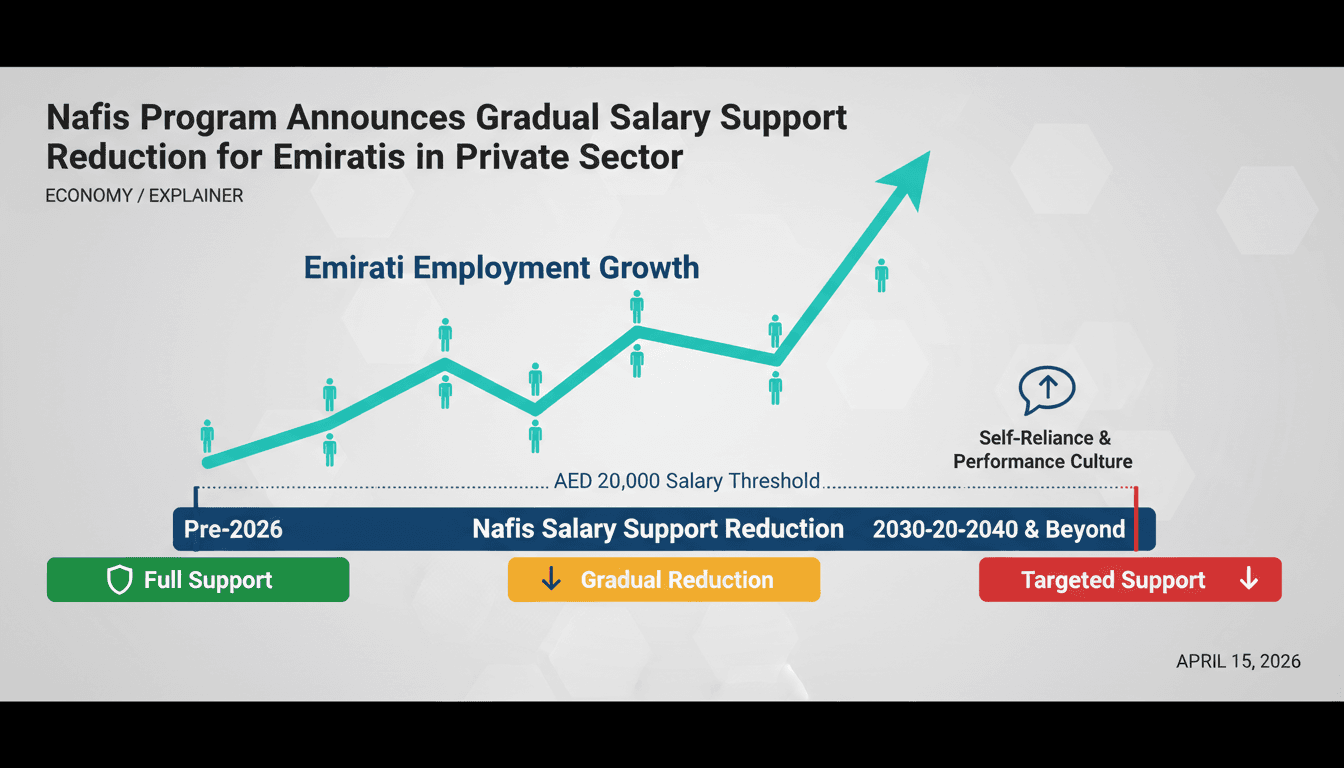
Here's what it means for you.
If you're an Emirati professional in the private sector, expect a gradual shift in salary support that could impact your financial planning.
Why it matters
This policy aims to foster professional independence among Emiratis while aligning with evolving labor market dynamics.
What happened (in 30 seconds)
- On April 15, 2026, the Nafis program clarified a phased reduction in salary support for UAE nationals in the private sector.
- Support decreases by AED 500 every six months once salaries exceed AED 20,000, emphasizing a transition to self-reliance.
- The program was extended to 2040, responding to public inquiries and introducing new benefits while refining existing salary mechanisms.
The context you actually need
- Nafis launched in September 2021 with a goal to integrate 75,000 Emiratis into private sector roles, backed by a AED 24 billion budget.
- By early 2026, the program exceeded its targets, employing over 176,000 Emiratis, with 152,000 actively in private jobs.
- The recent adjustments are part of a broader strategy to promote a performance-driven culture and align with minimum wage laws and Emiratisation quotas.
What's really happening
The Nafis program, initiated under the UAE's 'Projects of the 50', was designed to enhance the participation of Emiratis in the private sector through various financial supports. Initially, it provided salary top-ups of up to AED 8,000 for new hires, which significantly boosted employment numbers. By early 2026, the program had successfully integrated over 176,000 Emiratis into the workforce, far exceeding its original target.
However, the recent announcement regarding the gradual reduction of salary support is a strategic move aimed at fostering long-term professional independence among Emiratis. The phased reduction, which starts once an Emirati's salary exceeds AED 20,000, is set at AED 500 every six months. This approach is designed to encourage Emiratis to seek higher salaries and career advancement without relying on government support as a permanent fixture.
The rationale behind this adjustment is multifaceted. First, it aligns with the UAE's broader labor market evolution, including the introduction of minimum wage laws and the need for a sustainable workforce. By incentivizing higher salaries, the government aims to cultivate a culture of performance and self-reliance among Emiratis, which is crucial for the UAE's economic diversification goals under Vision 2040.
Moreover, the extension of the Nafis program to 2040, coupled with new benefits such as unlimited child allowances, indicates a commitment to long-term support for Emiratis. However, the adjustments to salary support mechanisms reflect a necessary shift towards ensuring that these benefits do not become a crutch but rather a stepping stone to professional growth.
The government has also taken steps to ensure compliance with these new policies, including prosecuting companies that manipulate salaries to circumvent the support structure. This enforcement is critical to maintaining the integrity of the program and ensuring that it achieves its intended outcomes.
In summary, while the reduction in salary support may initially seem like a setback, it is part of a larger strategy to empower Emiratis in the private sector, encouraging them to thrive independently and contribute to the UAE's economic landscape.
Who feels it first (and how)
- Emirati professionals earning above AED 20,000 in the private sector will experience direct salary support reductions.
- Private sector employers may need to adjust salary structures to retain talent and comply with new performance incentives.
- Training and development sectors will see increased demand as companies invest in upskilling Emiratis to meet performance expectations.
What to watch next
- Salary growth trends: Monitor how private sector salaries evolve in response to the Nafis adjustments, as higher salaries could indicate a successful transition to self-reliance.
- Employment rates among Emiratis: Keep an eye on the employment statistics to see if the program continues to attract Emiratis into the private sector despite the support reductions.
- Compliance enforcement actions: Watch for any government actions against companies that fail to adhere to the new salary support guidelines, as this will impact employer behavior.
The Nafis program has successfully employed over 176,000 Emiratis in the private sector.
The phased reduction in salary support will encourage higher salary offers from employers.
The long-term impact on Emirati employment rates in the private sector as salary support decreases.
Frequently Asked Questions
- Why it matters?
- This policy aims to foster professional independence among Emiratis while aligning with evolving labor market dynamics.
- What happened (in 30 seconds)?
- On April 15, 2026, the Nafis program clarified a phased reduction in salary support for UAE nationals in the private sector. Support decreases by AED 500 every six months once salaries exceed AED 20,000, emphasizing a transition to self-reliance. The program was extended to 2040, responding to public inquiries and introducing new benefits while refining existing salary mechanisms.
- What's really happening?
- The Nafis program, initiated under the UAE's 'Projects of the 50', was designed to enhance the participation of Emiratis in the private sector through various financial supports. Initially, it provided salary top-ups of up to AED 8,000 for new hires, which significantly boosted employment numbers. By early 2026, the program had successfully integrated over 176,000 Emiratis into the workforce, far exceeding its original target. However, the recent announcement regarding the gradual reduction of
- Who feels it first (and how)?
- Emirati professionals earning above AED 20,000 in the private sector will experience direct salary support reductions. Private sector employers may need to adjust salary structures to retain talent and comply with new performance incentives. Training and development sectors will see increased demand as companies invest in upskilling Emiratis to meet performance expectations.
- What to watch next?
- Salary growth trends: Monitor how private sector salaries evolve in response to the Nafis adjustments, as higher salaries could indicate a successful transition to self-reliance. Employment rates among Emiratis: Keep an eye on the employment statistics to see if the program continues to attract Emiratis into the private sector despite the support reductions. Compliance enforcement actions: Watch for any government actions against companies that fail to adhere to the new salary support guidel
Arabic-language local coverage focused on UAE domestic issues, civic affairs, and community reporting.
"Emarat Al Youm local coverage emphasizes UAE institutions, public services, and community-level developments."
— A47 Editor
«نافس» يشرح أسباب خفض الدعم المخصص لرواتب المواطنين العاملين في القطاع الخاص «نافس» يشرح أسباب خفض الدعم المخصص لرواتب المواطنين العاملين في القطاع الخاص
The federal program Naif has explained the reasons behind the reduction of support allocated to the salaries of Emirati citizens working in the private sector, indicating a shift in policy that may affect employment dynamics.
UAE-based English-language newspaper covering regional politics, economics, and global affairs.
"The National reflects Emirati policy perspectives while maintaining international editorial standards."
— A47 Editor
UAE to reduce salary top-ups for Emiratis in private sector and promote 'performance-driven' culture
The UAE government has announced a reduction in salary top-ups for Emiratis working in the private sector, aiming to foster a performance-driven culture within the workforce. This initiative is part of a broader strategy to enhance productivity and c...
Arabic-language UAE newspaper coverage focused on domestic affairs, public institutions, business, society, and regional developments.
"Al Khaleej coverage generally reflects a mainstream UAE editorial lens with strong attention to public affairs, institutions, and regional developments."
— A47 Editor
نافس:خفض الدعم الشهري 500 درهم كل 6 شهور للرواتب فوق 20 الفا
The recent updates to the Nafis program indicate a gradual reduction in monthly support, with a decrease of 500 dirhams every six months for citizens earning over 20,000 dirhams in the private sector. This policy is set to be implemented until 2040, ...