
German Economy Minister Visits China to Strengthen Trade Relations
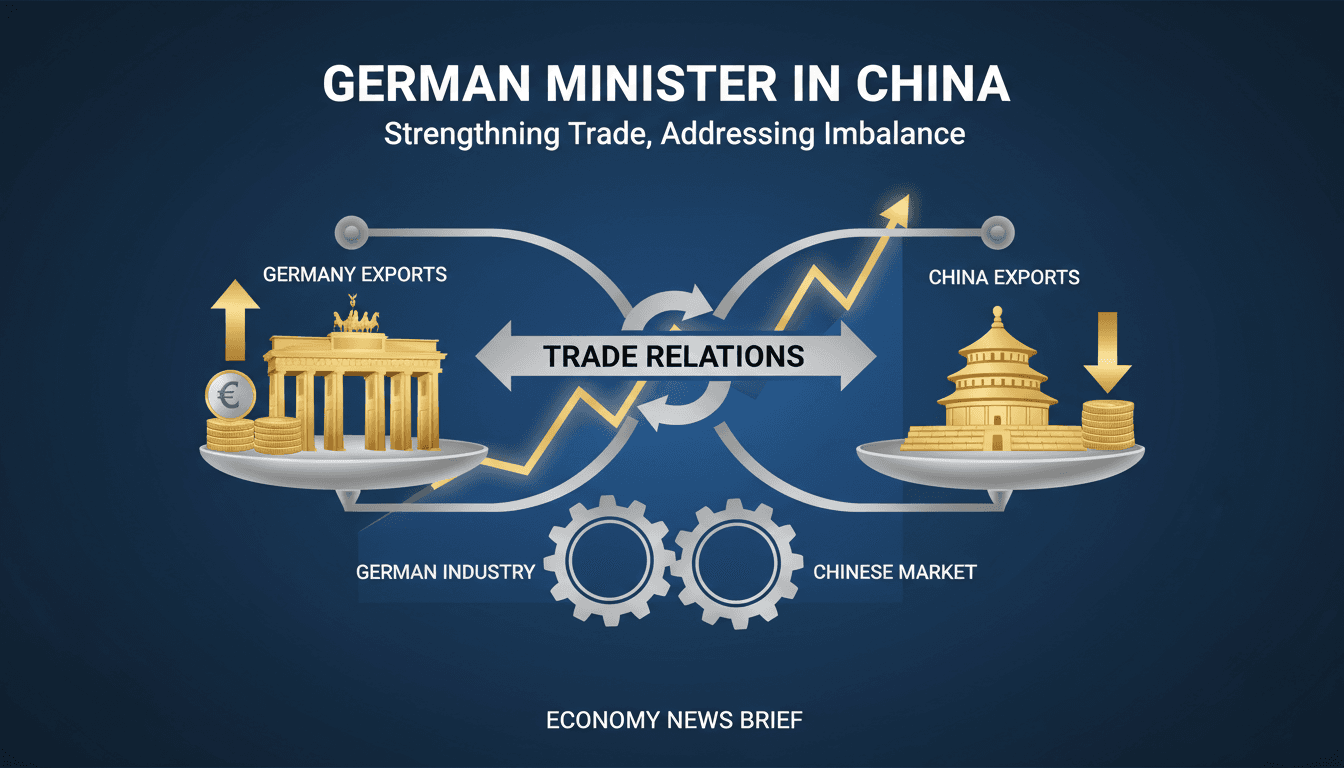
Here's what it means for you.
Germany's engagement with China is crucial for maintaining robust economic ties, especially in light of recent trade imbalances. The visit by Economy Minister Katherina Reiche signals a strategic effort to balance cooperation with competition in trade relations. This approach may influence future EU policies, particularly regarding trade measures that could impact exports to China. As Germany seeks to enhance its economic partnership with China, businesses and policymakers should prepare for potential shifts in trade dynamics. The outcome of this visit could set the stage for new agreements that foster growth while addressing existing concerns.
What happened
Katherina Reiche, the German Economy Minister, is currently visiting China to strengthen economic ties and address trade imbalances. During her visit, she emphasized the importance of cooperation and competition in modern economic relations between Germany and China. Reiche also urged the European Union to avoid measures that could harm exports to China, highlighting the need for a balanced approach.
The visit began on May 26, 2026, and included discussions focused on enhancing cooperation with China, a key economic partner for Germany. Concerns regarding trade imbalances were raised, indicating a need for Germany to reassess its economic strategies with China.
The Context
Germany's relationship with China is pivotal, given China's status as a major economic partner. The timing of Reiche's visit comes amid growing concerns about trade imbalances that could affect Germany's economic stability. By addressing these issues, Reiche aims to foster a more collaborative environment while maintaining competitive trade practices.
The discussions during this visit reflect a broader strategy within the EU to navigate complex trade relationships. Stakeholders are keenly aware of the implications that trade policies can have on exports, making this visit a critical moment for both Germany and the EU.
Takeaway
Looking ahead, Germany's approach to its economic relationship with China will likely focus on fostering cooperation while addressing trade imbalances. The outcomes of this visit may influence potential changes in EU trade policies regarding China, which could reshape future economic agreements.
As the situation evolves, stakeholders should monitor developments closely, particularly any shifts in trade measures that could impact exports. The balance between collaboration and competition will be essential for Germany as it navigates its economic landscape with China.
Pan-Arab news coverage spanning politics, business, sports, and regional affairs.
"Asharq Al-Awsat reflects a broad Arab editorial perspective with strong attention to regional geopolitics."
— A47 Editor
من قلب بكين... وزيرة الاقتصاد الألمانية تدعو الصين للتعاون والمنافسة
German Economy Minister Katrin Reich stated on Wednesday in Beijing that modern economic relations require both cooperation and competition. This statement underscores the importance of balancing collaborative efforts with competitive strategies in i...
Global markets, investing, and macroeconomics from a premier financial newsroom.
"Bloomberg is respected for in-depth financial reporting and data-driven analysis."
— A47 Editor
Germany’s Reiche Tells EU to Avoid Harming Exports to China
German Economy Minister Katherina Reiche has urged the European Union to ensure that any trade measures imposed on China do not adversely affect the bloc's exports to the country. This statement highlights the delicate balance the EU must maintain in...
English-language news from Qatar covering domestic and regional affairs.
"Gulf Times reflects Qatari perspectives on regional developments."
— A47 Editor
Germany warns on trade imbalance as economy minister visits China
Germany's economy minister, Katherina Reiche, has commenced a visit to China, emphasizing Berlin's intention to enhance cooperation with its significant trading partner while simultaneously warning of increasing trade imbalances.