
US-Israel-Iran conflict drives $104 increase in European long-haul flight fuel costs
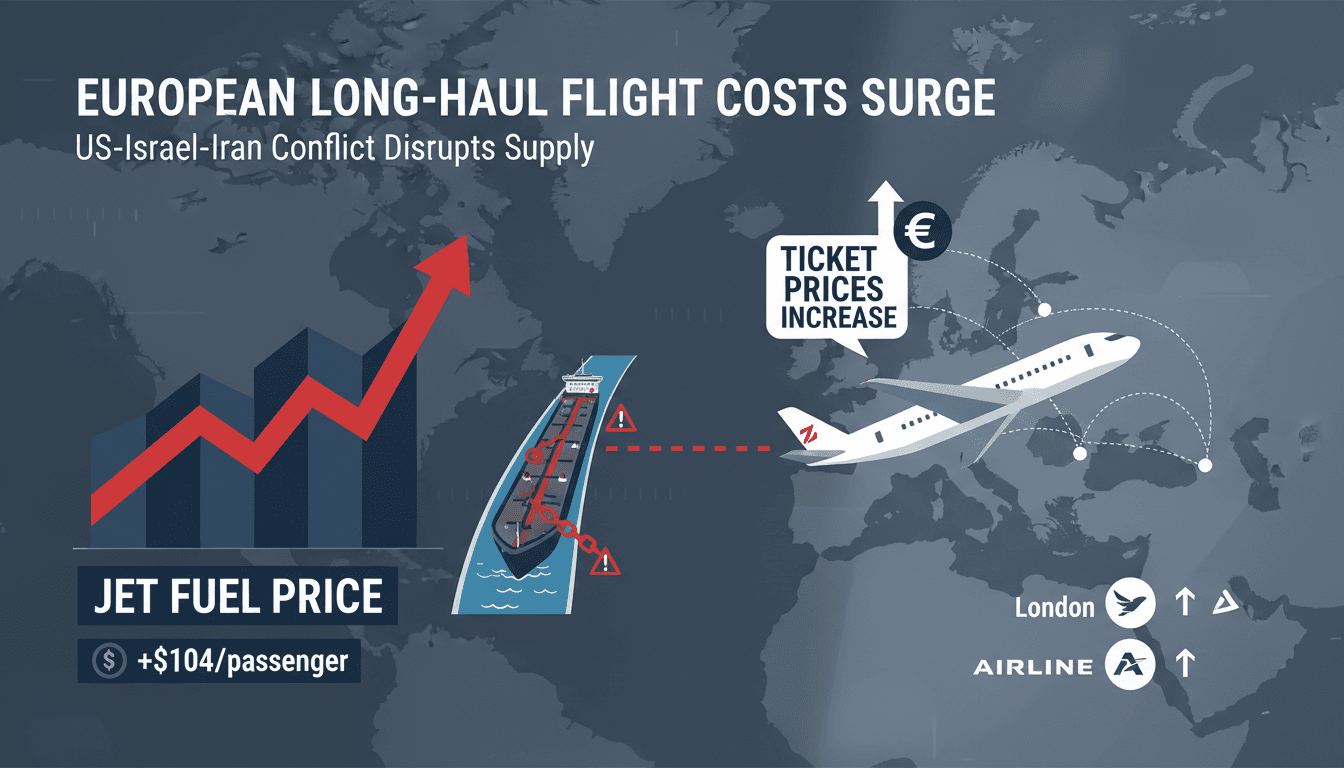
Here's what it means for you.
If you're planning long-haul travel from Europe, expect to pay significantly more for your ticket due to soaring jet fuel prices.
Why it matters
The ongoing conflict is reshaping global aviation economics, directly impacting your travel budget.
What happened (in 30 seconds)
- April 21, 2026: Transport & Environment released an analysis showing an average increase of $104 in jet fuel costs per passenger for long-haul flights from Europe.
- February 28, 2026: The US-Israel-Iran war began, disrupting the Strait of Hormuz, a critical oil transit route.
- Airlines are responding: Major carriers like Lufthansa and Ryanair are signaling fare increases as they grapple with rising fuel costs.
The context you actually need
- Geopolitical tensions escalated: The US and Israel launched strikes on Iran, leading to Iranian retaliation and maritime restrictions in the Strait of Hormuz.
- Oil supply vulnerabilities: The Strait of Hormuz is vital for global oil transport, accounting for 20% of oil and LNG flows, exacerbating Europe's energy challenges.
- Historical price spikes: Jet fuel prices surged above $100 per barrel, marking a significant increase from pre-war levels, with airlines warning of cost pass-through to consumers.
What's really happening
The US-Israel-Iran conflict has triggered a complex chain reaction affecting global aviation. The war, initiated on February 28, 2026, has led to immediate disruptions in the Strait of Hormuz, a crucial maritime route for oil transport. This disruption has caused jet fuel prices to soar, with Transport & Environment's analysis revealing an average increase of $104 per passenger for long-haul flights departing Europe.
Airlines are now facing a dual challenge: rising fuel costs and the need to maintain profitability. Major carriers, including Lufthansa, Ryanair, and Air France-KLM, are preparing to pass these costs onto consumers, leading to anticipated fare increases. The European Union is also stepping in, with guidelines on jet fuel supply management scheduled for April 22, 2026, as they seek to mitigate the impact of foreign oil dependency on their aviation sector.
The situation is compounded by Europe's previous vulnerabilities, particularly following disruptions in Russian gas supplies due to the Ukraine conflict. The combination of these geopolitical tensions and energy supply challenges has created a perfect storm for the aviation industry, with jet fuel prices now exceeding $100 per barrel. This price spike is not just a temporary blip; it reflects deeper systemic issues in global energy markets and the aviation sector's reliance on fossil fuels.
As airlines adjust to these new realities, the implications for travelers are significant. With ticket prices expected to rise, consumers will need to budget more for air travel. Additionally, the ongoing conflict and its impact on fuel prices could lead to further instability in the aviation market, affecting flight availability and connectivity, particularly for regions heavily reliant on air travel.
Who feels it first (and how)
- Travelers: Long-haul passengers from Europe will see ticket prices rise significantly.
- Airlines: Major carriers will face increased operational costs, leading to fare adjustments.
- Energy-dependent economies: Countries reliant on oil imports will experience economic strain due to rising fuel prices.
- Middle Eastern carriers: Airlines like flydubai and Emirates will impose surcharges, affecting regional travel.
What to watch next
- Airfare trends: Monitor ticket prices for long-haul flights from Europe to gauge the impact of rising fuel costs.
- EU policy changes: Watch for the implementation of new jet fuel supply guidelines and their effects on the aviation market.
- Geopolitical developments: Keep an eye on the US-Israel-Iran conflict and any potential ceasefire agreements that could stabilize oil supply.
Jet fuel prices have increased significantly due to the conflict.
Airlines will pass on fuel costs to consumers, leading to higher ticket prices.
The duration of the conflict and its long-term impact on global aviation economics.
Frequently Asked Questions
- Why it matters?
- The ongoing conflict is reshaping global aviation economics, directly impacting your travel budget.
- What happened (in 30 seconds)?
- April 21, 2026: Transport & Environment released an analysis showing an average increase of $104 in jet fuel costs per passenger for long-haul flights from Europe. February 28, 2026: The US-Israel-Iran war began, disrupting the Strait of Hormuz, a critical oil transit route. Airlines are responding: Major carriers like Lufthansa and Ryanair are signaling fare increases as they grapple with rising fuel costs.
- What's really happening?
- The US-Israel-Iran conflict has triggered a complex chain reaction affecting global aviation. The war, initiated on February 28, 2026, has led to immediate disruptions in the Strait of Hormuz, a crucial maritime route for oil transport. This disruption has caused jet fuel prices to soar, with Transport & Environment's analysis revealing an average increase of $104 per passenger for long-haul flights departing Europe. Airlines are now facing a dual challenge: rising fuel costs and the need to m
- Who feels it first (and how)?
- Travelers: Long-haul passengers from Europe will see ticket prices rise significantly. Airlines: Major carriers will face increased operational costs, leading to fare adjustments. Energy-dependent economies: Countries reliant on oil imports will experience economic strain due to rising fuel prices. Middle Eastern carriers: Airlines like flydubai and Emirates will impose surcharges, affecting regional travel.
- What to watch next?
- Airfare trends: Monitor ticket prices for long-haul flights from Europe to gauge the impact of rising fuel costs. EU policy changes: Watch for the implementation of new jet fuel supply guidelines and their effects on the aviation market. Geopolitical developments: Keep an eye on the US-Israel-Iran conflict and any potential ceasefire agreements that could stabilize oil supply.
Regional and international reporting focused on Middle Eastern politics, diplomacy, and economics.
"Asharq Al-Awsat is a Saudi-owned international newspaper reflecting mainstream Gulf political perspectives."
— A47 Editor
Iran War Fuel Hike Adds $100 to Long-Haul Flight Cost, Study Says
A recent study indicates that the ongoing conflict in Iran has led to a significant increase in fuel prices, adding approximately $100 to the cost of long-haul flights. This surge in fuel costs is attributed to disruptions in oil supply chains, exace...
Oil, metals, and agriculture: supply/demand headlines, OPEC chatter, inventories, and price action.
"Solid tape for energy and metals traders tracking macro and micro catalysts."
— A47 Editor
Analysis-Biofuels back in vogue as Iran war triggers oil price surge
The ongoing conflict in Iran has reignited interest in biofuels as oil prices surge due to geopolitical tensions. The war has disrupted traditional oil supply chains, prompting a reevaluation of alternative energy sources like biofuels, which are see...