
BIS Warns of Financial Stability Risks from US Dollar Stablecoins and Calls for Global Regulation
Here's what it means for you.
If you engage in crypto trading or cross-border payments, the stability of your transactions may soon be influenced by global regulatory changes.
Why it matters
The rapid growth of US dollar stablecoins poses systemic risks that could affect monetary policy and financial integrity worldwide.
What happened (in 30 seconds)
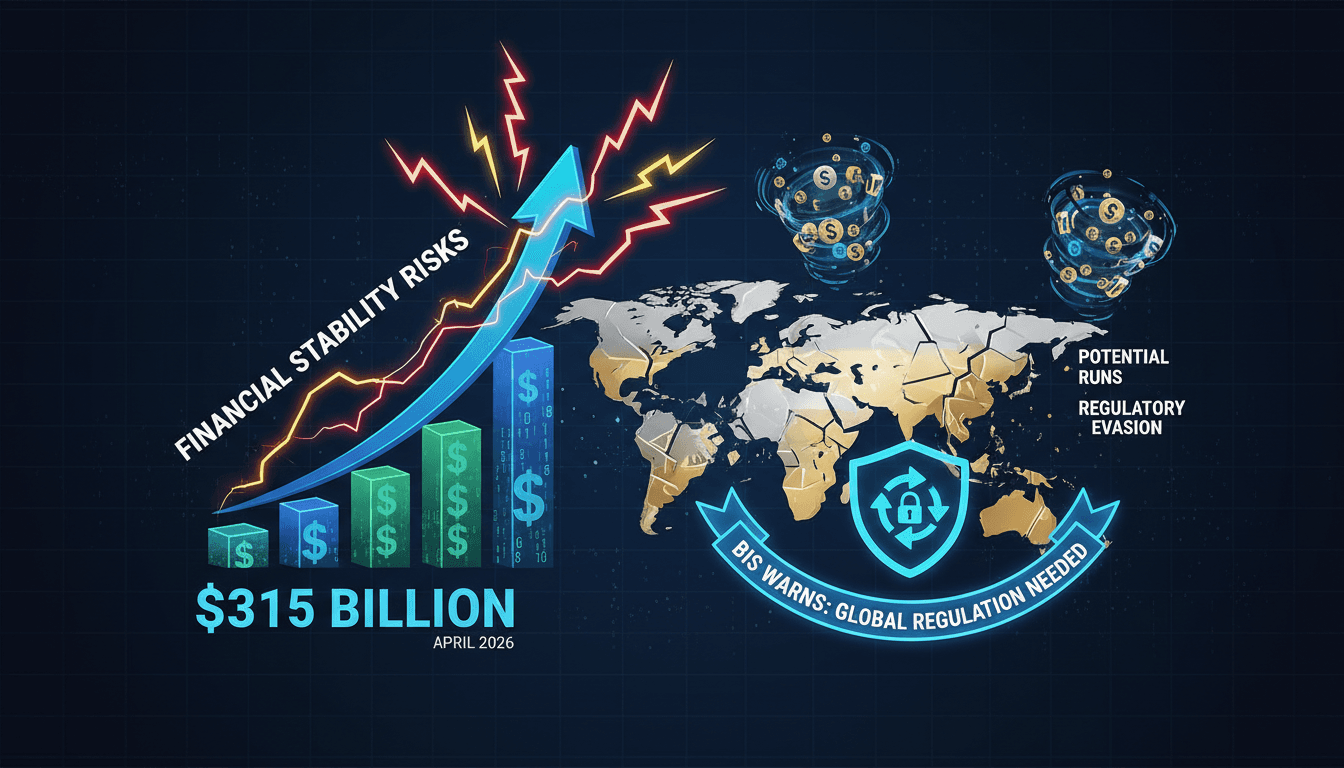
- BIS General Manager Pablo Hernández de Cos warned that US dollar stablecoins, with a market cap of $315 billion, threaten financial stability.
- Key risks identified include potential runs leading to asset fire sales and dollarization in emerging markets.
- BIS advocates for global regulatory coordination to address these risks and prevent market fragmentation.
The context you actually need
- Stablecoins have surged to a global market capitalization of approximately $315 billion, with 98% pegged to the US dollar, highlighting their dominance.
- Previous analyses by BIS have flagged risks related to financial stability and regulatory evasion, emphasizing the need for robust frameworks.
- Emerging markets are particularly vulnerable to dollarization, which could disrupt local economies and monetary policies.
What's really happening
On April 20, 2026, during a seminar in Tokyo, Pablo Hernández de Cos of the Bank for International Settlements (BIS) delivered a critical speech titled "Stablecoins: framing the debate." He acknowledged the technological advantages of stablecoins, such as programmability and atomic settlement, but underscored significant structural flaws. These include redemption frictions that resemble exchange-traded funds (ETFs) rather than traditional money, a lack of central bank settlement, and fragmentation across various blockchain networks.
The BIS highlighted several key risks associated with the rapid growth of US dollar stablecoins. One major concern is the potential for runs, where a sudden rush to redeem stablecoins could lead to asset fire sales, destabilizing financial markets. Additionally, the proliferation of stablecoins could facilitate dollarization in emerging markets and developing economies (EMDEs), undermining local currencies and monetary sovereignty. This dollarization could disrupt monetary policy, making it challenging for central banks to manage inflation and economic stability.
Moreover, the use of unhosted wallets raises integrity issues, particularly concerning anti-money laundering (AML) compliance. The BIS called for robust regulatory frameworks and resolution mechanisms to mitigate these risks, emphasizing the importance of international cooperation to prevent market fragmentation and regulatory arbitrage.
As stablecoins continue to facilitate crypto trading and cross-border payments, their influence on global finance is likely to grow. The BIS's call for coordinated regulation reflects a recognition that without a unified approach, the risks associated with stablecoins could escalate, potentially leading to broader financial instability.
Who feels it first (and how)
- Crypto traders: Increased scrutiny and potential regulatory changes may affect trading practices and liquidity.
- Emerging market economies: Dollarization could undermine local currencies, impacting economic stability and monetary policy.
- Regulatory bodies: Agencies will need to adapt to new frameworks and compliance requirements, influencing their operational strategies.
What to watch next
- Regulatory developments: Keep an eye on international regulatory frameworks emerging from the BIS and other financial authorities, as they will shape the future of stablecoins.
- Market reactions: Monitor how the crypto market responds to regulatory announcements, particularly regarding stablecoin liquidity and trading volumes.
- Emerging market policies: Watch for changes in monetary policies in EMDEs as they react to the risks posed by dollarization and stablecoin proliferation.
The global stablecoin market capitalization is approximately $315 billion, with 98% denominated in US dollars.
Regulatory frameworks will evolve to address the risks associated with stablecoins, particularly in relation to financial stability and AML compliance.
The exact impact of these regulations on the crypto market and emerging economies remains uncertain.
Frequently Asked Questions
- Why it matters?
- The rapid growth of US dollar stablecoins poses systemic risks that could affect monetary policy and financial integrity worldwide.
- What happened (in 30 seconds)?
- BIS General Manager Pablo Hernández de Cos warned that US dollar stablecoins, with a market cap of $315 billion, threaten financial stability. Key risks identified include potential runs leading to asset fire sales and dollarization in emerging markets. BIS advocates for global regulatory coordination to address these risks and prevent market fragmentation.
- What's really happening?
- On April 20, 2026, during a seminar in Tokyo, Pablo Hernández de Cos of the Bank for International Settlements (BIS) delivered a critical speech titled "Stablecoins: framing the debate." He acknowledged the technological advantages of stablecoins, such as programmability and atomic settlement, but underscored significant structural flaws. These include redemption frictions that resemble exchange-traded funds (ETFs) rather than traditional money, a lack of central bank settlement, and fragmentati
- Who feels it first (and how)?
- Crypto traders: Increased scrutiny and potential regulatory changes may affect trading practices and liquidity. Emerging market economies: Dollarization could undermine local currencies, impacting economic stability and monetary policy. Regulatory bodies: Agencies will need to adapt to new frameworks and compliance requirements, influencing their operational strategies.
- What to watch next?
- Regulatory developments: Keep an eye on international regulatory frameworks emerging from the BIS and other financial authorities, as they will shape the future of stablecoins. Market reactions: Monitor how the crypto market responds to regulatory announcements, particularly regarding stablecoin liquidity and trading volumes. Emerging market policies: Watch for changes in monetary policies in EMDEs as they react to the risks posed by dollarization and stablecoin proliferation.
Research, news, and analysis on blockchain startups, DeFi, and regulations.
"Crypto Briefing provides research, news, and analysis on blockchain startups, DeFi, and crypto regulations with investor-focused coverage."
— A47 Editor
BIS warns US dollar stablecoins pose financial stability risks, urges regulation
The Bank for International Settlements (BIS) has issued a warning regarding the financial stability risks posed by US dollar stablecoins, emphasizing the need for regulatory measures to address these concerns. This warning comes amid increasing scrut...
Real-time updates, analysis, and reports on the blockchain and cryptocurrency sectors.
"Crypto News delivers real-time updates, analysis, and reports on the blockchain and cryptocurrency sectors."
— A47 Editor
BIS chief warns U.S. dollar stablecoins could destabilize global markets
Central bankers, led by Pablo Hernández de Cos, have issued warnings regarding the rapid growth of U.S. dollar stablecoins, suggesting that their unchecked expansion could lead to significant financial instability in global markets. The concerns stem...
Covers blockchain, cryptocurrency news, project analysis, and market insights.
"Cointelegraph is a leading crypto-focused media outlet known for timely news, analysis, and educational content related to blockchain and digital assets."
— A47 Editor
BIS warns dollar stablecoins could strain banks and policy
The Bank for International Settlements (BIS) has issued a warning regarding the potential risks that US dollar stablecoins pose to financial stability, as articulated by general manager Pablo Hernández de Cos. The BIS emphasizes the need for stronger...