
Gold Prices Steady as US-Iran Ceasefire Holds and CPI Data Approaches
Here's what it means for you.
If you’re invested in commodities or affected by inflation, the stability of gold prices amid geopolitical tensions could impact your financial strategy.
Why it matters
The interplay between geopolitical events and commodity prices can directly affect inflation rates and investment strategies globally.
What happened (in 30 seconds)
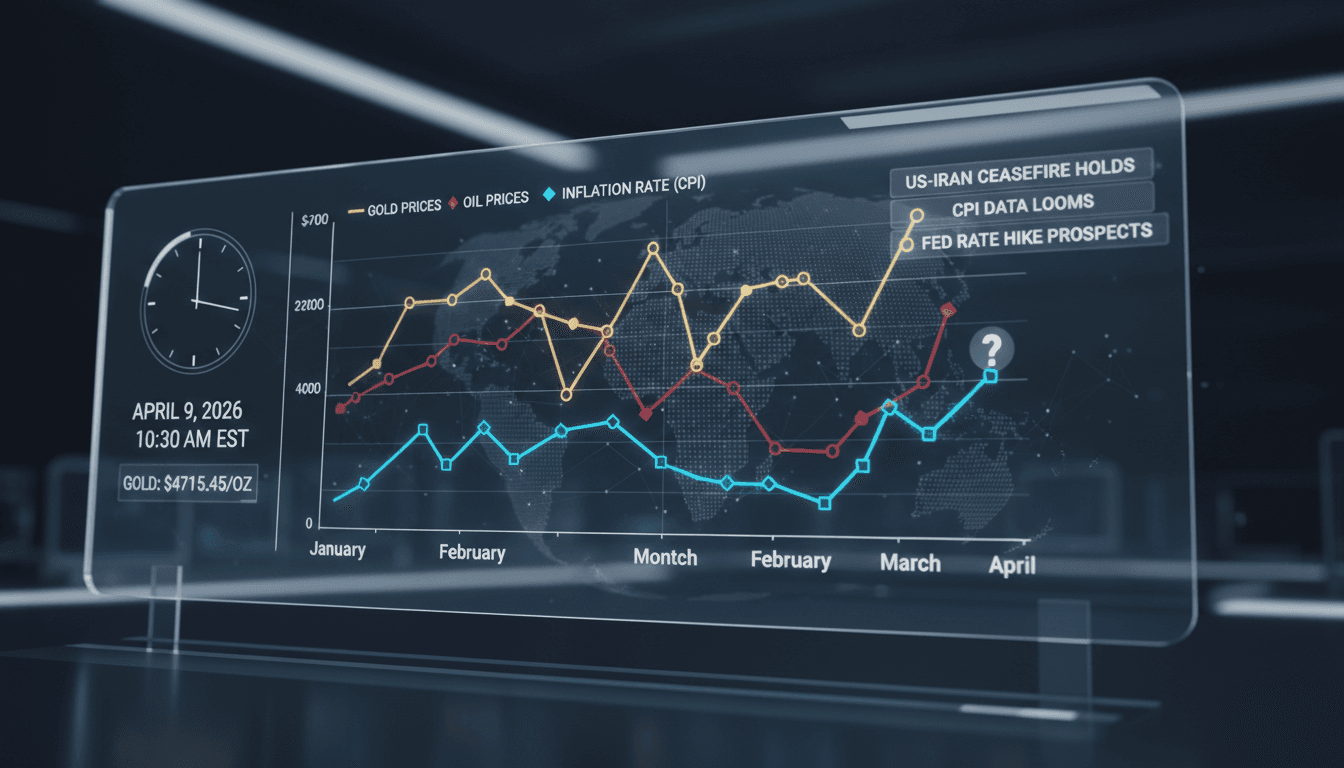
- Gold prices held steady at $4,715.45 per ounce on April 9, 2026, as investors assessed the US-Iran ceasefire.
- A two-week truce was agreed upon on April 8, following a significant escalation in conflict that began on February 28, 2026.
- Market participants are awaiting the US March Consumer Price Index data release, which could influence Federal Reserve interest rate decisions.
The context you actually need
- The US-Iran conflict that began in late February 2026 disrupted the Strait of Hormuz, significantly affecting oil prices and raising inflation concerns.
- Gold prices dropped over 10% during the conflict, reflecting heightened sensitivity to interest rate changes and inflation fears.
- The recent ceasefire has led to a temporary stabilization in gold prices, but doubts about its durability persist, influencing market sentiment.
What's really happening
The recent stabilization of gold prices is a reflection of the complex interplay between geopolitical tensions and economic indicators. The US-Iran conflict, which escalated dramatically in late February 2026, has had far-reaching implications for global markets. The conflict disrupted critical shipping routes in the Strait of Hormuz, leading to a surge in oil prices above $100 per barrel. This spike in oil prices, combined with fears of inflation, prompted a significant drop in gold prices—over 10%—as investors anticipated potential interest rate hikes from the Federal Reserve.
The situation reached a critical point with a deadline set by the US government under President Trump for Iran to agree to a ceasefire. On April 8, 2026, a conditional two-week truce was brokered, mediated by Pakistan, which included the reopening of the Strait of Hormuz for shipping. Following this announcement, gold prices surged over 2.5% to near a three-week high above $4,800 per ounce. However, as of April 9, prices steadied at $4,715.45, reflecting a cautious optimism among investors who are weighing the durability of the ceasefire against the backdrop of upcoming economic data.
The anticipation of the US March Consumer Price Index (CPI) data, set to be released on April 10, adds another layer of complexity. If inflation continues to rise, it could lead to a shift in Federal Reserve policy, potentially impacting interest rates and, by extension, gold prices. Investors are closely monitoring these developments, as the CPI data could signal whether the Fed will maintain its current stance or pivot towards rate cuts, which would influence the attractiveness of gold as a safe-haven asset.
In Dubai, the local gold market reacted positively to the ceasefire, with prices surging over AED 12.50 per gram, stimulating transactions in the Gold Souk. This local response underscores the broader economic implications of geopolitical events, as lower oil prices could help mitigate regional inflation risks, further influencing market dynamics.
Who feels it first (and how)
- Institutional investors: They closely monitor gold prices as a hedge against inflation and geopolitical risks.
- Commodity traders: Fluctuations in gold prices directly impact trading strategies and profit margins.
- Consumers in the UAE: Local gold prices affect purchasing decisions, especially in markets like Dubai’s Gold Souk.
- Economists and analysts: They assess the implications of CPI data on monetary policy and market stability.
What to watch next
- US March CPI data: Scheduled for release on April 10, this data will provide insights into inflation trends and potential Federal Reserve actions.
- Durability of the ceasefire: Ongoing developments in the US-Iran relationship could impact market stability and gold prices.
- Global oil prices: Any fluctuations in oil prices will continue to influence inflation expectations and commodity market dynamics.
Gold prices are currently stable at $4,715.45 per ounce.
The US March CPI data will influence Federal Reserve interest rate decisions.
The long-term durability of the US-Iran ceasefire and its impact on global markets.
Frequently Asked Questions
- Why it matters?
- The interplay between geopolitical events and commodity prices can directly affect inflation rates and investment strategies globally.
- What happened (in 30 seconds)?
- Gold prices held steady at $4,715.45 per ounce on April 9, 2026, as investors assessed the US-Iran ceasefire. A two-week truce was agreed upon on April 8, following a significant escalation in conflict that began on February 28, 2026. Market participants are awaiting the US March Consumer Price Index data release, which could influence Federal Reserve interest rate decisions.
- What's really happening?
- The recent stabilization of gold prices is a reflection of the complex interplay between geopolitical tensions and economic indicators. The US-Iran conflict, which escalated dramatically in late February 2026, has had far-reaching implications for global markets. The conflict disrupted critical shipping routes in the Strait of Hormuz, leading to a surge in oil prices above $100 per barrel. This spike in oil prices, combined with fears of inflation, prompted a significant drop in gold prices—over
- Who feels it first (and how)?
- Institutional investors: They closely monitor gold prices as a hedge against inflation and geopolitical risks. Commodity traders: Fluctuations in gold prices directly impact trading strategies and profit margins. Consumers in the UAE: Local gold prices affect purchasing decisions, especially in markets like Dubai’s Gold Souk. Economists and analysts: They assess the implications of CPI data on monetary policy and market stability.
- What to watch next?
- US March CPI data: Scheduled for release on April 10, this data will provide insights into inflation trends and potential Federal Reserve actions. Durability of the ceasefire: Ongoing developments in the US-Iran relationship could impact market stability and gold prices. Global oil prices: Any fluctuations in oil prices will continue to influence inflation expectations and commodity market dynamics.
Regional and international reporting focused on Middle Eastern politics, diplomacy, and economics.
"Asharq Al-Awsat is a Saudi-owned international newspaper reflecting mainstream Gulf political perspectives."
— A47 Editor
Gold Steady as Investors Eye US-Iran Ceasefire, Brace for Inflation Data
Gold prices have remained steady as investors closely monitor the fragile ceasefire between the United States and Iran, which was established to ease military tensions. However, recent developments, including the failure of peace talks that lasted 21...
Business, markets, economy, and corporate news with strong UAE and regional relevance.
"Emirates 24|7 business coverage tends to center UAE markets, property, regulation, and regional economic developments."
— A47 Editor
Gold steady as markets watch US–Iran ceasefire and await key inflation data Gold steady as markets watch US–Iran ceasefire and await key inflation data
Gold prices remained steady as investors monitored the fragile ceasefire between the U.S. and Iran, with spot gold inching up 0.1% to $4,721.51 per ounce. The market is also awaiting a crucial U.S. inflation report that could influence interest rate ...
Arabic-language UAE newspaper coverage focused on domestic affairs, public institutions, business, society, and regional developments.
"Al Khaleej coverage generally reflects a mainstream UAE editorial lens with strong attention to public affairs, institutions, and regional developments."
— A47 Editor
الذهب يستقر وسط ترقب الهدنة وبيانات التضخم الأمريكي
Gold prices remained largely stable on Thursday as investors awaited the fragile ceasefire agreement between the United States and Iran, which has implications for geopolitical stability in the region. The ongoing tension between these nations has ke...