
OPEC Secretariat Receives Updated Compensation Plans from Iraq, UAE, Kazakhstan, and Oman
Here's what it means for you.
If you’re involved in energy markets or rely on oil for your business, these compensation plans could influence pricing and supply stability.
Why it matters
The updated compensation plans from OPEC+ members are crucial for maintaining balance in a volatile global oil market.
What happened (in 30 seconds)
- On April 7, 2026, the OPEC General Secretariat received updated compensation plans from Iraq, UAE, Kazakhstan, and Oman.
- These plans aim to offset oil production exceeding allocated quotas, following a virtual meeting of eight OPEC+ countries in early March 2026.
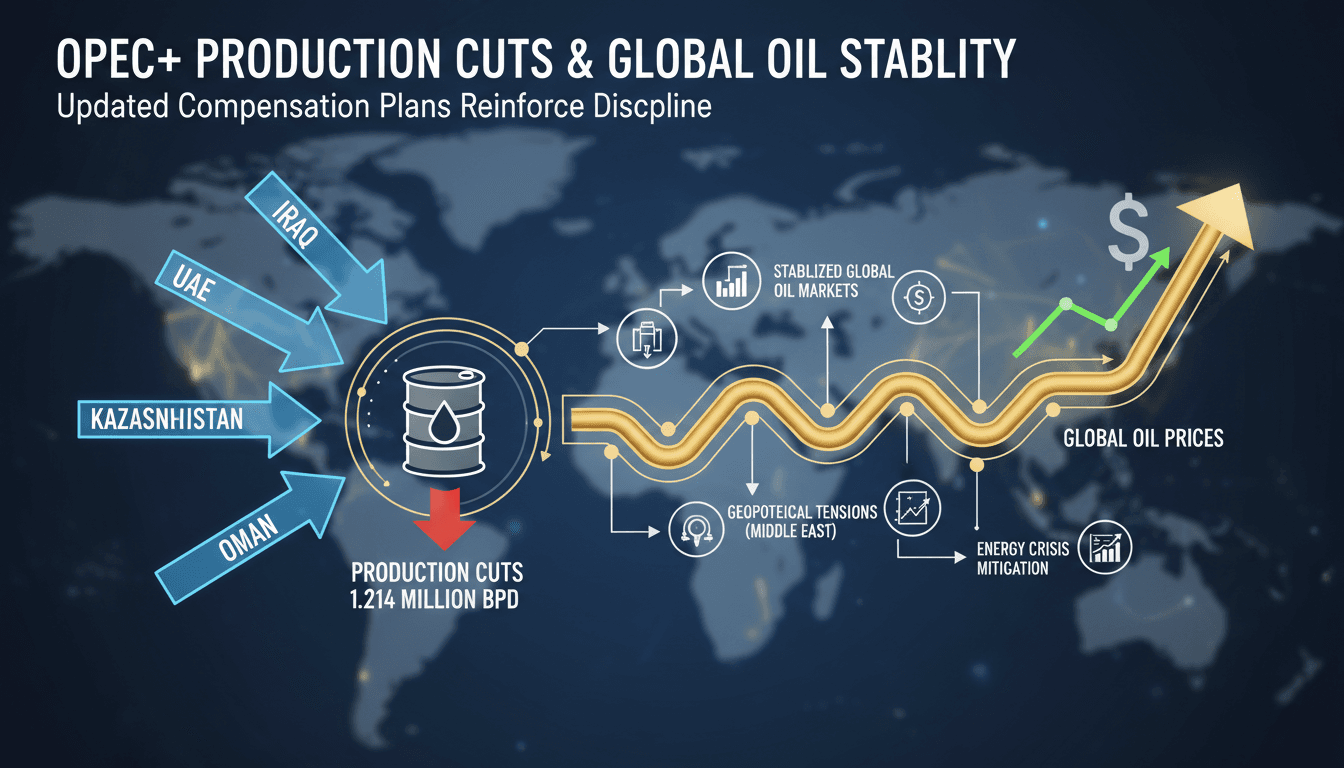
- A collective reduction of 1.214 million barrels per day was confirmed for March 2026 to stabilize the market amid rising geopolitical tensions.
The context you actually need
- OPEC+ has been enforcing voluntary production adjustments since 2022 to counteract economic volatility and geopolitical tensions affecting oil supply.
- Compensation schedules are mandatory for overproducing members to ensure compliance and market stability, particularly since January 2024.
- Recent conflicts in the Middle East have raised concerns about supply disruptions, particularly regarding the strategic Strait of Hormuz.
What's really happening
In early March 2026, a virtual meeting of eight OPEC+ countries, including major players like Saudi Arabia and Russia, underscored their commitment to stabilizing the oil market through coordinated production cuts. This meeting was pivotal as it set the stage for Iraq, the UAE, Kazakhstan, and Oman to submit updated compensation plans to the OPEC Secretariat. These plans are designed to rectify excess production that has occurred since January 2024, ensuring that all member countries adhere to their quotas.
The collective reduction of 1.214 million barrels per day achieved in March 2026 reflects a significant commitment from these countries to align with OPEC+ goals. This reduction is not merely a number; it represents a strategic maneuver to mitigate the risk of oversupply in a market already strained by geopolitical tensions. The International Energy Agency (IEA) has warned that ongoing conflicts in the Middle East could lead to a severe energy crisis, particularly if the Strait of Hormuz, a critical chokepoint for oil transport, becomes inaccessible. This backdrop amplifies the importance of OPEC+ compliance and the need for member countries to adhere to their production limits.
The compensation plans are a response to the need for stability in oil prices, which can have cascading effects on global economies. For instance, if oil prices spike due to supply disruptions, it could lead to increased costs for consumers and businesses alike. Therefore, the proactive steps taken by OPEC+ members to submit these plans are crucial for maintaining a balance in the market. The ongoing monitoring by OPEC+ will ensure that these plans are implemented effectively, reinforcing the commitment to market stability.
In essence, these compensation plans are not just bureaucratic formalities; they are essential tools for managing the delicate balance of global oil supply and demand. As the situation evolves, the adherence to these plans will play a critical role in shaping the future of oil markets and, by extension, the global economy.
Who feels it first (and how)
- Energy companies: They will experience immediate impacts on production strategies and pricing.
- Consumers: Fluctuations in oil prices could lead to changes in fuel costs at the pump.
- Investors: Market volatility may affect investment strategies in energy sectors.
- Governments: National budgets reliant on oil revenues could face pressure from price instability.
What to watch next
- Compliance rates: Monitoring how well OPEC+ countries adhere to their compensation plans will indicate market stability.
- Geopolitical developments: Any escalation in Middle East conflicts could disrupt oil supply and impact prices.
- Market reactions: Watch for immediate shifts in oil prices following announcements or changes in production levels.
OPEC+ has received updated compensation plans from Iraq, UAE, Kazakhstan, and Oman.
Continued monitoring and adjustments to production quotas will be necessary as geopolitical tensions evolve.
The exact impact of these plans on global oil prices in the coming months remains uncertain.
Frequently Asked Questions
- Why it matters?
- The updated compensation plans from OPEC+ members are crucial for maintaining balance in a volatile global oil market.
- What happened (in 30 seconds)?
- On April 7, 2026, the OPEC General Secretariat received updated compensation plans from Iraq, UAE, Kazakhstan, and Oman. These plans aim to offset oil production exceeding allocated quotas, following a virtual meeting of eight OPEC+ countries in early March 2026. A collective reduction of 1.214 million barrels per day was confirmed for March 2026 to stabilize the market amid rising geopolitical tensions.
- What's really happening?
- In early March 2026, a virtual meeting of eight OPEC+ countries, including major players like Saudi Arabia and Russia, underscored their commitment to stabilizing the oil market through coordinated production cuts. This meeting was pivotal as it set the stage for Iraq, the UAE, Kazakhstan, and Oman to submit updated compensation plans to the OPEC Secretariat. These plans are designed to rectify excess production that has occurred since January 2024, ensuring that all member countries adhere to t
- Who feels it first (and how)?
- Energy companies: They will experience immediate impacts on production strategies and pricing. Consumers: Fluctuations in oil prices could lead to changes in fuel costs at the pump. Investors: Market volatility may affect investment strategies in energy sectors. Governments: National budgets reliant on oil revenues could face pressure from price instability.
- What to watch next?
- Compliance rates: Monitoring how well OPEC+ countries adhere to their compensation plans will indicate market stability. Geopolitical developments: Any escalation in Middle East conflicts could disrupt oil supply and impact prices. Market reactions: Watch for immediate shifts in oil prices following announcements or changes in production levels.
Sports reporting with a focus on Saudi and regional competitions.
"Okaz sports coverage is broad and audience-friendly, with strong attention to Saudi teams and leagues."
— A47 Editor
هل تلقت «أوبك» خططاً لتعويض كميات النفط ؟
The Organization of the Petroleum Exporting Countries (OPEC) has received updated plans from Iraq, the UAE, Kazakhstan, and Oman to compensate for oil production that exceeded set quotas, in line with production cut agreements aimed at stabilizing gl...
Pan-Arab news coverage spanning politics, business, sports, and regional affairs.
"Asharq Al-Awsat reflects a broad Arab editorial perspective with strong attention to regional geopolitics."
— A47 Editor
«أوبك» تتسلم خطط التعويض المحدثة... وكازاخستان «المطالب الوحيد» بتقليص الفائض
The OPEC General Secretariat has received updated compensation plans from Iraq, the UAE, Kazakhstan, and Oman, indicating a collaborative effort among member states to address production levels. Kazakhstan has emerged as the sole country requesting a...