
U.S. Dollar Index Drops 1.3% as U.S.-Iran Ceasefire Sparks Market Optimism
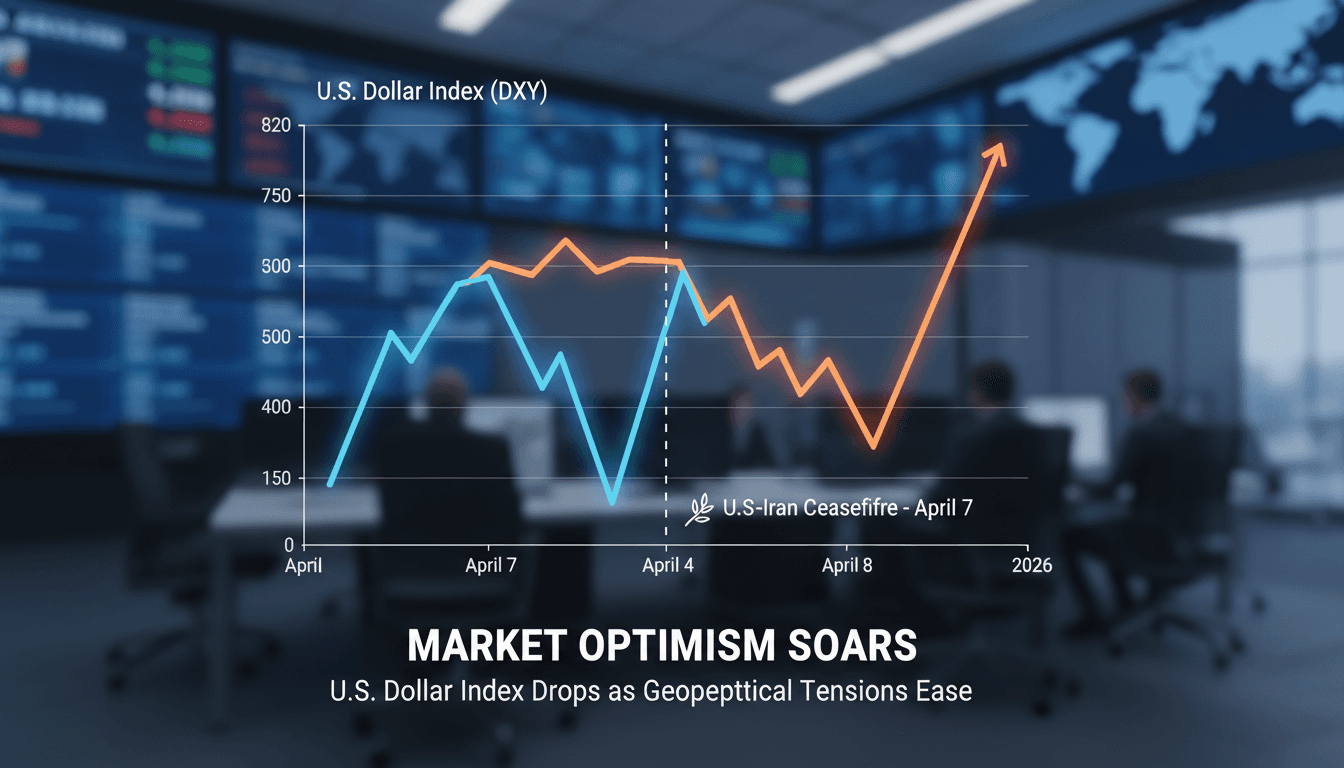
Here's what it means for you.
The recent decline in the U.S. dollar index signals shifting global economic dynamics that could impact your investments and purchasing power.
Why it matters
The fluctuation in the U.S. dollar index reflects broader geopolitical tensions and their direct influence on global markets, affecting everything from oil prices to inflation rates.
What happened (in 30 seconds)
- The U.S. dollar index fell 1.3% for the week ending April 8, 2026, marking its largest weekly loss since January.
- A two-week ceasefire agreement was reached between the U.S. and Iran, leading to reduced demand for safe-haven assets like the dollar.
- High-level negotiations are set to take place in Islamabad, with key figures from both nations involved.
The context you actually need
- The dollar had strengthened throughout March 2026 due to heightened tensions from the U.S.-Israeli conflict against Iran, which disrupted oil supplies and raised inflation fears.
- The ceasefire agreement on April 7, 2026, restored oil flows and eased immediate geopolitical risks, prompting a shift in market sentiment.
- Traders are now focused on the outcomes of upcoming negotiations, particularly Iran's 10-point peace proposal, which could reshape future relations.
What's really happening
The recent decline in the U.S. dollar index is a direct response to the fragile two-week ceasefire agreement reached on April 7, 2026, between the United States and Iran. Prior to this development, the dollar had been viewed as a safe-haven asset amid escalating geopolitical tensions, particularly the conflict involving the U.S. and Israel against Iran. This conflict had disrupted oil supplies, elevated crude prices, and increased inflation concerns, leading to a surge in dollar demand as investors sought stability.
However, with the announcement of the ceasefire, market dynamics began to shift. The ceasefire allowed for the resumption of Gulf oil shipments, which alleviated some inflation fears and reduced the immediate risks associated with the conflict. As a result, traders started unwinding their safe-haven positions in the dollar, leading to a 1.3% decline in the dollar index, which fell from approximately 100 to 98.95 by April 8.
The upcoming negotiations in Islamabad, led by U.S. Vice President JD Vance and Iranian Parliament Speaker Mohammad Baqer Qalibaf, are critical. These talks will focus on Iran's 10-point peace proposal, which includes preconditions for a lasting peace. The outcomes of these negotiations will likely have significant implications for both countries and the global economy. Should the talks yield positive results, it could further stabilize oil prices and reduce inflationary pressures, potentially leading to a rebound in the dollar.
However, the situation remains precarious. The ceasefire is fragile, and any misstep could reignite tensions, leading to renewed demand for safe-haven assets. This uncertainty keeps markets on edge, as investors weigh the potential for both recovery and further conflict.
Who feels it first (and how)
- Investors in global markets: Fluctuations in the dollar index directly affect investment strategies and asset valuations.
- Oil-dependent economies: Countries reliant on oil exports will experience changes in revenue based on oil price fluctuations.
- U.S. consumers: Changes in the dollar's strength can impact import prices and inflation rates, affecting purchasing power.
What to watch next
- Negotiation outcomes: The results of the U.S.-Iran talks in Islamabad will be pivotal in determining future market stability and dollar strength.
- Oil price movements: Watch for changes in crude oil prices, as they will influence inflation and economic sentiment globally.
- Market reactions to geopolitical developments: Any escalation or de-escalation in tensions will likely lead to immediate shifts in the dollar index and investor behavior.
The dollar index has declined 1.3% due to reduced safe-haven demand.
The outcomes of the Islamabad negotiations will significantly influence market dynamics and oil prices.
The long-term sustainability of the ceasefire and its impact on geopolitical stability remains uncertain.
Frequently Asked Questions
- Why it matters?
- The fluctuation in the U.S. dollar index reflects broader geopolitical tensions and their direct influence on global markets, affecting everything from oil prices to inflation rates.
- What happened (in 30 seconds)?
- The U.S. dollar index fell 1.3% for the week ending April 8, 2026, marking its largest weekly loss since January. A two-week ceasefire agreement was reached between the U.S. and Iran, leading to reduced demand for safe-haven assets like the dollar. High-level negotiations are set to take place in Islamabad, with key figures from both nations involved.
- What's really happening?
- The recent decline in the U.S. dollar index is a direct response to the fragile two-week ceasefire agreement reached on April 7, 2026, between the United States and Iran. Prior to this development, the dollar had been viewed as a safe-haven asset amid escalating geopolitical tensions, particularly the conflict involving the U.S. and Israel against Iran. This conflict had disrupted oil supplies, elevated crude prices, and increased inflation concerns, leading to a surge in dollar demand as invest
- Who feels it first (and how)?
- Investors in global markets: Fluctuations in the dollar index directly affect investment strategies and asset valuations. Oil-dependent economies: Countries reliant on oil exports will experience changes in revenue based on oil price fluctuations. U.S. consumers: Changes in the dollar's strength can impact import prices and inflation rates, affecting purchasing power.
- What to watch next?
- Negotiation outcomes: The results of the U.S.-Iran talks in Islamabad will be pivotal in determining future market stability and dollar strength. Oil price movements: Watch for changes in crude oil prices, as they will influence inflation and economic sentiment globally. Market reactions to geopolitical developments: Any escalation or de-escalation in tensions will likely lead to immediate shifts in the dollar index and investor behavior.
Pan-Arab political news and analysis.
"Al-Quds Al-Arabi is a London-based Arabic newspaper known for political coverage."
— A47 Editor
الدولار يتجه نحو خسائر أسبوعية قبيل محادثات أمريكا وإيران
The dollar is on track to incur its largest weekly losses since January, as other currencies have risen amid optimism regarding the stability of the ceasefire in the Gulf and the resumption of oil shipments. Market direction is likely to depend on th...
Macro commentary, policy analysis, growth/inflation themes, and global outlooks.
"Contextual macro coverage that complements day-to-day market headlines."
— A47 Editor
Dollar set for weekly drop ahead of US-Iran peace talks
The U.S. dollar is poised for a weekly decline as markets react to the upcoming peace talks between the United States and Iran, amidst ongoing geopolitical tensions. The fragile ceasefire agreement has created uncertainty, impacting investor sentimen...