
Cuba's National Power Grid Fails, Leaving 11 Million Without Electricity
Why it matters
Cuba's blackout underscores the fragility of aging infrastructure and the consequences of geopolitical tensions on energy availability.
What happened (in 30 seconds)
- Cuba experienced a nationwide blackout on March 16, 2026, affecting approximately 11 million residents due to a complete failure of its electrical grid.
- The outage lasted over 29 hours, with partial restoration beginning on March 17 amid ongoing fuel shortages and infrastructure decay.
- Protests erupted in response to the blackout, reflecting public frustration over the government's handling of the energy crisis.
The context you actually need
- Cuba's power infrastructure is aging, with thermoelectric plants averaging over 40 years in age, leading to chronic underperformance and outages.
- U.S. sanctions have exacerbated fuel shortages, particularly following the blockade that cut off Venezuelan oil shipments, which are crucial for Cuba's energy needs.
- The blackout marks the third major grid failure since December 2025, amid daily rolling blackouts that have become a norm for many residents.
What's really happening
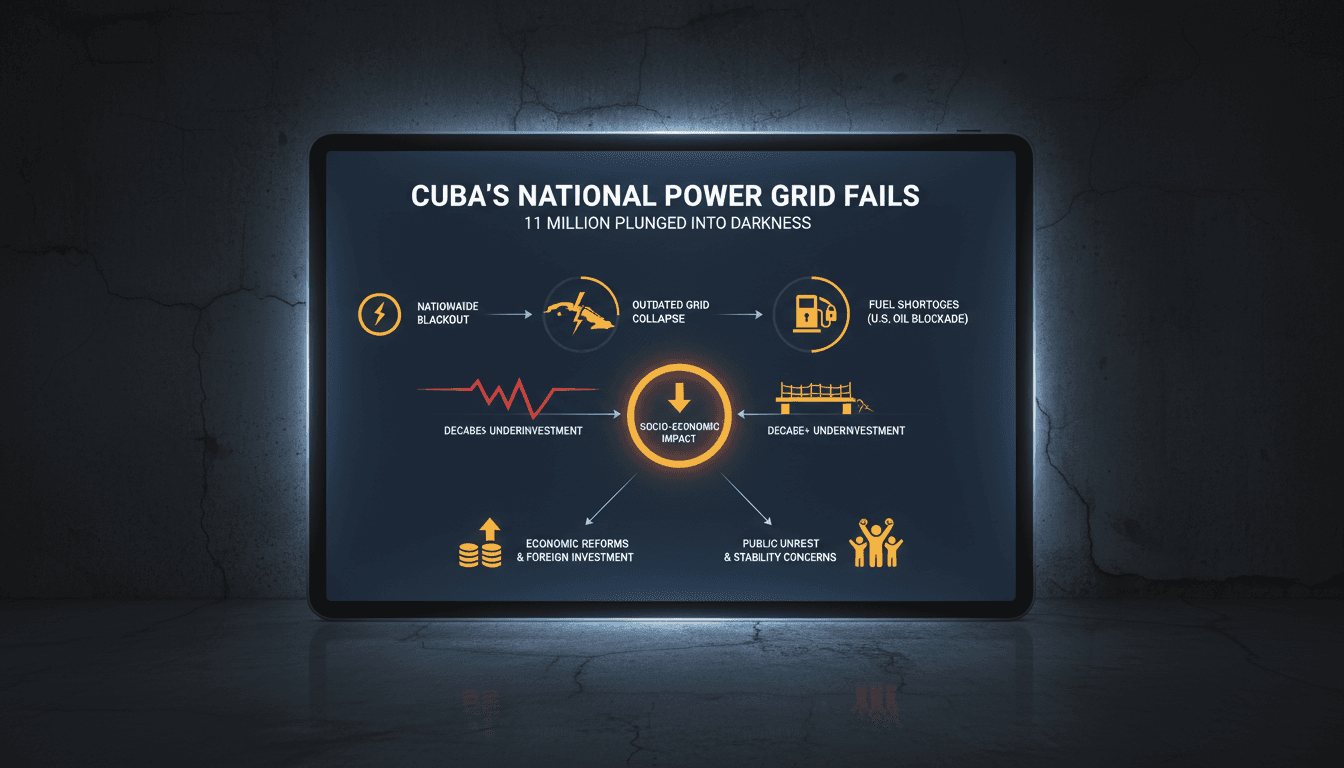
Cuba's nationwide blackout on March 16, 2026, is a culmination of years of neglect and mismanagement of its electrical grid, which has been under strain from both internal and external pressures. The country's power infrastructure, primarily reliant on outdated thermoelectric plants, has suffered from chronic underinvestment and a heavy dependency on imported heavy fuel oil. With only about 40% of its energy needs met through domestic production, Cuba's energy crisis has been exacerbated by the U.S. oil blockade, which has severely limited access to Venezuelan oil—Cuba's primary supplier.
The blackout occurred at approximately 1:54 p.m. local time, with no immediate reports of plant breakdowns but rather a critical shortage of fuel stocks. As officials scrambled to restore power, they initiated gradual restarts of key facilities, including the Antonio Guiteras oil-fired plant. By late March 16, only 5% of Havana had regained power, and protests erupted as residents expressed their frustration through demonstrations, including banging pots in the streets.
The Cuban government has shifted its focus to prioritizing power restoration for hospitals and communication services, while also announcing economic reforms aimed at inviting foreign investment. However, these measures may not be enough to address the underlying issues of infrastructure decay and fuel shortages. The U.S. government has attributed the power failure to the incompetence of the Cuban regime, further straining bilateral relations amid ongoing discussions.
The aftermath of the blackout has seen localized protests persist, although mass unrest has not materialized. The economic impact is significant, with food spoilage, delayed medical procedures, and increased migration pressures as residents seek better living conditions elsewhere. The grid's stability remains precarious, with ongoing outages and insufficient generation capacity to meet demand.
Who feels it first (and how)
- Cuban residents: Approximately 11 million people faced immediate impacts from the blackout, affecting daily life and access to essential services.
- Healthcare facilities: Hospitals prioritized for power restoration faced challenges in maintaining operations due to fuel shortages.
- Local businesses: Many businesses experienced losses due to power outages, leading to economic strain on communities.
- Migrants and expatriates: Increased migration pressures may arise as residents seek better opportunities abroad.
What to watch next
- Fuel supply developments: Monitor any changes in U.S. sanctions or shifts in Venezuelan oil exports that could impact Cuba's energy supply.
- Public response: Watch for potential escalations in protests or civil unrest as the population grapples with ongoing power issues and economic hardships.
- Government reforms: Keep an eye on the effectiveness of announced economic reforms and foreign investment initiatives aimed at revitalizing Cuba's energy infrastructure.
The blackout affected approximately 11 million residents and highlighted systemic issues within Cuba's energy infrastructure.
Continued public discontent may lead to further protests and demands for government accountability.
The long-term effectiveness of economic reforms and foreign investments in addressing Cuba's energy crisis remains uncertain.
Frequently Asked Questions
- Why it matters?
- Cuba's blackout underscores the fragility of aging infrastructure and the consequences of geopolitical tensions on energy availability.
- What happened (in 30 seconds)?
- Cuba experienced a nationwide blackout on March 16, 2026, affecting approximately 11 million residents due to a complete failure of its electrical grid. The outage lasted over 29 hours, with partial restoration beginning on March 17 amid ongoing fuel shortages and infrastructure decay. Protests erupted in response to the blackout, reflecting public frustration over the government's handling of the energy crisis.
- What's really happening?
- Cuba's nationwide blackout on March 16, 2026, is a culmination of years of neglect and mismanagement of its electrical grid, which has been under strain from both internal and external pressures. The country's power infrastructure, primarily reliant on outdated thermoelectric plants, has suffered from chronic underinvestment and a heavy dependency on imported heavy fuel oil. With only about 40% of its energy needs met through domestic production, Cuba's energy crisis has been exacerbated by the
- Who feels it first (and how)?
- Cuban residents: Approximately 11 million people faced immediate impacts from the blackout, affecting daily life and access to essential services. Healthcare facilities: Hospitals prioritized for power restoration faced challenges in maintaining operations due to fuel shortages. Local businesses: Many businesses experienced losses due to power outages, leading to economic strain on communities. Migrants and expatriates: Increased migration pressures may arise as residents seek better opportuniti
- What to watch next?
- Fuel supply developments: Monitor any changes in U.S. sanctions or shifts in Venezuelan oil exports that could impact Cuba's energy supply. Public response: Watch for potential escalations in protests or civil unrest as the population grapples with ongoing power issues and economic hardships. Government reforms: Keep an eye on the effectiveness of announced economic reforms and foreign investment initiatives aimed at revitalizing Cuba's energy infrastructure.
Global political, business, and cultural coverage from WSJ international desks.
"The Wall Street Journal offers extensive international reporting with a reputation for financial insight and a center-right editorial stance."
— A47 Editor
Cuba Struggles to Revive Obsolete Power Grid After Nationwide Blackout
Cuba is grappling with a severe electricity crisis following a nationwide blackout that has left millions without power, particularly affecting residents in Havana and western provinces. The blackout has been attributed to the collapse of the island'...
24/7 international news from a French perspective in multiple languages.
"France 24 is viewed as a globally focused outlet with balanced coverage and a European perspective."
— A47 Editor
Cuba hit by massive islandwide blackout as power grid crisis deepens
Cuba experienced a massive islandwide blackout on March 16, 2026, marking the third significant power outage in four months, as the country's electrical grid faced a complete collapse. This incident left millions without electricity, exacerbating the...
UAE-based English-language newspaper covering regional politics, economics, and global affairs.
"The National reflects Emirati policy perspectives while maintaining international editorial standards."
— A47 Editor
Collapse of Cuba's national electricity grid leaves millions without power
Cuba's national electricity grid has collapsed, resulting in a nationwide blackout that has left approximately 11 million people without power. This crisis has been intensified by a severe fuel shortage linked to the ongoing US oil blockade, which ha...
International coverage from The Guardian's global desks.
"The Guardian is known for its progressive editorial stance and in-depth analysis."
— A47 Editor
Cuba’s electrical grid collapses amid US oil blockade
Cuba's national electric grid has collapsed, leaving approximately 10 million people without power amid an ongoing US-imposed oil blockade that has severely impacted the island's aging energy infrastructure. The grid operator, UNE, is investigating t...