
Gulf States Condemn UN Security Council Veto on Strait of Hormuz Resolution
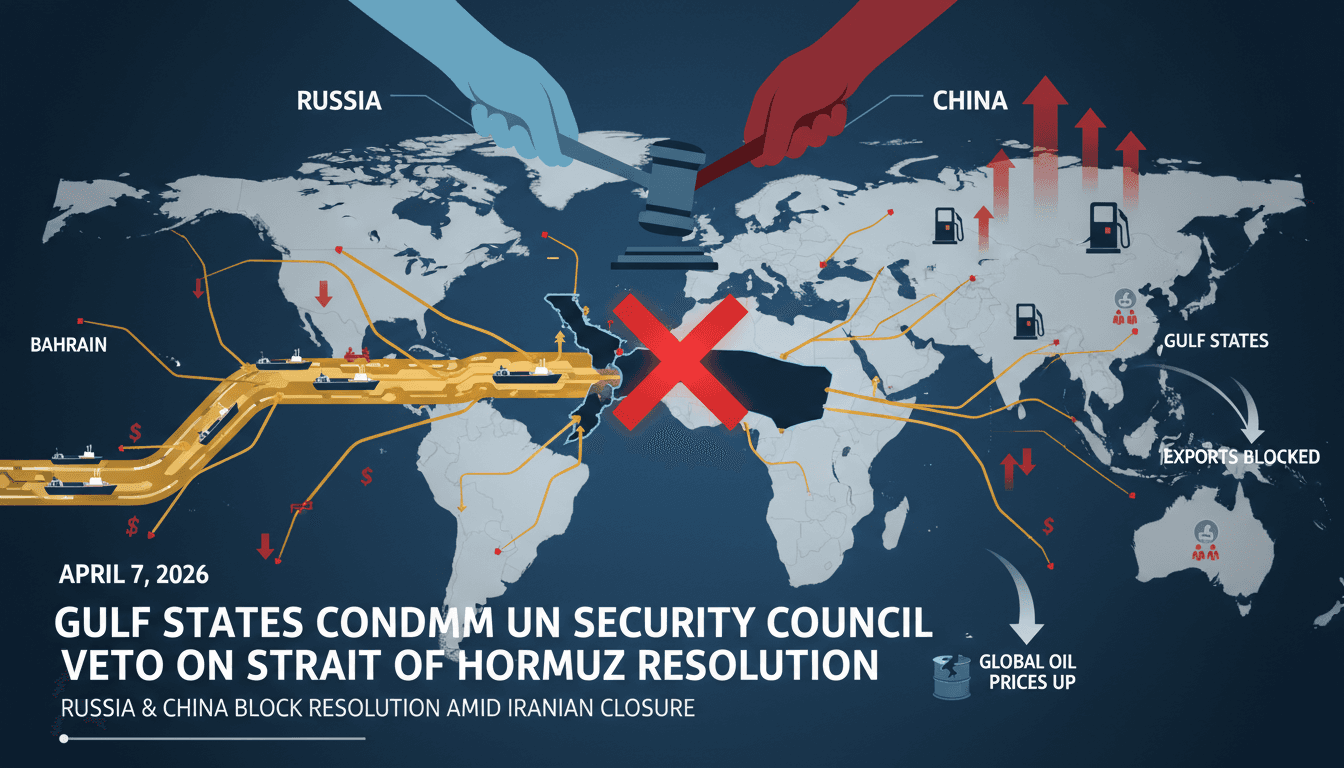
Here's what it means for you.
If you rely on global oil markets, the recent geopolitical tensions could impact your costs and supply chains.
Why it matters
The rejection of the resolution signals a potential escalation in regional conflicts that could disrupt global energy supplies.
What happened (in 30 seconds)
- On April 7, 2026, the UN Security Council rejected a resolution to reopen the Strait of Hormuz due to vetoes from Russia and China.
- Gulf Cooperation Council members expressed regret, highlighting the veto's implication that threats to international waterways may go unchecked.
- Iran has closed the strait since late February 2026, significantly disrupting global oil shipments.
The context you actually need
- The Strait of Hormuz is a critical chokepoint for global energy trade, accounting for 20% of the world's oil shipments prior to its closure.
- Iran's closure of the strait was a retaliatory measure following U.S. and Israeli military strikes, escalating regional tensions.
- Gulf states, led by Bahrain, sought international cooperation to reopen the strait but faced opposition from major powers, complicating their security and economic interests.
What's really happening
The recent veto by Russia and China against the Bahrain-drafted resolution to reopen the Strait of Hormuz underscores a complex interplay of geopolitical interests and regional security dynamics. The strait is not just a vital maritime route; it is a linchpin of global energy supply, with approximately 20% of the world's oil shipments transiting through it. The closure by Iran, initiated in late February 2026, was a direct response to military actions by the U.S. and Israel, which have heightened tensions in an already volatile region.
The Gulf Cooperation Council (GCC) states, including Saudi Arabia, Qatar, Kuwait, and the UAE, along with Jordan, expressed their dismay at the veto, framing it as a dangerous precedent that could embolden further threats to international waterways. Bahrain's Foreign Minister, Abdullatif bin Rashid Al Zayani, articulated this sentiment, emphasizing the need for a collective international response to such threats. The veto not only complicates the immediate situation but also reflects broader geopolitical rifts, particularly between Western powers and Russia and China, who have been increasingly assertive in their foreign policy stances.
The implications of this veto extend beyond immediate security concerns; they resonate deeply within global oil markets. The closure of the Strait of Hormuz has already led to a 95% collapse in shipping transits, resulting in soaring fuel prices, particularly in the UAE, where Dubai crude has surpassed $166 per barrel. This spike in oil prices is likely to inflate costs across various sectors, affecting everything from transportation to consumer goods. The UAE, despite its efforts to diversify its economy, remains heavily reliant on oil exports, making it particularly vulnerable to such disruptions.
As the situation unfolds, the GCC states are likely to continue advocating for de-escalation while preparing for potential military responses to Iranian provocations. This ongoing tension will keep global oil markets on edge, with volatility expected as stakeholders react to developments in the region.
Who feels it first (and how)
- Oil and gas sector: Companies reliant on stable oil prices will experience immediate impacts on costs and profitability.
- Consumers in the UAE: Higher fuel prices will lead to increased costs for goods and services, affecting everyday expenses.
- Global shipping companies: Disruptions in shipping routes will delay imports and exports, complicating logistics and supply chains.
What to watch next
- Global oil prices: Monitor fluctuations as they will indicate market reactions to ongoing tensions in the region.
- Military developments: Keep an eye on any escalations in military actions by Iran or GCC states, which could further impact shipping routes.
- International diplomatic efforts: Watch for any new resolutions or negotiations aimed at de-escalating the situation, particularly involving major powers like the U.S., Russia, and China.
The Strait of Hormuz remains closed, significantly disrupting global oil shipments.
Continued volatility in oil prices as markets react to geopolitical developments.
The long-term implications of the veto on international relations and regional security dynamics.
Frequently Asked Questions
- Why it matters?
- The rejection of the resolution signals a potential escalation in regional conflicts that could disrupt global energy supplies.
- What happened (in 30 seconds)?
- On April 7, 2026, the UN Security Council rejected a resolution to reopen the Strait of Hormuz due to vetoes from Russia and China. Gulf Cooperation Council members expressed regret, highlighting the veto's implication that threats to international waterways may go unchecked. Iran has closed the strait since late February 2026, significantly disrupting global oil shipments.
- What's really happening?
- The recent veto by Russia and China against the Bahrain-drafted resolution to reopen the Strait of Hormuz underscores a complex interplay of geopolitical interests and regional security dynamics. The strait is not just a vital maritime route; it is a linchpin of global energy supply, with approximately 20% of the world's oil shipments transiting through it. The closure by Iran, initiated in late February 2026, was a direct response to military actions by the U.S. and Israel, which have heightene
- Who feels it first (and how)?
- Oil and gas sector: Companies reliant on stable oil prices will experience immediate impacts on costs and profitability. Consumers in the UAE: Higher fuel prices will lead to increased costs for goods and services, affecting everyday expenses. Global shipping companies: Disruptions in shipping routes will delay imports and exports, complicating logistics and supply chains.
- What to watch next?
- Global oil prices: Monitor fluctuations as they will indicate market reactions to ongoing tensions in the region. Military developments: Keep an eye on any escalations in military actions by Iran or GCC states, which could further impact shipping routes. International diplomatic efforts: Watch for any new resolutions or negotiations aimed at de-escalating the situation, particularly involving major powers like the U.S., Russia, and China.
Pan-Arab news coverage spanning politics, business, sports, and regional affairs.
"Asharq Al-Awsat reflects a broad Arab editorial perspective with strong attention to regional geopolitics."
— A47 Editor
أسف خليجي بعد رفض قرار أممي حول «هرمز»
Saudi Crown Prince Mohammed bin Salman received a phone call from Pakistani Prime Minister Muhammad Shahbaz Sharif, during which they discussed the developments in the region. This conversation follows the recent rejection of a UN resolution concerni...
Arabic-language reporting focused on domestic developments in Saudi Arabia.
"Okaz is a mainstream Saudi newspaper that often reflects domestic priorities and official-facing coverage."
— A47 Editor
ولي العهد ورئيس وزراء باكستان يستعرضان تطورات الأوضاع في المنطقة
Crown Prince and Prime Minister Mohammed bin Salman received a phone call from Pakistani Prime Minister Shahbaz Sharif, during which they discussed the ongoing developments in the region. Sharif condemned the continuous Iranian attacks targeting faci...
Arabic-language coverage of political affairs and current events.
"Okaz political coverage typically follows mainstream Saudi framing on national and regional affairs."
— A47 Editor
رئيس الوزراء الباكستاني: نقلت لولي العهد تضامن بلادي الثابت مع السعودية
Pakistani Prime Minister Shahbaz Sharif announced a phone call with Saudi Crown Prince Mohammed bin Salman, expressing Pakistan's unwavering solidarity with Saudi Arabia and condemning the Iranian attack on oil facilities in Jubail. Sharif emphasized...