
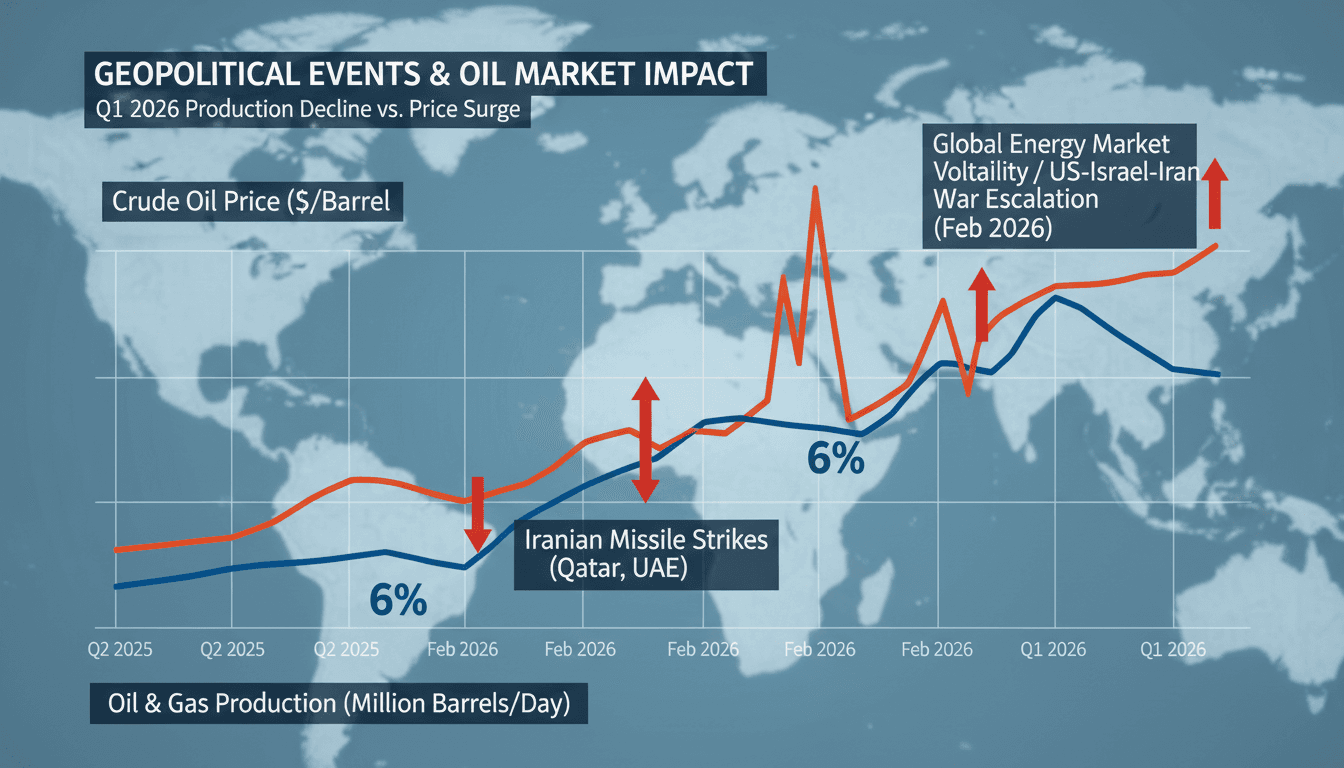
ExxonMobil and Chevron report 6% production declines due to Iran war disruptions
Here's what it means for you.
Rising energy prices and supply chain disruptions could impact your cost of living and business operations.
Why it matters
The ongoing conflict in the Middle East is disrupting global energy supplies, leading to increased prices and economic uncertainty.
What happened (in 30 seconds)
- ExxonMobil and Chevron reported a 6% production decline in Q1 2026, largely due to operational shutdowns linked to the US-Israel-Iran war.
- Iranian missile strikes targeted energy facilities in Qatar and the UAE, causing significant outages and shipping disruptions in the Strait of Hormuz.
- Despite lower output, elevated oil prices provided some financial relief, with upstream earnings partially offsetting production losses.
The context you actually need
- The US-Israel-Iran conflict escalated in late February 2026, leading to retaliatory strikes that directly impacted energy infrastructure.
- Qatar's LNG capacity faced a 17% outage, while UAE facilities experienced damage, prompting force majeure declarations and production halts.
- The Strait of Hormuz, a critical shipping route, saw disruptions affecting 20% of global energy shipments, driving oil prices above $100 per barrel.
What's really happening
The recent disclosures from ExxonMobil and Chevron reveal the significant impact of geopolitical tensions on energy production and pricing. The US-Israel conflict with Iran, which escalated in late February 2026, has led to Iranian missile strikes targeting key energy infrastructure in both Qatar and the UAE. This has resulted in operational shutdowns and force majeure declarations, which are legal clauses that allow companies to suspend obligations due to unforeseen circumstances.
ExxonMobil reported a 6% decline in global oil and gas production for Q1 2026, dropping to below 5 million barrels of oil equivalent per day (boe/d) from Q4 2025 levels. This decline is particularly concerning given that 20% of Exxon's prior-year output was derived from the affected regions. Chevron echoed similar concerns, disclosing a production drop to approximately 3.8–3.9 million boe/d, also a 6% decrease from previous figures.
The operational shutdowns were compounded by shipping disruptions in the Strait of Hormuz, a vital corridor through which a significant portion of the world's oil is transported. The partial closure of this route has exacerbated supply constraints, pushing oil prices above $100 per barrel initially. While elevated prices have provided some financial relief to upstream segments, the downstream sectors are facing substantial hits, with estimated losses ranging from $3.5 to $6.5 billion due to undelivered cargoes.
The aftermath of these disruptions has led to volatility in energy stocks, as the market grapples with the dual pressures of rising prices and declining production volumes. The UAE government has intervened to curb unjustified price hikes and has allocated $270 million in economic aid to support businesses and families facing inflationary pressures. Analysts predict that repairs to damaged facilities could take up to five years, particularly for Qatar's LNG capacity, which is expected to remain significantly impacted.
This situation highlights the fragility of global energy markets and the far-reaching implications of geopolitical conflicts. As energy companies navigate these challenges, consumers and businesses alike may face rising costs and supply chain disruptions that could linger for the foreseeable future.
Who feels it first (and how)
- Consumers: Higher energy prices will likely lead to increased costs for goods and services.
- Businesses: Companies reliant on energy supplies may face operational disruptions and increased expenses.
- Investors: Volatility in energy stocks could affect investment portfolios and market stability.
- Residents in the UAE: Local populations may experience inflation and supply shortages due to government interventions.
What to watch next
- Oil price trends: Monitoring fluctuations in oil prices will indicate the ongoing impact of geopolitical tensions on global markets.
- Repair timelines for affected facilities: Understanding how quickly energy infrastructure can be restored will provide insights into future production levels.
- Economic support measures: Observing government interventions in the UAE and other affected regions will reveal how authorities are managing inflation and supply chain issues.
ExxonMobil and Chevron reported a 6% production decline due to the Iran conflict.
Energy prices will remain elevated as supply constraints persist.
The long-term implications of the conflict on global energy markets and consumer prices.
Frequently Asked Questions
- Why it matters?
- The ongoing conflict in the Middle East is disrupting global energy supplies, leading to increased prices and economic uncertainty.
- What happened (in 30 seconds)?
- ExxonMobil and Chevron reported a 6% production decline in Q1 2026, largely due to operational shutdowns linked to the US-Israel-Iran war. Iranian missile strikes targeted energy facilities in Qatar and the UAE, causing significant outages and shipping disruptions in the Strait of Hormuz. Despite lower output, elevated oil prices provided some financial relief, with upstream earnings partially offsetting production losses.
- What's really happening?
- The recent disclosures from ExxonMobil and Chevron reveal the significant impact of geopolitical tensions on energy production and pricing. The US-Israel conflict with Iran, which escalated in late February 2026, has led to Iranian missile strikes targeting key energy infrastructure in both Qatar and the UAE. This has resulted in operational shutdowns and force majeure declarations, which are legal clauses that allow companies to suspend obligations due to unforeseen circumstances. ExxonMobil r
- Who feels it first (and how)?
- Consumers: Higher energy prices will likely lead to increased costs for goods and services. Businesses: Companies reliant on energy supplies may face operational disruptions and increased expenses. Investors: Volatility in energy stocks could affect investment portfolios and market stability. Residents in the UAE: Local populations may experience inflation and supply shortages due to government interventions.
- What to watch next?
- Oil price trends: Monitoring fluctuations in oil prices will indicate the ongoing impact of geopolitical tensions on global markets. Repair timelines for affected facilities: Understanding how quickly energy infrastructure can be restored will provide insights into future production levels. Economic support measures: Observing government interventions in the UAE and other affected regions will reveal how authorities are managing inflation and supply chain issues.
Economic trends, financial markets, corporate news, and policy from a Russian perspective.
"RT is widely criticized for promoting pro-Kremlin narratives and is considered by many to be a state propaganda outlet."
— A47 Editor
US energy giants report fallout from Middle East war
US oil giants ExxonMobil and Chevron have reported a decline in output due to disruptions in energy supply caused by the ongoing conflict in Iran. This situation has led to significant challenges for these companies as they navigate the geopolitical ...
Global markets, investing, and macroeconomics from a premier financial newsroom.
"Bloomberg is respected for in-depth financial reporting and data-driven analysis."
— A47 Editor
Iran War Erodes Exxon, Chevron Profits Even as Oil Prices Soar
The ongoing conflict in Iran has led to significant disruptions in oil and natural gas production, impacting major energy companies like Exxon and Chevron. Despite soaring oil prices, these companies are facing production losses and hedging challenge...