
NASA's Artemis II Mission to Test New Direct Reentry Trajectory After Heat Shield Issues
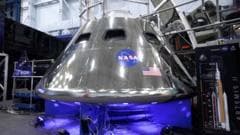
Here's what it means for you.
The success of Artemis II's reentry test could redefine safety standards for future space missions, impacting industries reliant on aerospace technologies.
Why it matters
The Artemis program is pivotal for establishing a sustainable lunar presence, influencing global space exploration strategies and partnerships.
What happened (in 30 seconds)
- NASA's Artemis II mission is set to validate a new direct reentry trajectory on April 10, 2026, off San Diego, California.
- The mission follows the Artemis I mission, which revealed significant heat shield damage due to a problematic 'skip' reentry maneuver.
- Four astronauts will test the new trajectory, prioritizing crew safety during atmospheric entry at speeds exceeding 32 times the speed of sound.
The context you actually need
- Artemis I launched on November 16, 2022, successfully validating the Space Launch System and Orion spacecraft, despite post-mission heat shield anomalies.
- Investigations from 2023 to 2024 confirmed that the 'skip' reentry caused uneven ablation of the heat shield, leading to cracks and material loss.
- The decision for a direct reentry on Artemis II aims to ensure uniform heating and ablation, enhancing safety for crewed space missions.
What's really happening
NASA's Artemis program is a cornerstone of its strategy to return humans to the Moon and eventually establish a sustainable presence there. The Artemis I mission, which launched in late 2022, was crucial for testing the Space Launch System (SLS) and the Orion spacecraft. However, upon its return, significant heat shield damage was discovered, attributed to the 'skip' reentry maneuver. This maneuver, designed to manage forces during reentry, inadvertently caused uneven ablation of the Avcoat heat shield material, leading to cracks and char loss at over 100 sites.
In response, NASA undertook extensive investigations, conducting 121 thermal tests and analyzing 200 samples of the heat shield material. By December 2024, the agency identified the cause of the anomalies and announced a revised trajectory for Artemis II, which eliminates the problematic 'skip' maneuver. Instead, the mission will employ a direct reentry profile, allowing for more uniform heating and ablation, thus enhancing crew safety.
The upcoming Artemis II mission, scheduled for launch on April 1, 2026, will see four astronauts—Reid Wiseman, Victor Glover, Christina Koch, and Jeremy Hansen—test this new trajectory. The mission's reentry test will occur on April 10, 2026, at approximately 8:07 p.m. EDT, monitored by NASA Armstrong chase planes. This direct reentry will occur at speeds exceeding 25,000 mph, or 32 times the speed of sound, a critical factor in assessing the effectiveness of the new heat shield strategy.
The implications of this mission extend beyond immediate safety concerns. Successful validation of the direct reentry trajectory could set new standards for future crewed missions, influencing design and operational protocols for spacecraft. Additionally, the Artemis program's success is vital for international collaborations in space exploration, as countries like the UAE have shown interest in participating through initiatives like the Artemis Accords.
Who feels it first (and how)
- Aerospace engineers: They will need to adapt designs based on the outcomes of the Artemis II mission.
- Space exploration agencies: International partners may adjust their strategies based on NASA's findings.
- Investors in aerospace technology: Companies developing heat shield materials and reentry technologies could see shifts in demand.
- STEM educators: Increased interest in space missions may lead to more educational programs and funding in related fields.
What to watch next
- Reentry test results: The data collected during the Artemis II reentry will be crucial for future missions and could influence global aerospace standards.
- International partnerships: Watch for announcements regarding collaborations stemming from the Artemis program, particularly with nations involved in the Artemis Accords.
- Technological advancements: Innovations in heat shield materials and reentry technologies may emerge as a direct response to the findings from Artemis II.
The Artemis II mission will validate a new direct reentry trajectory.
Successful reentry may lead to enhanced safety protocols for future crewed missions.
The long-term impact on international collaborations in space exploration remains to be seen.
Frequently Asked Questions
- Why it matters?
- The Artemis program is pivotal for establishing a sustainable lunar presence, influencing global space exploration strategies and partnerships.
- What happened (in 30 seconds)?
- NASA's Artemis II mission is set to validate a new direct reentry trajectory on April 10, 2026, off San Diego, California. The mission follows the Artemis I mission, which revealed significant heat shield damage due to a problematic 'skip' reentry maneuver. Four astronauts will test the new trajectory, prioritizing crew safety during atmospheric entry at speeds exceeding 32 times the speed of sound.
- What's really happening?
- NASA's Artemis program is a cornerstone of its strategy to return humans to the Moon and eventually establish a sustainable presence there. The Artemis I mission, which launched in late 2022, was crucial for testing the Space Launch System (SLS) and the Orion spacecraft. However, upon its return, significant heat shield damage was discovered, attributed to the 'skip' reentry maneuver. This maneuver, designed to manage forces during reentry, inadvertently caused uneven ablation of the Avcoat heat
- Who feels it first (and how)?
- Aerospace engineers: They will need to adapt designs based on the outcomes of the Artemis II mission. Space exploration agencies: International partners may adjust their strategies based on NASA's findings. Investors in aerospace technology: Companies developing heat shield materials and reentry technologies could see shifts in demand. STEM educators: Increased interest in space missions may lead to more educational programs and funding in related fields.
- What to watch next?
- Reentry test results: The data collected during the Artemis II reentry will be crucial for future missions and could influence global aerospace standards. International partnerships: Watch for announcements regarding collaborations stemming from the Artemis program, particularly with nations involved in the Artemis Accords. Technological advancements: Innovations in heat shield materials and reentry technologies may emerge as a direct response to the findings from Artemis II.
Reports on climate change, environmental science, sustainability, and nature.
"BBC News is widely regarded as a reputable international news organization, known for its impartial tone and public service mandate."
— A47 Editor
BBC tours Orion spacecraft model ahead of Artemis II return
The Orion spacecraft is set to return the Artemis II crew to Earth on April 10, 2026, following a successful mission that included a historic lunar flyby. The crew, which launched on April 1, 2026, has conducted various tests and maneuvers aboard the...
Global markets, investing, and macroeconomics from a premier financial newsroom.
"Bloomberg is respected for in-depth financial reporting and data-driven analysis."
— A47 Editor
With Artemis II, NASA Readies the Lunar Economy
NASA's Artemis II mission successfully launched on April 1, 2026, marking the agency's first crewed lunar mission in over 50 years, as four astronauts embarked on a journey to the Moon from Kennedy Space Center in Florida. This mission is a significa...
Scientific research, technology, environment, and society.
"Scientific American is one of the oldest and most authoritative science magazines, known for deep dives into science, technology, and society."
— A47 Editor
NASA’s Artemis II moon mission is on track for Friday splashdown
NASA's Artemis II mission is on track for a splashdown on April 10, 2026, after an eight-day journey in space, marking a significant milestone as the first crewed flight to the Moon in over 50 years. The crew, consisting of four astronauts, has succe...
Science and technology stories including AI.
"Longstanding science magazine with thoughtful AI coverage."
— A47 Editor
NASA’s Artemis II moon mission is on track for Friday splashdown
NASA's Artemis II mission is on track for a splashdown on April 10, 2026, after an eight-day journey in space, marking a significant milestone as the first crewed flight to the Moon in over 50 years. The crew, consisting of four astronauts, has succe...
Scientific research, space, environment, and health coverage.
"The New York Times is a globally recognized newspaper offering authoritative reporting with a center-left editorial stance."
— A47 Editor
For Artemis II, Returning to Earth May Be the Most Dangerous Part of the Mission
The Artemis II mission, which launched on April 1, 2026, is currently returning to Earth after successfully completing a historic lunar flyby. However, the astronauts face significant risks during re-entry due to a flawed heat shield, raising concern...
Scientific discoveries, health, technology, and natural phenomena.
"Live Science reports on scientific discoveries, health, technology, and natural phenomena with a popular science tone."
— A47 Editor
There's an issue with the Artemis II heat shield, but NASA isn't worried. Here's why.
NASA's Artemis II mission is currently facing a challenge with its heat shield, which is compromised as the astronauts prepare for reentry into Earth's atmosphere at unprecedented speeds. Despite this issue, NASA officials express confidence in the s...
U.S. national news with a West Coast perspective.
"The Los Angeles Times is a major West Coast newspaper offering in-depth reporting with a liberal editorial tone and strong regional focus."
— A47 Editor
A cracked heat shield rattled NASA after Artemis I. Now, Artemis II will put the fix to the test
NASA's Artemis II mission is set to test a new trajectory during its reentry into Earth's atmosphere, following a cracked heat shield that was discovered during the Artemis I mission. This critical test aims to ensure the safety and effectiveness of ...
International news with cultural insight.
"The Los Angeles Times is a major West Coast newspaper offering in-depth reporting with a liberal editorial tone and strong regional focus."
— A47 Editor
A cracked heat shield rattled NASA after Artemis I. Now, Artemis II will put the fix to the test
NASA's Artemis II mission is set to test a new trajectory during its reentry into Earth's atmosphere, following a cracked heat shield that was discovered during the Artemis I mission. This critical test aims to ensure the safety and effectiveness of ...