
Trump Rejects Iran's Ceasefire Proposal Amid Ongoing Middle East Tensions
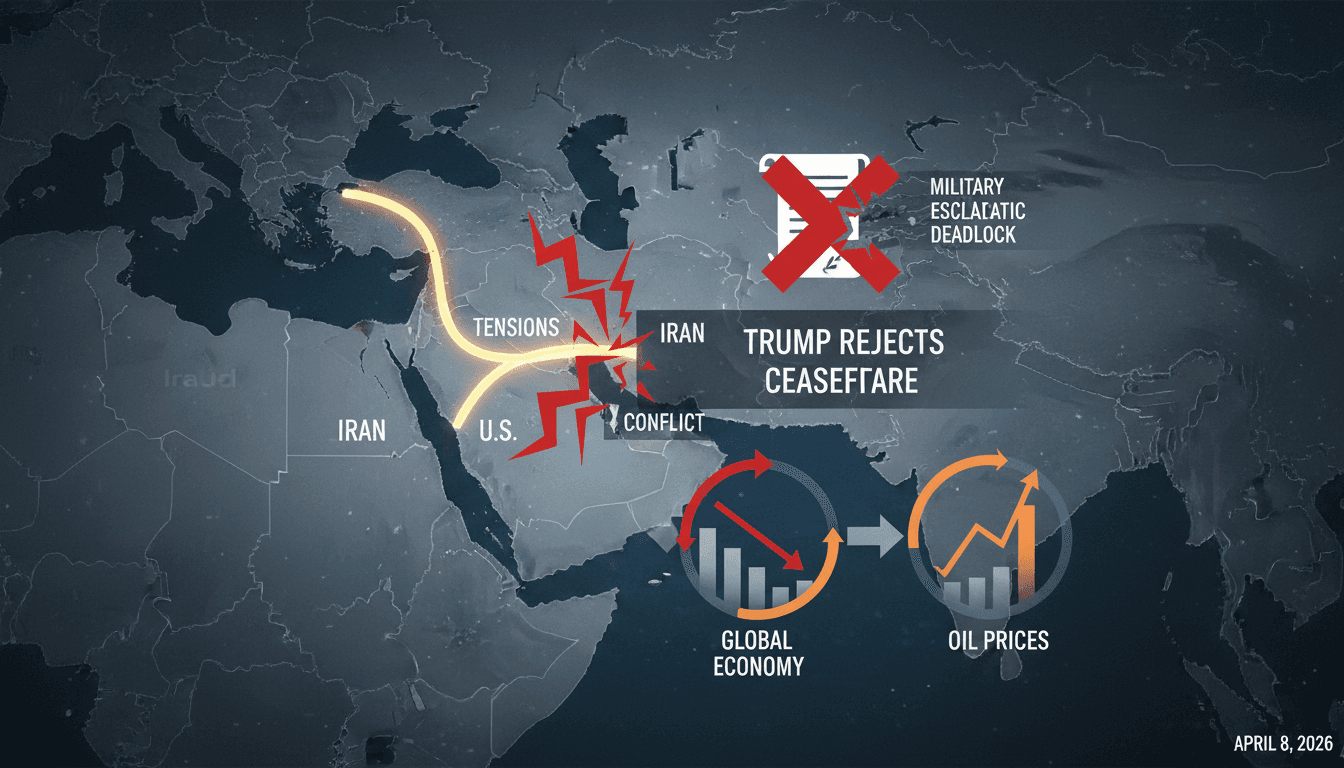
Here's what it means for you.
The ongoing Middle East conflict could impact global oil prices and regional stability, affecting your investments and daily costs.
Why it matters
The rejection of Iran's ceasefire proposal signals a continuation of hostilities, which can destabilize oil markets and increase geopolitical tensions.
What happened (in 30 seconds)
- On April 8, 2026, White House Press Secretary Karoline Leavitt announced that President Trump discarded Iran's initial 10-point ceasefire proposal.
- Iran subsequently submitted a revised proposal and agreed to reopen the Strait of Hormuz, a critical maritime route for oil shipments.
- The current status is a fragile two-week ceasefire following U.S. military operations in the region.
The context you actually need
- President Trump's second term has intensified pressure on Iran, demanding dismantlement of nuclear capabilities and regional proxies.
- Operation Epic Fury, launched by the U.S. on February 28, 2026, targeted Iranian military assets, leading to significant casualties and a request for ceasefire from Iran.
- Economic impacts have been felt in the UAE, with oil prices surging and stock markets dropping significantly due to the conflict.
What's really happening
The rejection of Iran's initial ceasefire proposal by President Trump is rooted in a broader strategy of maximum pressure aimed at curtailing Iran's military capabilities and nuclear ambitions. Trump's administration has maintained strict red lines: no nuclear weapons, no ballistic missiles, and no regional proxies. This stance reflects a commitment to U.S. national security interests and regional allies, particularly Israel, which has been actively involved in military operations against Iranian targets.
The backdrop of this diplomatic maneuvering is a complex web of military engagements and economic repercussions. Following the U.S. Operation Epic Fury, which lasted 38 days and resulted in over 13,000 targets struck, Iran found itself in a precarious position, prompting its request for a ceasefire. However, the initial proposal was viewed as insufficient by the U.S., leading to its outright rejection. This rejection was not merely a dismissal of terms but a strategic move to reinforce U.S. leverage in ongoing negotiations.
Iran's subsequent submission of a more viable ceasefire proposal indicates a recognition of its weakened position. The reopening of the Strait of Hormuz is particularly significant, as it is a vital conduit for global oil supplies. This concession may be an attempt to stabilize the situation and mitigate further military actions that could exacerbate the conflict.
The implications of this rejection extend beyond immediate military concerns. The economic fallout has been palpable, especially in the UAE, where oil prices have surged past $120 per barrel, and stock markets in Dubai and Abu Dhabi have seen a combined loss of $120 billion since the onset of hostilities. This volatility not only affects investors but also impacts everyday consumers through rising fuel prices and potential shortages.
As negotiations continue, the fragility of the ceasefire remains a critical concern. Iran has accused the U.S. of violations, particularly in relation to Israeli strikes on Hezbollah, which have resulted in significant casualties. This ongoing tension complicates the diplomatic landscape and raises questions about the durability of any future agreements.
Who feels it first (and how)
- Investors: Those with stakes in oil and energy markets will experience immediate impacts from fluctuating prices.
- Consumers: Rising fuel costs will affect daily expenses and transportation.
- Regional governments: Countries like the UAE and Saudi Arabia will face economic strain and security challenges due to ongoing hostilities.
What to watch next
- Iran's revised proposal: Monitor how Iran's new terms are received and whether they lead to a more stable ceasefire.
- Oil price fluctuations: Keep an eye on global oil prices as they react to developments in the conflict, which could affect your costs.
- U.S. military actions: Watch for any further military operations or diplomatic initiatives from the U.S. that could escalate or de-escalate tensions.
The U.S. has rejected Iran's initial ceasefire proposal.
Ongoing negotiations will continue, with potential for further military actions.
The long-term stability of the ceasefire and its impact on regional security remains uncertain.
Frequently Asked Questions
- Why it matters?
- The rejection of Iran's ceasefire proposal signals a continuation of hostilities, which can destabilize oil markets and increase geopolitical tensions.
- What happened (in 30 seconds)?
- On April 8, 2026, White House Press Secretary Karoline Leavitt announced that President Trump discarded Iran's initial 10-point ceasefire proposal. Iran subsequently submitted a revised proposal and agreed to reopen the Strait of Hormuz, a critical maritime route for oil shipments. The current status is a fragile two-week ceasefire following U.S. military operations in the region.
- What's really happening?
- The rejection of Iran's initial ceasefire proposal by President Trump is rooted in a broader strategy of maximum pressure aimed at curtailing Iran's military capabilities and nuclear ambitions. Trump's administration has maintained strict red lines: no nuclear weapons, no ballistic missiles, and no regional proxies. This stance reflects a commitment to U.S. national security interests and regional allies, particularly Israel, which has been actively involved in military operations against Irania
- Who feels it first (and how)?
- Investors: Those with stakes in oil and energy markets will experience immediate impacts from fluctuating prices. Consumers: Rising fuel costs will affect daily expenses and transportation. Regional governments: Countries like the UAE and Saudi Arabia will face economic strain and security challenges due to ongoing hostilities.
- What to watch next?
- Iran's revised proposal: Monitor how Iran's new terms are received and whether they lead to a more stable ceasefire. Oil price fluctuations: Keep an eye on global oil prices as they react to developments in the conflict, which could affect your costs. U.S. military actions: Watch for any further military operations or diplomatic initiatives from the U.S. that could escalate or de-escalate tensions.
Arabic-language coverage of political affairs and current events.
"Okaz political coverage typically follows mainstream Saudi framing on national and regional affairs."
— A47 Editor
«البيت الأبيض»: ترمب ألقى بخطة إيران الأولية في القمامة.. وخطوطه الحمراء لم تتغير
White House spokesperson Caroline Levitt confirmed that President Donald Trump rejected Iran's initial 10-point proposal, discarding it entirely. She noted that Iran later presented a more reasonable plan, but emphasized that Trump's red lines remain...
Arabic-language UAE newspaper coverage focused on domestic affairs, public institutions, business, society, and regional developments.
"Al Khaleej coverage generally reflects a mainstream UAE editorial lens with strong attention to public affairs, institutions, and regional developments."
— A47 Editor
البيت الأبيض: ترامب رمى المقترح الإيراني الأول للتفاوض في القمامة
The White House spokesperson, Caroline Levitt, stated on Wednesday that the military operation known as the 'Epic Anger' has achieved its main objectives, while also indicating that former President Trump dismissed the initial Iranian proposal for ne...
Arabic-language digital news outlet covering UAE, regional, and international developments with broad general-news coverage.
"Al Ain News coverage typically blends UAE-focused reporting with wider Arab regional and international news."
— A47 Editor
البيت الأبيض ينفي قبول «خطة إيران».. خطوط ترامب الحمراء لم تتغير
The White House spokesperson, Karoline Leavitt, denied that Washington accepted Iran's 10-point ceasefire plan, emphasizing that President Donald Trump's red lines remain unchanged, including the cessation of uranium enrichment.