
European Nations Propose Naval Mission in Strait of Hormuz Excluding US
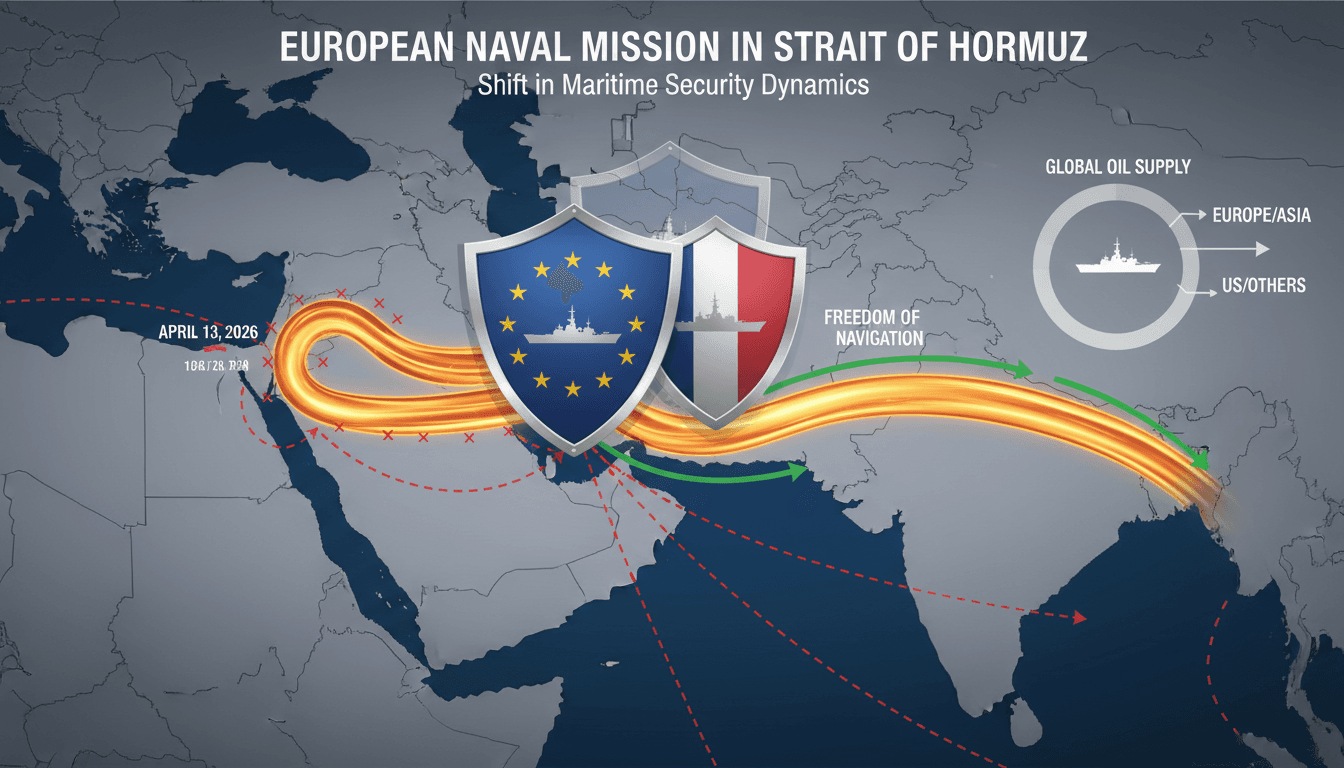
Here's what it means for you.
If you rely on global oil markets, this emerging naval mission could impact shipping costs and energy prices.
Why it matters
The Strait of Hormuz is a critical chokepoint for global oil supply, with approximately 20 million barrels transiting daily.
What happened (in 30 seconds)
- European nations are planning a postwar naval security mission in the Strait of Hormuz, led by France and the UK.
- The United States has initiated a naval blockade of Iranian ports to enforce compliance on vessels, heightening tensions in the region.
- Iran has threatened retaliatory actions, including mining the strait, which could disrupt global energy supplies.
The context you actually need
- The U.S.-Iran conflict escalated in 2026, with military operations and failed ceasefire negotiations leading to increased naval tensions.
- European leaders are seeking to establish a coalition that excludes the U.S., Israel, and Iran, aiming to ensure freedom of navigation in the strait.
- The economic stakes are high, as disruptions in the Strait of Hormuz could lead to significant increases in oil prices and shipping costs globally.
What's really happening
The proposed naval mission by European nations arises from a complex backdrop of geopolitical tensions and economic imperatives. The Strait of Hormuz is a vital maritime corridor, facilitating the transit of about 20 million barrels of oil daily, which accounts for roughly 20% of the world's oil supply. The ongoing U.S.-Iran conflict has intensified since the launch of Operation Epic Fury on February 28, 2026, which aimed to curb Iranian influence and activities in the region. Following failed ceasefire negotiations on April 8 and subsequent talks in Islamabad, the U.S. imposed a naval blockade on Iranian ports on April 13, 2026. This blockade is designed to economically isolate Iran by enforcing compliance on vessels entering or exiting Iranian waters while allowing transit through the Strait of Hormuz to non-Iranian ports.
The blockade's immediate impact has been significant, with reports indicating that nine ships complied within the first 48 hours, and up to 13 vessels turned around by April 16. This enforcement has raised concerns about potential retaliatory measures from Iran, which has threatened to disrupt shipping in the Red Sea and has reportedly mined the strait, increasing risks to global energy supplies.
In response to these developments, European leaders, particularly French President Emmanuel Macron and UK Prime Minister Keir Starmer, are advocating for a postwar naval security mission that would exclude U.S. involvement. This initiative aims to restore freedom of navigation through demining operations, warship escorts, and logistical support for vessels stranded due to the blockade. The proposal has garnered attention, with invitations extended to China and India for a virtual meeting to discuss potential participation in this coalition.
Germany has also signaled its likely participation, pending parliamentary approval. This move reflects a broader European strategy to assert its influence in a region where U.S. dominance has been challenged. The exclusion of the U.S. from this coalition is particularly noteworthy, as it indicates a shift in the geopolitical landscape and a desire among European nations to take a more proactive role in ensuring maritime security.
The implications of this naval mission extend beyond military considerations; they encompass economic factors that could affect global oil prices and shipping logistics. As the situation evolves, the potential for increased freight rates and oil import costs looms large, particularly for regions like Dubai, which relies heavily on stable energy prices.
Who feels it first (and how)
- Shipping companies: Increased costs and logistical challenges due to potential disruptions in the Strait of Hormuz.
- Oil traders: Volatility in oil prices as markets react to geopolitical tensions and supply chain uncertainties.
- Consumers in Dubai: Higher energy prices and logistics costs impacting daily living expenses for the city's 3.5 million residents.
- European governments: Increased pressure to manage energy security and economic stability amid rising oil prices.
What to watch next
- Implementation of the naval mission: Monitor the progress of European discussions and potential coalition formation, as this will directly impact maritime security in the region.
- Iran's response: Watch for any retaliatory actions from Iran that could escalate tensions and disrupt oil supply chains.
- Oil price fluctuations: Keep an eye on Brent crude prices, as any significant changes could signal broader economic impacts and shifts in global energy markets.
The U.S. has initiated a naval blockade of Iranian ports, impacting global shipping.
European nations will continue to pursue a postwar naval mission to secure the Strait of Hormuz.
The extent of Iran's retaliatory measures and their potential impact on global oil supply.
Frequently Asked Questions
- Why it matters?
- The Strait of Hormuz is a critical chokepoint for global oil supply, with approximately 20 million barrels transiting daily.
- What happened (in 30 seconds)?
- European nations are planning a postwar naval security mission in the Strait of Hormuz, led by France and the UK. The United States has initiated a naval blockade of Iranian ports to enforce compliance on vessels, heightening tensions in the region. Iran has threatened retaliatory actions, including mining the strait, which could disrupt global energy supplies.
- What's really happening?
- The proposed naval mission by European nations arises from a complex backdrop of geopolitical tensions and economic imperatives. The Strait of Hormuz is a vital maritime corridor, facilitating the transit of about 20 million barrels of oil daily, which accounts for roughly 20% of the world's oil supply. The ongoing U.S.-Iran conflict has intensified since the launch of Operation Epic Fury on February 28, 2026, which aimed to curb Iranian influence and activities in the region. Following failed c
- Who feels it first (and how)?
- Shipping companies: Increased costs and logistical challenges due to potential disruptions in the Strait of Hormuz. Oil traders: Volatility in oil prices as markets react to geopolitical tensions and supply chain uncertainties. Consumers in Dubai: Higher energy prices and logistics costs impacting daily living expenses for the city's 3.5 million residents. European governments: Increased pressure to manage energy security and economic stability amid rising oil prices.
- What to watch next?
- Implementation of the naval mission: Monitor the progress of European discussions and potential coalition formation, as this will directly impact maritime security in the region. Iran's response: Watch for any retaliatory actions from Iran that could escalate tensions and disrupt oil supply chains. Oil price fluctuations: Keep an eye on Brent crude prices, as any significant changes could signal broader economic impacts and shifts in global energy markets.
Arabic-language UAE newspaper coverage focused on domestic affairs, public institutions, business, society, and regional developments.
"Al Khaleej coverage generally reflects a mainstream UAE editorial lens with strong attention to public affairs, institutions, and regional developments."
— A47 Editor
خطة أوروبية محتملة لتأمين مضيق هرمز تستثني واشنطن
European Union countries are exploring the establishment of a naval force to ensure navigation security in the Strait of Hormuz without U.S. involvement, amid differing opinions within Europe regarding the nature of this alliance. The discussions com...
Markets desk coverage, trading insights, and investor updates.
"WSJ’s markets reporting provides in-depth analysis and context for investors."
— A47 Editor
Europe Works on Postwar Hormuz Shipping Plan—Sans U.S.
Europe is actively developing a postwar shipping plan for the Hormuz Strait, notably excluding the United States from the process, which reflects a significant shift in regional maritime security dynamics.
Arabic-language coverage of international news and geopolitics.
"RT Arabic is a Russian state-funded outlet often criticized for promoting Kremlin-aligned narratives."
— A47 Editor
صحيفة: الأوروبيون يعملون على تشكيل تحالف لضمان الملاحة في مضيق هرمز بدون واشنطن
The Wall Street Journal reports that European countries are working on a plan to form a coalition aimed at ensuring freedom of navigation in the Strait of Hormuz, excluding the United States. This initiative reflects a shift in European strategy rega...