
U.S. Dollar Reaches One-Week High Amid U.S.-Iran Conflict and Strait of Hormuz Closure
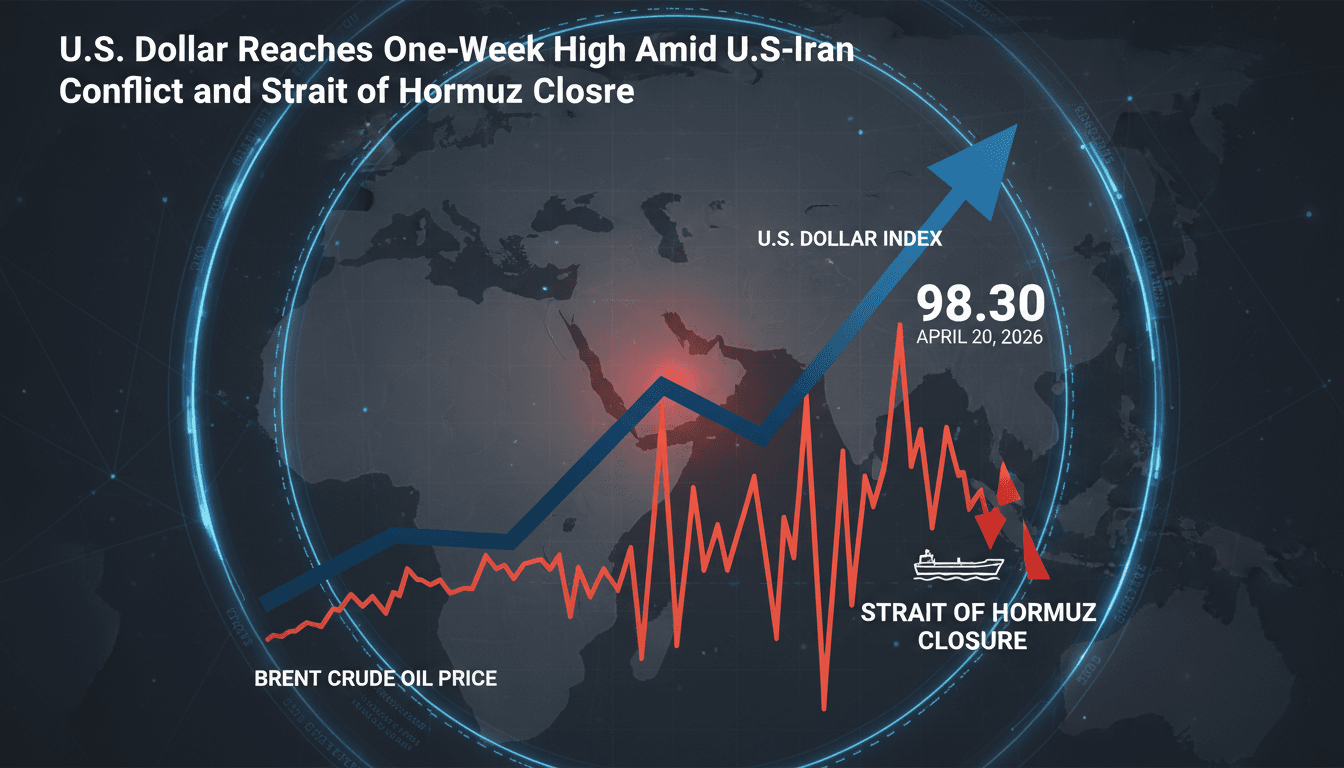
Here's what it means for you.
The rising dollar signals increased market volatility, impacting global trade and investment strategies.
What happened
The U.S. dollar reached its highest level in a week due to heightened tensions between the U.S. and Iran, particularly following the detention of an Iranian cargo ship.
The Context
- Geopolitical Risks: The ongoing U.S.-Iran conflict has led to the effective closure of the Strait of Hormuz, a critical passage for global oil transport.
- Market Reactions: Investors are flocking to safe-haven assets like the dollar, while oil prices surged over 5% amid supply disruptions.
- Economic Forecasts: Analysts are cautious, noting that geopolitical tensions are likely to influence central bank policies and economic growth projections.
The Number
— This peak U.S. Dollar Index value reflects a significant shift in market sentiment, underscoring the dollar's role as a safe-haven asset during geopolitical crises.
Takeaway
As the U.S.-Iran ceasefire approaches expiration, expect continued market fluctuations and potential shifts in energy prices.
Currency market headlines, FX rates, central-bank chatter, and macro drivers moving major pairs.
"Investing.com’s forex stream is useful for fast updates across USD, EUR, JPY, GBP and emerging-market FX."
— A47 Editor
Dollar slips amid concerns over Iran peace talks, caution ahead of Warsh hearing
The U.S. dollar has slipped amid rising concerns regarding the ongoing peace talks with Iran and caution surrounding the upcoming Warsh hearing. This decline reflects market apprehension as geopolitical tensions remain high, particularly following th...
Currency market headlines, FX rates, central-bank chatter, and macro drivers moving major pairs.
"Investing.com’s forex stream is useful for fast updates across USD, EUR, JPY, GBP and emerging-market FX."
— A47 Editor
US dollar drops as traders remain optimistic on Iran peace breakthrough
The US dollar has experienced a decline as traders express optimism regarding a potential peace breakthrough between the US and Iran. This sentiment follows a period of heightened tensions, including the US Navy's recent seizure of an Iranian-flagged...
Oil, metals, and agriculture: supply/demand headlines, OPEC chatter, inventories, and price action.
"Solid tape for energy and metals traders tracking macro and micro catalysts."
— A47 Editor
Oil prices rise 6% on fears of US-Iran ceasefire collapse
Oil prices surged by 6% amid escalating fears regarding the potential collapse of the ceasefire between the U.S. and Iran, which has heightened tensions in the region. This increase follows Iran's recent decision to re-close the Strait of Hormuz, a c...
Pan-Arab news coverage spanning politics, business, sports, and regional affairs.
"Asharq Al-Awsat reflects a broad Arab editorial perspective with strong attention to regional geopolitics."
— A47 Editor
الدولار يرتفع لأعلى مستوى في أسبوع بدعم التوترات الأميركية - الإيرانية
The U.S. dollar rose to its highest level in a week during trading on Monday, driven by renewed tensions between the United States and Iran, before partially reversing some of its gains.
Global political, business, and cultural coverage from WSJ international desks.
"The Wall Street Journal offers extensive international reporting with a reputation for financial insight and a center-right editorial stance."
— A47 Editor
Dollar Rises Along With Oil Prices on Fresh Iran War Concerns
The dollar has risen to a near one-week high as oil prices increased due to renewed concerns about potential supply disruptions linked to the ongoing conflict in Iran. This development reflects the volatility in global markets influenced by geopoliti...
Pan-Arab news coverage spanning politics, business, sports, and regional affairs.
"Asharq Al-Awsat reflects a broad Arab editorial perspective with strong attention to regional geopolitics."
— A47 Editor
النفط يرتفع 5 % مع تجدد التوتر بين الولايات المتحدة وإيران
Oil prices surged by over 5% on Monday amid concerns over the potential collapse of the ceasefire between the United States and Iran. This increase reflects heightened tensions in the region, which could impact global oil supply and market stability.