
Trump Announces 10-Day Ceasefire Between Israel and Lebanon Including Hezbollah Amid Iran Nuclear Talks
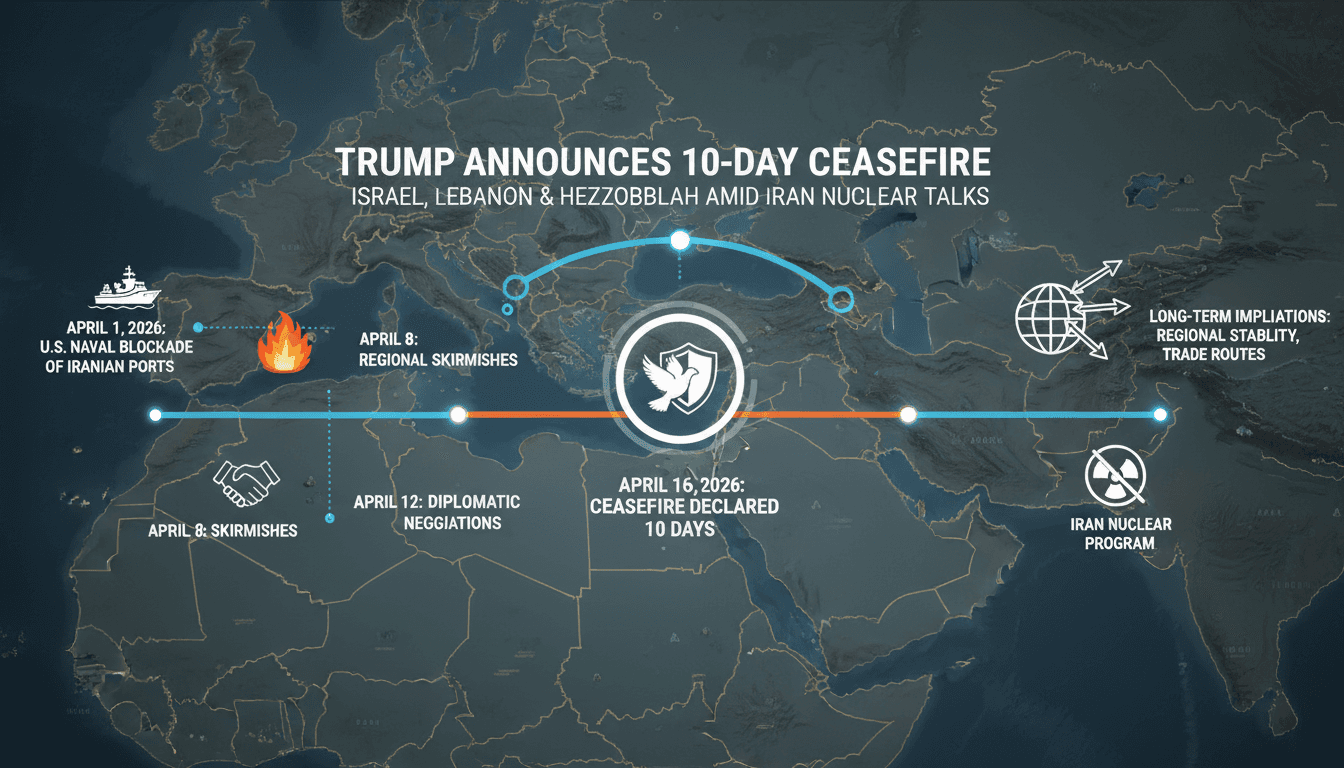
Here's what it means for you.
If you rely on global trade or energy markets, the recent ceasefire could stabilize prices and shipping routes.
Why it matters
This ceasefire represents a critical juncture in Middle Eastern geopolitics, influencing global energy markets and trade dynamics.
What happened (in 30 seconds)
- On April 16, 2026, President Trump announced a 10-day ceasefire between Israel and Lebanon, including Hezbollah.
- Iran agreed to hand over its enriched uranium stockpile amid ongoing diplomatic talks, signaling potential progress in nuclear negotiations.
- The U.S. naval blockade of Iranian ports, initiated on April 14, aims to pressure Tehran while addressing global energy concerns.
The context you actually need
- Tensions escalated in February 2026, leading to military strikes and retaliations that drew Hezbollah into the conflict.
- A previous ceasefire attempt on April 7 collapsed, prompting the U.S. to enforce a naval blockade to leverage negotiations.
- Regional stakeholders, including the UAE and Saudi Arabia, are closely monitoring the situation, as stability is crucial for their economies.
What's really happening
The announcement of a 10-day ceasefire between Israel and Lebanon, which includes Hezbollah, marks a significant shift in the ongoing conflict that has escalated since early 2026. The backdrop of this ceasefire is a series of military actions that began with U.S. and Israeli strikes on Iranian targets on February 28, 2026. This prompted Iranian retaliation, including the blockade of the Strait of Hormuz, a vital shipping route for global oil supplies. Hezbollah's involvement, marked by rocket attacks on Israel starting March 2, further complicated the situation, drawing Lebanon deeper into hostilities.
The U.S. response included a naval blockade of Iranian ports, initiated on April 14, 2026, which aimed to pressure Iran into compliance regarding its nuclear program. This blockade turned back 13 vessels, signaling a serious commitment to leverage military presence for diplomatic ends. The U.S. has been clear about its objectives: to secure a nuclear deal with Iran while ensuring regional allies, particularly Israel, feel supported against threats from Hezbollah and Iranian influence.
The ceasefire announcement came after a failed attempt at negotiations in Islamabad, where U.S. officials sought to revive talks with Iranian representatives. The fact that Iran has agreed to transfer its enriched uranium stockpile is a notable development, suggesting that diplomatic channels are beginning to yield results. This could pave the way for a broader peace deal, potentially mediated by Pakistan, which has positioned itself as a neutral ground for these discussions.
The implications of this ceasefire extend beyond immediate military concerns. For the UAE and Saudi Arabia, regional stability is paramount, as it directly affects their economies, particularly in terms of oil prices and trade routes. The UAE has welcomed the ceasefire, anticipating that it will enhance stability in the region, which is vital for Dubai's role as a global trade and energy hub. The normalization of shipping routes through the Strait of Hormuz could mitigate risks to Dubai's import-dependent economy, especially after recent volatility in oil prices.
Who feels it first (and how)
- Energy sector professionals: Fluctuations in oil prices will directly impact their operations and profitability.
- Global traders: Stability in shipping routes will affect logistics and supply chain costs.
- Middle Eastern governments: Regional leaders will need to navigate the political fallout and public sentiment regarding the ceasefire.
What to watch next
- Iran's compliance with the uranium transfer: This will indicate the seriousness of their commitment to negotiations and could influence global energy markets.
- Reactions from Hezbollah: Their response to the ceasefire and any potential military actions will be critical in assessing the ceasefire's durability.
- Market responses: Watch for fluctuations in oil prices and stock markets, as these will reflect investor confidence in the stability of the region.
The ceasefire is currently in effect, and U.S.-Iran talks are advancing.
Continued diplomatic efforts will emerge, potentially leading to a more comprehensive peace agreement.
The long-term effectiveness of the ceasefire and its impact on regional stability remains uncertain.
Frequently Asked Questions
- Why it matters?
- This ceasefire represents a critical juncture in Middle Eastern geopolitics, influencing global energy markets and trade dynamics.
- What happened (in 30 seconds)?
- On April 16, 2026, President Trump announced a 10-day ceasefire between Israel and Lebanon, including Hezbollah. Iran agreed to hand over its enriched uranium stockpile amid ongoing diplomatic talks, signaling potential progress in nuclear negotiations. The U.S. naval blockade of Iranian ports, initiated on April 14, aims to pressure Tehran while addressing global energy concerns.
- What's really happening?
- The announcement of a 10-day ceasefire between Israel and Lebanon, which includes Hezbollah, marks a significant shift in the ongoing conflict that has escalated since early 2026. The backdrop of this ceasefire is a series of military actions that began with U.S. and Israeli strikes on Iranian targets on February 28, 2026. This prompted Iranian retaliation, including the blockade of the Strait of Hormuz, a vital shipping route for global oil supplies. Hezbollah's involvement, marked by rocket at
- Who feels it first (and how)?
- Energy sector professionals: Fluctuations in oil prices will directly impact their operations and profitability. Global traders: Stability in shipping routes will affect logistics and supply chain costs. Middle Eastern governments: Regional leaders will need to navigate the political fallout and public sentiment regarding the ceasefire.
- What to watch next?
- Iran's compliance with the uranium transfer: This will indicate the seriousness of their commitment to negotiations and could influence global energy markets. Reactions from Hezbollah: Their response to the ceasefire and any potential military actions will be critical in assessing the ceasefire's durability. Market responses: Watch for fluctuations in oil prices and stock markets, as these will reflect investor confidence in the stability of the region.
UAE-based newspaper covering Gulf politics, society, and international developments.
"Gulf News is one of the UAE’s most prominent English-language publications."
— A47 Editor
Trump positive about talks with Iran, Hezbollah included in Israel-Lebanon ceasefire
U.S. President Donald Trump expressed optimism regarding ongoing discussions with Iran, highlighting the inclusion of Hezbollah in the recent ceasefire agreement between Israel and Lebanon. This development comes amid a backdrop of complex negotiatio...
A curated Gulf News feed featuring major stories across news, business, opinion, and lifestyle.
"Gulf News is a major UAE newspaper whose featured stories feed reflects a broad editorial mix shaped for a Gulf audience."
— A47 Editor
Trump positive about talks with Iran, Hezbollah included in Israel-Lebanon ceasefire
U.S. President Donald Trump expressed optimism regarding ongoing discussions with Iran, highlighting the inclusion of Hezbollah in the recent ceasefire agreement between Israel and Lebanon. This development comes amid a backdrop of complex negotiatio...
UAE-based English-language newspaper covering regional politics, economics, and global affairs.
"The National reflects Emirati policy perspectives while maintaining international editorial standards."
— A47 Editor
Iranian ships continue to cross Strait of Hormuz despite US blockade
Iranian ships have continued to cross the Strait of Hormuz despite a U.S. blockade aimed at restricting maritime traffic to and from Iranian ports. This blockade was initiated following the collapse of peace negotiations between the U.S. and Iran, wi...
Regional and international reporting focused on Middle Eastern politics, diplomacy, and economics.
"Asharq Al-Awsat is a Saudi-owned international newspaper reflecting mainstream Gulf political perspectives."
— A47 Editor
US Says Ball in Iran’s Court as Push Grows to End War
The United States has indicated that the responsibility to advance peace negotiations now lies with Iran, as diplomatic efforts intensify to conclude the ongoing conflict. This statement comes amid a backdrop of fragile ceasefires and ongoing tension...