
QatarEnergy Restarts LNG Production at Ras Laffan Following Ceasefire
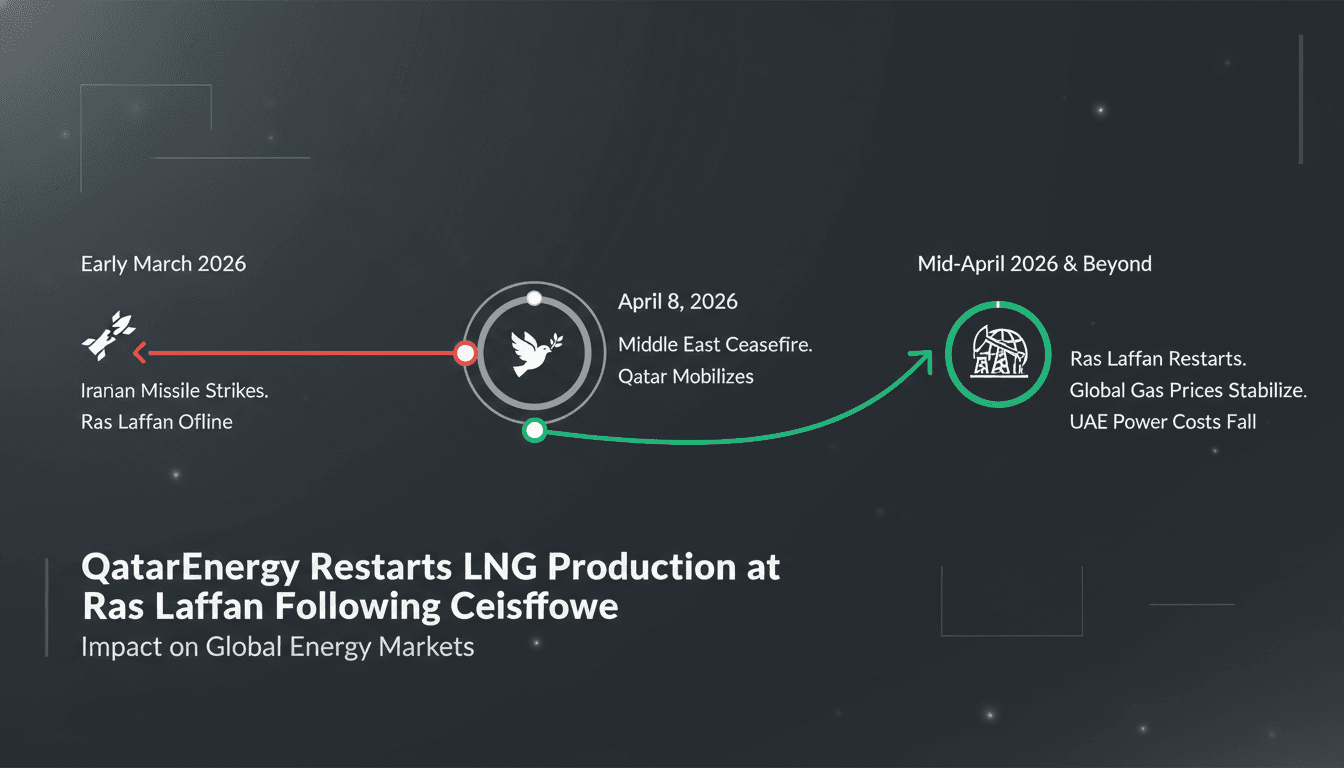
Here's what it means for you.
The resumption of LNG production in Qatar could stabilize energy prices and utility costs across the region.
Why it matters
This event is crucial for global energy markets, particularly for countries reliant on Qatari LNG exports.
What happened (in 30 seconds)
- On April 8, 2026, Qatar mobilized engineers and workers to restart the Ras Laffan LNG facility after a ceasefire in the Middle East conflict.
- The facility, which has a capacity of 77 million tonnes per annum, had been offline since early March due to Iranian missile strikes that damaged 17% of its capacity.
- Limited production is anticipated in the coming days as repairs are expected to take three to five years for full restoration.
The context you actually need
- In early March 2026, Iranian missile strikes targeted Ras Laffan, leading to a 17% reduction in Qatar's LNG production capacity.
- QatarEnergy declared force majeure on affected contracts and halted production, estimating a $20 billion annual revenue loss.
- The recent ceasefire has allowed for the safe mobilization of personnel to begin repairs and restart operations.
What's really happening
The Ras Laffan LNG complex is a critical asset for Qatar, accounting for a significant portion of the global liquefied natural gas supply. Following the Iranian missile strikes in early March, QatarEnergy faced a dire situation as two LNG trains were severely damaged, leading to a forced shutdown of operations. The company declared force majeure on contracts, which indicates an inability to meet obligations due to extraordinary circumstances. This declaration not only impacts Qatar’s revenue but also reverberates through global energy markets, as Qatar is one of the leading LNG exporters.
The recent ceasefire in the Middle East conflict has opened the door for QatarEnergy to mobilize its workforce and begin the complex process of restarting production. However, the facility's full operational capacity will not be restored for three to five years, as extensive repairs are needed. This timeline is critical, as it directly affects Qatar's revenue and the stability of LNG prices globally.
The immediate effects of the production halt were felt in regional markets, particularly in the UAE, where natural gas price surges led to higher electricity tariffs for consumers. With Qatar’s LNG exports resuming, there is potential for price stabilization, which is essential for households and industries reliant on gas-fired power generation.
Additionally, the situation has prompted a shift in market dynamics, with countries like the UAE and Saudi Arabia closely monitoring energy security. The anticipated return of contractors, such as Chiyoda, signifies optimism for future expansion projects that could further enhance Qatar's LNG capabilities.
In summary, while the mobilization of workers marks a positive step towards recovery, the long-term implications of the damage and the geopolitical tensions in the region remain significant factors in the global energy landscape.
Who feels it first (and how)
- Energy consumers in the UAE: Likely to see stabilization in electricity tariffs as LNG production resumes.
- QatarEnergy stakeholders: Will experience a gradual recovery in revenue as production ramps up.
- Global LNG markets: May see price adjustments as supply levels normalize, impacting importers and exporters alike.
What to watch next
- Production levels at Ras Laffan: Monitoring the speed and extent of the restart will indicate Qatar's recovery trajectory.
- Global LNG prices: Watch for fluctuations in response to Qatar's resumed exports, particularly in European and Asian markets.
- Regional geopolitical developments: Any escalation in Middle East tensions could disrupt operations and impact energy security across the region.
QatarEnergy has mobilized workers to restart LNG production.
Stabilization of energy prices in the UAE as production resumes.
The long-term impact of geopolitical tensions on Qatar's LNG operations.
Frequently Asked Questions
- Why it matters?
- This event is crucial for global energy markets, particularly for countries reliant on Qatari LNG exports.
- What happened (in 30 seconds)?
- On April 8, 2026, Qatar mobilized engineers and workers to restart the Ras Laffan LNG facility after a ceasefire in the Middle East conflict. The facility, which has a capacity of 77 million tonnes per annum, had been offline since early March due to Iranian missile strikes that damaged 17% of its capacity. Limited production is anticipated in the coming days as repairs are expected to take three to five years for full restoration.
- What's really happening?
- The Ras Laffan LNG complex is a critical asset for Qatar, accounting for a significant portion of the global liquefied natural gas supply. Following the Iranian missile strikes in early March, QatarEnergy faced a dire situation as two LNG trains were severely damaged, leading to a forced shutdown of operations. The company declared force majeure on contracts, which indicates an inability to meet obligations due to extraordinary circumstances. This declaration not only impacts Qatar’s revenue but
- Who feels it first (and how)?
- Energy consumers in the UAE: Likely to see stabilization in electricity tariffs as LNG production resumes. QatarEnergy stakeholders: Will experience a gradual recovery in revenue as production ramps up. Global LNG markets: May see price adjustments as supply levels normalize, impacting importers and exporters alike.
- What to watch next?
- Production levels at Ras Laffan: Monitoring the speed and extent of the restart will indicate Qatar's recovery trajectory. Global LNG prices: Watch for fluctuations in response to Qatar's resumed exports, particularly in European and Asian markets. Regional geopolitical developments: Any escalation in Middle East tensions could disrupt operations and impact energy security across the region.
Macro commentary, policy analysis, growth/inflation themes, and global outlooks.
"Contextual macro coverage that complements day-to-day market headlines."
— A47 Editor
Qatar mobilizes workers to restart world’s largest LNG plant
Qatar is mobilizing workers and engineers to restart production at the world's largest liquefied natural gas (LNG) plant, following a ceasefire in ongoing regional conflicts that had previously disrupted operations. This initiative aims to restore no...
Global markets, investing, and macroeconomics from a premier financial newsroom.
"Bloomberg is respected for in-depth financial reporting and data-driven analysis."
— A47 Editor
Qatar Begins Work to Resume LNG Production After Ceasefire
Qatar is mobilizing engineers and workers to resume production at its liquefied natural gas (LNG) export plant, the largest in the world, following a ceasefire in the ongoing Middle Eastern conflict. This development signals a potential return to nor...