
Gulf Stock Markets Decline Ahead of U.S. Ultimatum to Iran
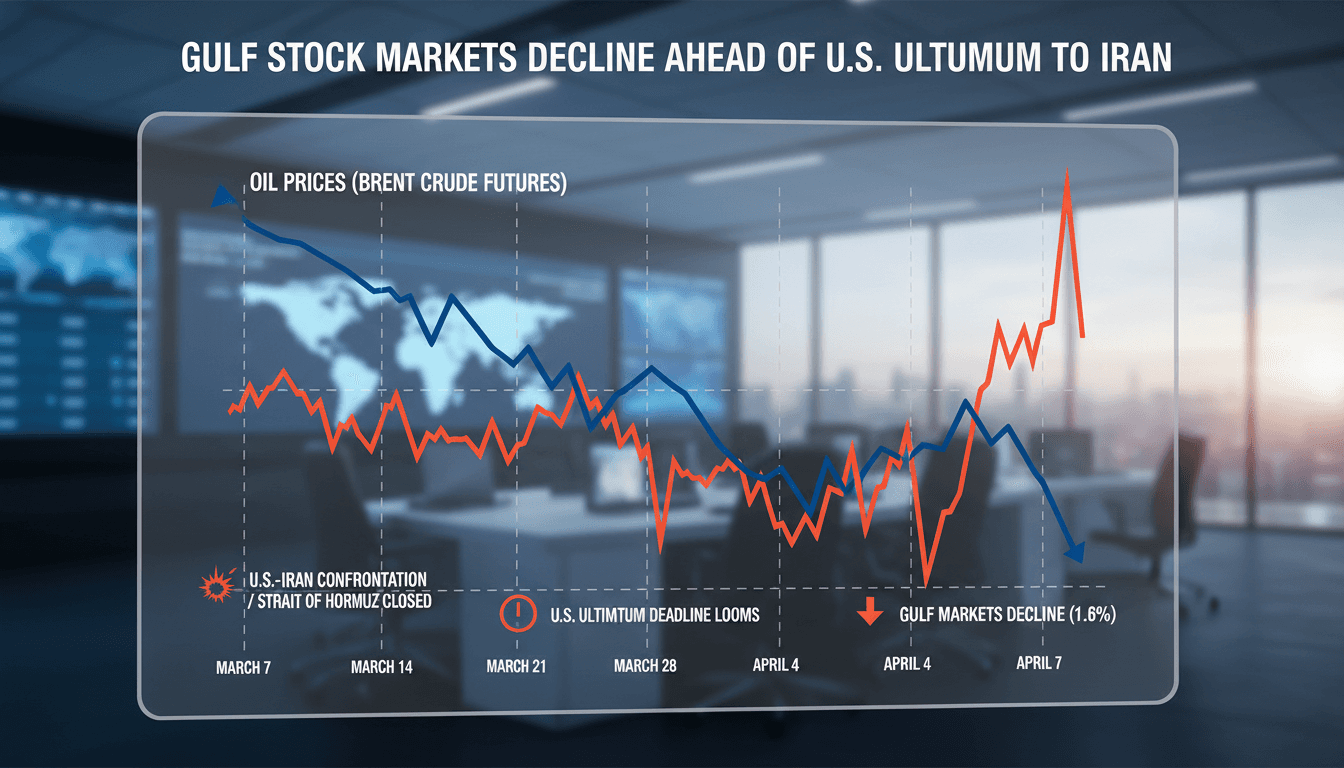
Here's what it means for you.
If you're invested in Gulf markets or the energy sector, this decline signals potential volatility ahead.
Why it matters
The Gulf stock markets' decline reflects broader geopolitical uncertainties that can impact global oil prices and economic stability.
What happened (in 30 seconds)
- Gulf stock markets closed lower on April 7, 2026, with declines ranging from 0.3 to 1.6 percent as investors reacted to U.S.-Iran tensions.
- The Saudi Tadawul All Share Index fell 1.6 percent, driven by significant drops in major companies like Al Rajhi Bank and SABIC.
- A last-minute ceasefire was announced shortly before the U.S. deadline, which may stabilize markets temporarily but leaves ongoing risks.
The context you actually need
- Tensions escalated in late February 2026 following confrontations between the U.S., Israel, and Iran, leading to the closure of the Strait of Hormuz.
- The Strait of Hormuz is critical, handling about 5 percent of global oil and LNG supplies, making its accessibility vital for energy markets.
- President Trump issued an ultimatum for Iran to reopen the strait by April 7, threatening military action, which heightened investor anxiety.
What's really happening
The Gulf stock markets' decline on April 7, 2026, is a direct response to geopolitical tensions surrounding the Strait of Hormuz, a vital maritime route for global oil and gas supplies. The closure of this strait by Iran has already disrupted energy flows, causing oil prices to surge above $140 per barrel, which has significant implications for inflation and economic stability worldwide. Investors are understandably cautious as they await the outcome of U.S. President Donald Trump's ultimatum for Iran to reopen the strait.
The Saudi Tadawul All Share Index (TASI) experienced the sharpest decline of 1.6 percent, primarily due to major players like Al Rajhi Bank and SABIC suffering significant losses. This decline reflects a broader trend of investor apprehension in the Gulf region, where economic stability is closely tied to energy prices and geopolitical dynamics. The Dubai Financial Market (DFM) and Abu Dhabi Securities Exchange (ADX) also registered declines, indicating a regional sentiment of uncertainty.
The announcement of a two-week ceasefire just 90 minutes before the ultimatum's expiration provided a temporary reprieve, but the underlying tensions remain unresolved. The ceasefire, confirmed by both the U.S. and Iran, includes provisions for safe passage through the Strait of Hormuz and suggests that negotiations will continue. However, the volatility in oil prices, which remained above $110 per barrel, indicates that the market is still on edge.
This situation illustrates the interconnectedness of geopolitical events and market performance. Investors are likely to remain cautious, monitoring developments closely as they can significantly influence market dynamics. The potential for further escalation or resolution will dictate investor sentiment and market movements in the coming weeks.
Who feels it first (and how)
- Investors in Gulf stock markets: Immediate impact on portfolio values and investment strategies.
- Energy sector companies: Fluctuating oil prices affect profitability and operational planning.
- Real estate stakeholders in Dubai: A decline in market confidence can lead to reduced property values and investment returns.
- Consumers in the region: Rising oil prices may lead to increased costs of living and inflationary pressures.
What to watch next
- U.S.-Iran negotiations: The outcome of ongoing talks could stabilize or further destabilize regional markets.
- Oil price fluctuations: Continued volatility in oil prices will impact economic conditions and investor confidence.
- Market reactions post-ceasefire: Watch for potential relief rallies or further declines as investors assess the ceasefire's effectiveness.
Gulf stock markets experienced declines due to geopolitical tensions.
Continued volatility in oil prices and market sentiment as negotiations unfold.
The long-term implications of the ceasefire on regional stability and economic recovery.
Frequently Asked Questions
- Why it matters?
- The Gulf stock markets' decline reflects broader geopolitical uncertainties that can impact global oil prices and economic stability.
- What happened (in 30 seconds)?
- Gulf stock markets closed lower on April 7, 2026, with declines ranging from 0.3 to 1.6 percent as investors reacted to U.S.-Iran tensions. The Saudi Tadawul All Share Index fell 1.6 percent, driven by significant drops in major companies like Al Rajhi Bank and SABIC. A last-minute ceasefire was announced shortly before the U.S. deadline, which may stabilize markets temporarily but leaves ongoing risks.
- What's really happening?
- The Gulf stock markets' decline on April 7, 2026, is a direct response to geopolitical tensions surrounding the Strait of Hormuz, a vital maritime route for global oil and gas supplies. The closure of this strait by Iran has already disrupted energy flows, causing oil prices to surge above $140 per barrel, which has significant implications for inflation and economic stability worldwide. Investors are understandably cautious as they await the outcome of U.S. President Donald Trump's ultimatum fo
- Who feels it first (and how)?
- Investors in Gulf stock markets: Immediate impact on portfolio values and investment strategies. Energy sector companies: Fluctuating oil prices affect profitability and operational planning. Real estate stakeholders in Dubai: A decline in market confidence can lead to reduced property values and investment returns. Consumers in the region: Rising oil prices may lead to increased costs of living and inflationary pressures.
- What to watch next?
- U.S.-Iran negotiations: The outcome of ongoing talks could stabilize or further destabilize regional markets. Oil price fluctuations: Continued volatility in oil prices will impact economic conditions and investor confidence. Market reactions post-ceasefire: Watch for potential relief rallies or further declines as investors assess the ceasefire's effectiveness.
Pan-Arab news coverage spanning politics, business, sports, and regional affairs.
"Asharq Al-Awsat reflects a broad Arab editorial perspective with strong attention to regional geopolitics."
— A47 Editor
الأسواق الخليجية تتراجع قبيل انتهاء مهلة ترمب لإيران
Gulf stock markets experienced a decline at the close of trading on Tuesday, reflecting a cautious sentiment among investors as the deadline set by U.S. President Donald Trump for Iran approaches.
Sports reporting with a focus on Saudi and regional competitions.
"Okaz sports coverage is broad and audience-friendly, with strong attention to Saudi teams and leagues."
— A47 Editor
مع تحذير ترمب لإيران.. أداء متباين لأسواق أسهم الخليج
Gulf stock markets closed with mixed results as investors await clarification on reports regarding ceasefire talks between the United States and Iran, following President Donald Trump's warning to Tehran of 'hell' if it does not reopen the Strait of ...
Sports reporting with a focus on Saudi and regional competitions.
"Okaz sports coverage is broad and audience-friendly, with strong attention to Saudi teams and leagues."
— A47 Editor
«الضبابية تخيّم».. أسواق العالم تترقّب مهلة ترمب
Global markets are currently in a state of uncertainty as investors await a deadline set by U.S. President Donald Trump for Iran to reach an agreement regarding the Strait of Hormuz. Amidst a weak trading week due to holidays, there are conflicting s...
Sports reporting with a focus on Saudi and regional competitions.
"Okaz sports coverage is broad and audience-friendly, with strong attention to Saudi teams and leagues."
— A47 Editor
مع مهلة ترمب.. كيف تتفاعل أسواق أسهم الخليج ؟
Gulf stock markets are on high alert this week as they await the outcome of the deadline set by U.S. President Donald Trump for Iran, amidst rising geopolitical tensions and threats. This climate of uncertainty has led investors to adopt a cautious a...