
Linux Kernel Implements AI-Assisted Code Contribution Policy with Disclosure Requirements
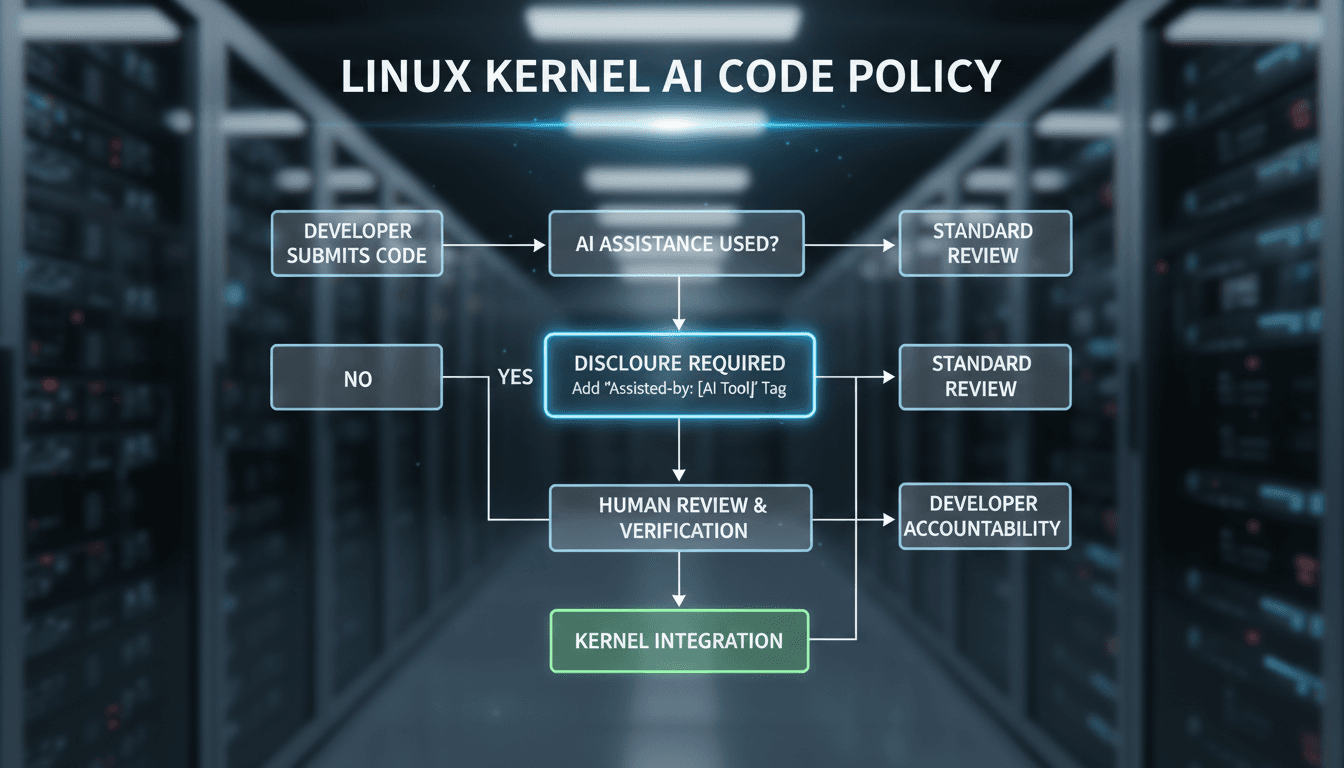
Here's what it means for you.
If you’re involved in software development, especially in open-source projects, this policy sets a new standard for how AI tools can be integrated into your workflow.
Why it matters
This policy formalizes the role of AI in software development, balancing innovation with accountability in a rapidly evolving tech landscape.
What happened (in 30 seconds)
- In April 2026, Linux kernel maintainers, led by Linus Torvalds, finalized a policy allowing AI-assisted code contributions with mandatory disclosure.
- Developers must use an 'Assisted-by' tag to indicate AI tool usage and cannot let AI add 'Signed-off-by' tags, ensuring human accountability.
- This decision follows months of debate over undisclosed AI-generated patches and concerns about quality control in open-source projects.
The context you actually need
- AI-generated code submissions have surged, raising concerns about quality and accountability, particularly after an undisclosed AI patch caused issues in Linux 6.15.
- Initial discussions on AI policy began in July 2025, evolving through various summits and community feedback, highlighting the need for transparency and legal clarity.
- Other open-source projects have faced similar challenges, with some implementing outright bans on AI contributions, contrasting with Linux's more nuanced approach.
What's really happening
The Linux kernel's new policy on AI-assisted code contributions represents a significant shift in how open-source projects can leverage AI tools while maintaining accountability. The decision comes after a series of incidents where undisclosed AI-generated patches led to performance regressions, notably an incident involving Nvidia engineer Sasha Levin's submission. This highlighted the risks of integrating AI into development without proper oversight.
The policy introduces the 'Assisted-by' tag, which developers must use to disclose AI tool usage, such as GitHub Copilot or Claude. This tag serves as a clear marker that AI was involved in the code generation process, ensuring that human developers remain accountable for the final output. By prohibiting AI from adding 'Signed-off-by' tags, the policy reinforces the principle that human oversight is essential in the development process.
This formalization of AI's role in the Linux kernel is not just about compliance; it reflects a broader trend in the tech industry where AI tools are becoming standard in software development. The Linux community's approach contrasts with other open-source projects that have opted for stricter bans on AI contributions, such as Gentoo and NetBSD. By allowing AI tools while enforcing transparency, Linux aims to strike a balance between innovation and quality control.
The policy also addresses the growing phenomenon of 'AI slop,' where poorly generated code floods projects, undermining their integrity. By mandating human review and compliance with licensing, the Linux kernel maintainers are setting a precedent that could influence other open-source communities. This move is likely to enhance the utility of AI tools in generating security reports and other contributions, although the challenge of managing AI-generated content remains.
As the tech landscape evolves, this policy could serve as a model for other organizations looking to integrate AI responsibly. The Linux kernel's decision reflects a recognition that while AI can enhance productivity, it must be managed carefully to avoid compromising the quality and reliability of open-source software.
Who feels it first (and how)
- Software developers using AI tools for coding will need to adapt to new disclosure requirements.
- Open-source project maintainers will have to implement and enforce these policies, impacting their workflow and review processes.
- Tech companies leveraging Linux in their infrastructure may need to adjust their development practices to align with this new standard.
What to watch next
- Adoption rates of the 'Assisted-by' tag: Monitoring how quickly developers integrate this tag will indicate the policy's acceptance and effectiveness.
- Impact on code quality: Observing changes in the quality of contributions and the frequency of 'AI slop' incidents will reveal the policy's real-world implications.
- Responses from other open-source communities: How other projects react—whether they adopt similar policies or maintain bans—will shape the future landscape of AI in software development.
The policy is active and documented in official kernel processes.
Other open-source projects may consider similar policies to manage AI contributions.
The long-term impact on code quality and developer behavior remains to be seen.
This article was generated by AI from 4 verified sources and reviewed by A47 editorial systems.
Enterprise-focused AI news and analysis.
"Practical AI strategies and tools for IT leaders."
— A47 Editor
The new rules for AI-assisted code in the Linux kernel: What every dev needs to know
Linus Torvalds and maintainers have finalized new AI policies for the Linux kernel, addressing the integration of AI-assisted code. However, concerns remain regarding the effectiveness of these rules in tackling the challenges posed by AI-generated c...
Business tech news, enterprise IT, and innovation analysis.
"ZDNet offers enterprise IT news, reviews, and strategy guidance."
— A47 Editor
The new rules for AI-assisted code in the Linux kernel: What every dev needs to know
Linus Torvalds and maintainers have finalized new AI policies for the Linux kernel, addressing the integration of AI-assisted code. However, concerns remain regarding the effectiveness of these rules in tackling the challenges posed by AI-generated c...
Consumer tech news, reviews, and buying guides for gadgets and electronics.
"TechRadar is known for comprehensive buying advice, hardware reviews, and consumer tech news targeted at mainstream audiences."
— A47 Editor
Linux rules on using AI-generated code - Copilot is OK, but humans must take 'full responsibility for the contribution'
Linux developers have been granted permission to utilize AI assistance in their coding processes, with a clear stipulation that individual contributors must retain full accountability for their contributions. This decision underscores the balance bet...
Biting coverage of AI/ML software and vendors.
"Known for skeptical, incisive reporting on enterprise tech."
— A47 Editor
Linux 7.0 debuts as Linus Torvalds ponders AI's bug-finding powers
Linus Torvalds has announced the release of Linux kernel version 7.0, which officially integrates support for the Rust programming language and adds code for legacy Alpha and SPARC CPUs. This update also introduces self-healing capabilities for the X...
Curated tech headlines including AI stories.
"Influential aggregator surfacing the day’s top tech/AI links."
— A47 Editor
The Linux Kernel Organization now lets developers submit AI-generated code, as long as it complies with the guidelines, licensing, and attribution requirements (Simon Batt/XDA Developers)
The Linux Kernel Organization has announced that developers can now submit AI-generated code, provided it adheres to specific guidelines, licensing, and attribution requirements. This marks a significant shift in the acceptance of AI contributions wi...