
French Finance Minister Calls for Increased Euro-Pegged Stablecoins to Reduce Dollar Dependence
Here's what it means for you.
If you're involved in finance or cryptocurrency, the rise of euro-pegged stablecoins could reshape your investment strategies and cross-border transactions.
Why it matters
The push for euro-pegged stablecoins signifies a strategic move by Europe to enhance its financial sovereignty and reduce reliance on the US dollar.
What happened (in 30 seconds)
- On April 17, 2026, French Finance Minister Roland Lescure called for increased issuance of euro-pegged stablecoins at a cryptocurrency conference in Paris.
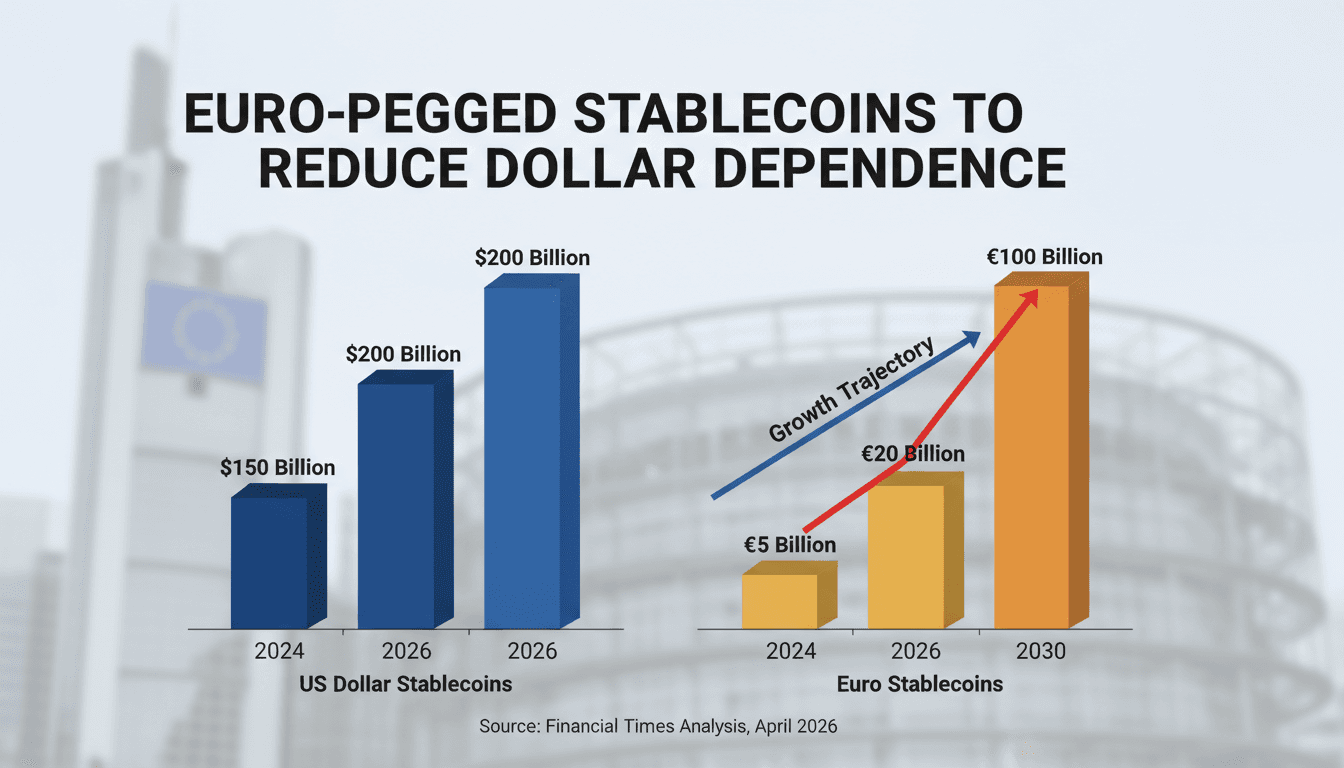
- Current euro stablecoin market cap stands at $675.9 million, a mere 0.207% of the global stablecoin market valued at $325.72 billion.
- The Qivalis consortium, comprising major European banks, aims to launch a euro-pegged stablecoin in H2 2026 to bolster this initiative.
The context you actually need
- Previous opposition: Former Finance Minister Bruno Le Maire had criticized privately issued stablecoins, viewing them as unsuitable for European markets.
- Geopolitical tensions: Rising EU-US tensions over security and trade have accelerated efforts to diminish dollar dominance in global payments.
- Digital euro project: The European Central Bank is actively working on a digital euro, complementing the push for euro-pegged stablecoins.
What's really happening
French Finance Minister Roland Lescure's recent remarks mark a significant pivot in European policy towards stablecoins, particularly those pegged to the euro. Historically, the European stance on privately issued stablecoins has been cautious, with former Finance Minister Bruno Le Maire openly opposing them. However, the current geopolitical landscape, characterized by escalating tensions between the EU and the US, has prompted a reevaluation of this position.
Lescure's advocacy for euro-pegged stablecoins is rooted in a desire to enhance Europe's financial sovereignty. The current market for euro stablecoins, with a capitalization of $675.9 million, pales in comparison to the US dollar's dominance in the stablecoin space. The global stablecoin market is valued at approximately $325.72 billion, with the dollar accounting for the vast majority. This disparity highlights Europe's vulnerability and the need for a robust alternative to the dollar.
The Qivalis consortium, which includes major European banks like ING, UniCredit, and BNP Paribas, is set to launch a euro-pegged stablecoin in the latter half of 2026. This initiative is not just about creating a new financial product; it represents a strategic move to reclaim some control over the digital currency landscape. By fostering the development of euro-pegged stablecoins, European institutions aim to reduce reliance on non-European stablecoin providers, which have dominated the market thus far.
Moreover, the push for tokenized deposits aligns with broader trends in digital finance, where traditional banking systems are increasingly integrating blockchain technology. This integration could lead to more efficient cross-border transactions and enhanced liquidity in the eurozone. As European regulators and banks rally behind this vision, the momentum for tokenized assets is expected to grow, with projections suggesting that euro stablecoins could reach a market cap of €25 billion by 2030.
In summary, the advocacy for euro-pegged stablecoins is a calculated response to the challenges posed by dollar dominance and geopolitical tensions. It reflects a broader ambition within Europe to establish a more resilient and independent financial ecosystem.
Who feels it first (and how)
- European banks: They will be directly involved in the issuance and management of euro-pegged stablecoins, impacting their operational strategies.
- Cryptocurrency investors: Those holding or trading stablecoins will see new options and potential volatility as euro-pegged alternatives emerge.
- Cross-border businesses: Companies operating in Europe may benefit from reduced transaction costs and improved efficiency in euro-denominated transactions.
What to watch next
- Qivalis stablecoin launch: The success of the Qivalis initiative in H2 2026 will be a critical indicator of the euro stablecoin's market acceptance and viability.
- Regulatory developments: Monitor how European regulators respond to the evolving landscape of stablecoins and their implications for financial sovereignty.
- Market cap growth: Watch for changes in the market capitalization of euro-pegged stablecoins, particularly as they approach the projected €25 billion by 2030.
The current market cap of euro-pegged stablecoins is $675.9 million.
The Qivalis consortium will launch its euro-pegged stablecoin in H2 2026.
The long-term impact of euro-pegged stablecoins on the dominance of the US dollar in global finance.
Frequently Asked Questions
- Why it matters?
- The push for euro-pegged stablecoins signifies a strategic move by Europe to enhance its financial sovereignty and reduce reliance on the US dollar.
- What happened (in 30 seconds)?
- On April 17, 2026, French Finance Minister Roland Lescure called for increased issuance of euro-pegged stablecoins at a cryptocurrency conference in Paris. Current euro stablecoin market cap stands at $675.9 million, a mere 0.207% of the global stablecoin market valued at $325.72 billion. The Qivalis consortium, comprising major European banks, aims to launch a euro-pegged stablecoin in H2 2026 to bolster this initiative.
- What's really happening?
- French Finance Minister Roland Lescure's recent remarks mark a significant pivot in European policy towards stablecoins, particularly those pegged to the euro. Historically, the European stance on privately issued stablecoins has been cautious, with former Finance Minister Bruno Le Maire openly opposing them. However, the current geopolitical landscape, characterized by escalating tensions between the EU and the US, has prompted a reevaluation of this position. Lescure's advocacy for euro-pegge
- Who feels it first (and how)?
- European banks: They will be directly involved in the issuance and management of euro-pegged stablecoins, impacting their operational strategies. Cryptocurrency investors: Those holding or trading stablecoins will see new options and potential volatility as euro-pegged alternatives emerge. Cross-border businesses: Companies operating in Europe may benefit from reduced transaction costs and improved efficiency in euro-denominated transactions.
- What to watch next?
- Qivalis stablecoin launch: The success of the Qivalis initiative in H2 2026 will be a critical indicator of the euro stablecoin's market acceptance and viability. Regulatory developments: Monitor how European regulators respond to the evolving landscape of stablecoins and their implications for financial sovereignty. Market cap growth: Watch for changes in the market capitalization of euro-pegged stablecoins, particularly as they approach the projected €25 billion by 2030.
News and analysis on Bitcoin, altcoins, and blockchain innovation.
"Bitcoinist delivers news and analysis on Bitcoin, altcoins, and blockchain innovation with a focus on market trends and industry updates."
— A47 Editor
Stablecoins Adoption: French Finance Minister Pushes For More Euro-Backed Tokens
French Finance Minister Roland Lescure has advocated for the creation of more euro-pegged stablecoins, aiming to enhance Europe's financial sovereignty and reduce reliance on the US dollar. This push comes amid increasing tensions between the Europea...
Covers Bitcoin plus altcoin news, market updates, and educational resources.
"Bitcoin.com provides news, market data, and guides focused on Bitcoin and the wider crypto industry."
— A47 Editor
French Finance Minister: Euro-Based Stablecoins Vital to European Financial Sovereignty
French Finance Minister Roland Lescure has emphasized the importance of euro-based stablecoins for maintaining European financial sovereignty, highlighting their role in ensuring that Europe retains control over its digital financial infrastructure a...
Real-time updates, analysis, and reports on the blockchain and cryptocurrency sectors.
"Crypto News delivers real-time updates, analysis, and reports on the blockchain and cryptocurrency sectors."
— A47 Editor
France’s Lescure backs euro stablecoins as Qivalis readies 2026 launch
France's Finance Minister Roland Lescure has endorsed the development of euro-denominated stablecoins, emphasizing the importance of maintaining Europe's digital financial infrastructure in euros rather than dollars, as Qivalis prepares for its launc...
Covers blockchain, cryptocurrency news, project analysis, and market insights.
"CoinDesk is a well-established cryptocurrency and blockchain news provider, offering comprehensive insights, market data, and industry research."
— A47 Editor
France's finance minister calls for more euro stablecoins in sign of government policy shift
France's finance minister has called for an increase in euro stablecoins, indicating a potential shift in the government's approach to cryptocurrency regulation. This statement reflects a growing recognition of the importance of stablecoins in the fi...