
Philippines Declares National Energy Emergency Amid U.S.-Israel-Iran War Fuel Crisis
Here's what it means for you.
If you rely on imported goods or energy, expect rising prices and potential supply disruptions.
Why it matters
The Philippines, heavily dependent on oil imports, faces acute vulnerabilities that could ripple through global markets.
What happened (in 30 seconds)
- March 25, 2026: The Philippines declared a national energy emergency due to fuel shortages linked to the U.S.-Israel-Iran war.
- Fuel prices doubled in early March, leading to public unrest and government action.
- Executive Order No. 110 was signed, enabling extraordinary procurement powers and rationing protocols.
The context you actually need
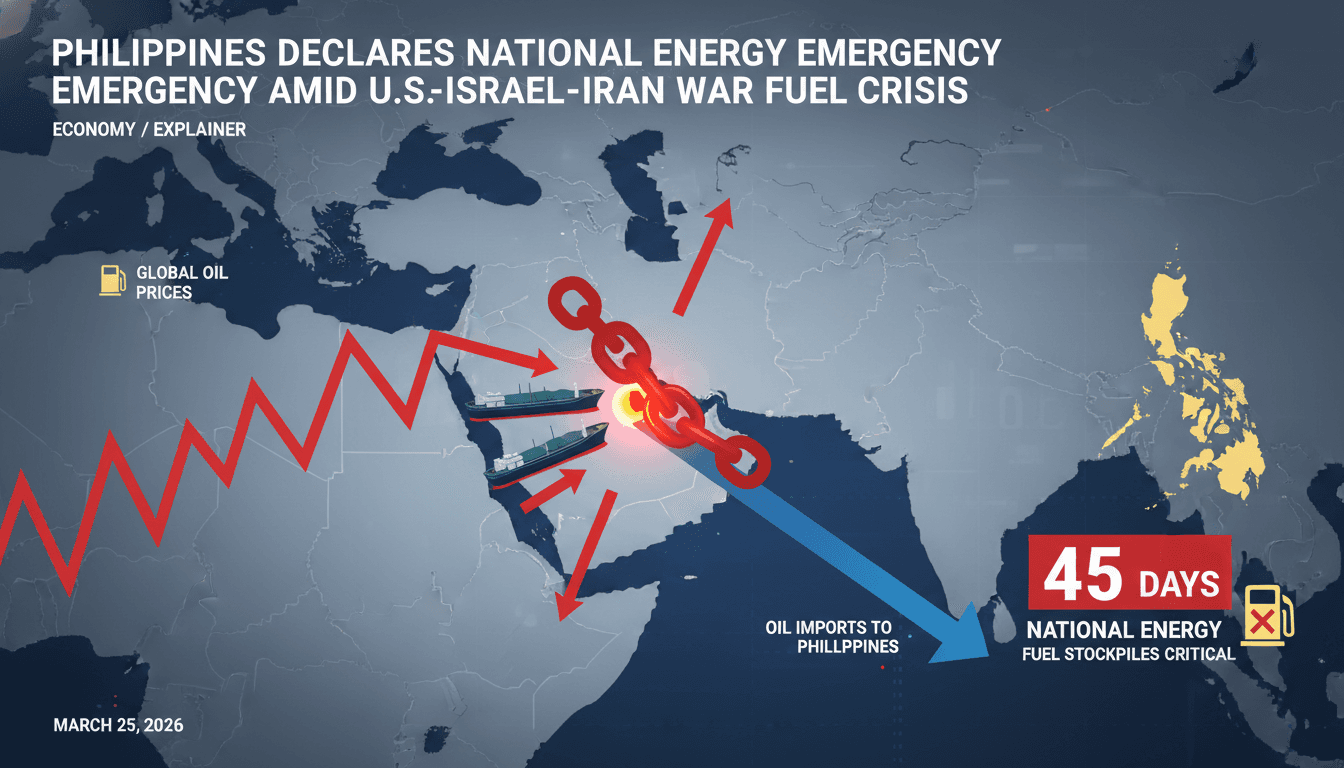
- Strait of Hormuz closure: The ongoing conflict has led to a blockade of this critical chokepoint, affecting 20% of global oil transit.
- Philippine oil dependency: The nation imports 98% of its crude oil from Gulf states, making it particularly vulnerable to global supply disruptions.
- Inflation pressures: The doubling of fuel prices has exacerbated existing economic challenges, including domestic inflation and energy import dependencies.
What's really happening
The declaration of a national energy emergency in the Philippines marks a significant response to a geopolitical crisis that has immediate and far-reaching implications. The U.S.-Israel-Iran war, which began on February 28, 2026, triggered a series of events that directly impacted the Philippines' energy security. The closure of the Strait of Hormuz, a vital artery for oil transport, has disrupted the flow of crude oil, leading to a dramatic increase in global oil prices—prices that have doubled in the Philippines.
As President Ferdinand Marcos Jr. invoked Executive Order No. 110, the urgency of the situation became clear. With only 45 days of fuel stockpiles remaining, the government took extraordinary measures to procure fuel directly and implement rationing protocols. This emergency declaration is not just a reactive measure; it reflects a deeper vulnerability in the Philippines' energy infrastructure, which is heavily reliant on imports from the Gulf region.
The implications of this energy emergency extend beyond immediate fuel shortages. The transport sector, already strained by rising costs, has seen unrest, with labor groups threatening strikes and demanding government intervention. The government's response has included a four-day workweek for public employees and financial subsidies for transport drivers, highlighting the socio-economic impact of the crisis.
Moreover, the emergency has prompted the Philippines to seek alternative suppliers, including Russia, to mitigate the effects of the conflict. This shift in procurement strategy could reshape the country's energy landscape and its geopolitical alliances, as it navigates the complexities of global energy markets.
The situation is further complicated by the indirect effects felt in regions like Dubai, where residents enjoy subsidized petrol prices. The contrast in energy pricing between the UAE and the Philippines underscores the varying impacts of global oil price fluctuations, with potential ripple effects on aviation fuel costs and the prices of imported goods.
Who feels it first (and how)
- Transport sector workers: Facing rising fuel costs and potential strikes.
- Public employees: Adjusted work schedules and potential wage impacts.
- Consumers: Experiencing higher prices for goods and services due to increased transportation costs.
- Businesses: Particularly those reliant on transport and logistics, facing rising operational costs.
What to watch next
- Fuel price trends: Monitor how global oil prices fluctuate and their impact on local prices in the Philippines.
- Government policy changes: Watch for further measures from the Philippine government to address the energy crisis, including potential negotiations with alternative suppliers.
- Public sentiment: Keep an eye on protests and labor actions, which could influence government responses and policy directions.
The Philippines has declared a national energy emergency due to fuel shortages.
Continued negotiations with alternative oil suppliers to stabilize the energy situation.
The long-term effects of the U.S.-Israel-Iran war on global oil markets and Philippine energy security.
Frequently Asked Questions
- Why it matters?
- The Philippines, heavily dependent on oil imports, faces acute vulnerabilities that could ripple through global markets.
- What happened (in 30 seconds)?
- March 25, 2026: The Philippines declared a national energy emergency due to fuel shortages linked to the U.S.-Israel-Iran war. Fuel prices doubled in early March, leading to public unrest and government action. Executive Order No. 110 was signed, enabling extraordinary procurement powers and rationing protocols.
- What's really happening?
- The declaration of a national energy emergency in the Philippines marks a significant response to a geopolitical crisis that has immediate and far-reaching implications. The U.S.-Israel-Iran war, which began on February 28, 2026, triggered a series of events that directly impacted the Philippines' energy security. The closure of the Strait of Hormuz, a vital artery for oil transport, has disrupted the flow of crude oil, leading to a dramatic increase in global oil prices—prices that have doubled
- Who feels it first (and how)?
- Transport sector workers: Facing rising fuel costs and potential strikes. Public employees: Adjusted work schedules and potential wage impacts. Consumers: Experiencing higher prices for goods and services due to increased transportation costs. Businesses: Particularly those reliant on transport and logistics, facing rising operational costs.
- What to watch next?
- Fuel price trends: Monitor how global oil prices fluctuate and their impact on local prices in the Philippines. Government policy changes: Watch for further measures from the Philippine government to address the energy crisis, including potential negotiations with alternative suppliers. Public sentiment: Keep an eye on protests and labor actions, which could influence government responses and policy directions.
Sports reporting with a focus on Saudi and regional competitions.
"Okaz sports coverage is broad and audience-friendly, with strong attention to Saudi teams and leagues."
— A47 Editor
مخاوف من نفاد الوقود.. أول دولة تعلن حالة طوارئ وطنية للطاقة بسبب حرب إيران
The Philippines has declared a national energy emergency, becoming the first country to take such action due to the ongoing conflict between the United States and Israel on one side and Iran on the other, which has severely disrupted global energy ma...
English-language reporting on Saudi politics, policy, and society.
"Saudi Gazette reflects mainstream Saudi institutional perspectives."
— A47 Editor
Philippines declares energy emergency over Iran conflict
The Philippines has declared a state of national energy emergency, becoming the first country to do so in response to the US-Israel conflict with Iran. President Ferdinand Marcos Jr. signed an executive order to protect the country's energy security,...
International coverage from The Guardian's global desks.
"The Guardian is known for its progressive editorial stance and in-depth analysis."
— A47 Editor
Philippines declares ‘national energy emergency’ and boosts coal power as Iran war grinds on
President Ferdinand Marcos of the Philippines has declared a state of 'national energy emergency' due to the ongoing war in the Middle East, which poses a significant threat to the country's energy supply. This declaration allows officials to address...
Sports reporting with a focus on Saudi and regional competitions.
"Okaz sports coverage is broad and audience-friendly, with strong attention to Saudi teams and leagues."
— A47 Editor
إعلان الطوارئ بقطاع الطاقة في الفلبين.. شركات طيران تقلّص الرحلات
Philippine President Ferdinand Marcos Jr. has declared a national emergency in the energy sector in response to the repercussions of the conflict in the Middle East, citing an imminent threat to the country's energy supplies. A committee has been for...