
Trump Threatens China with 50% Tariffs Over Military Aid to Iran Amid Strait of Hormuz Tensions
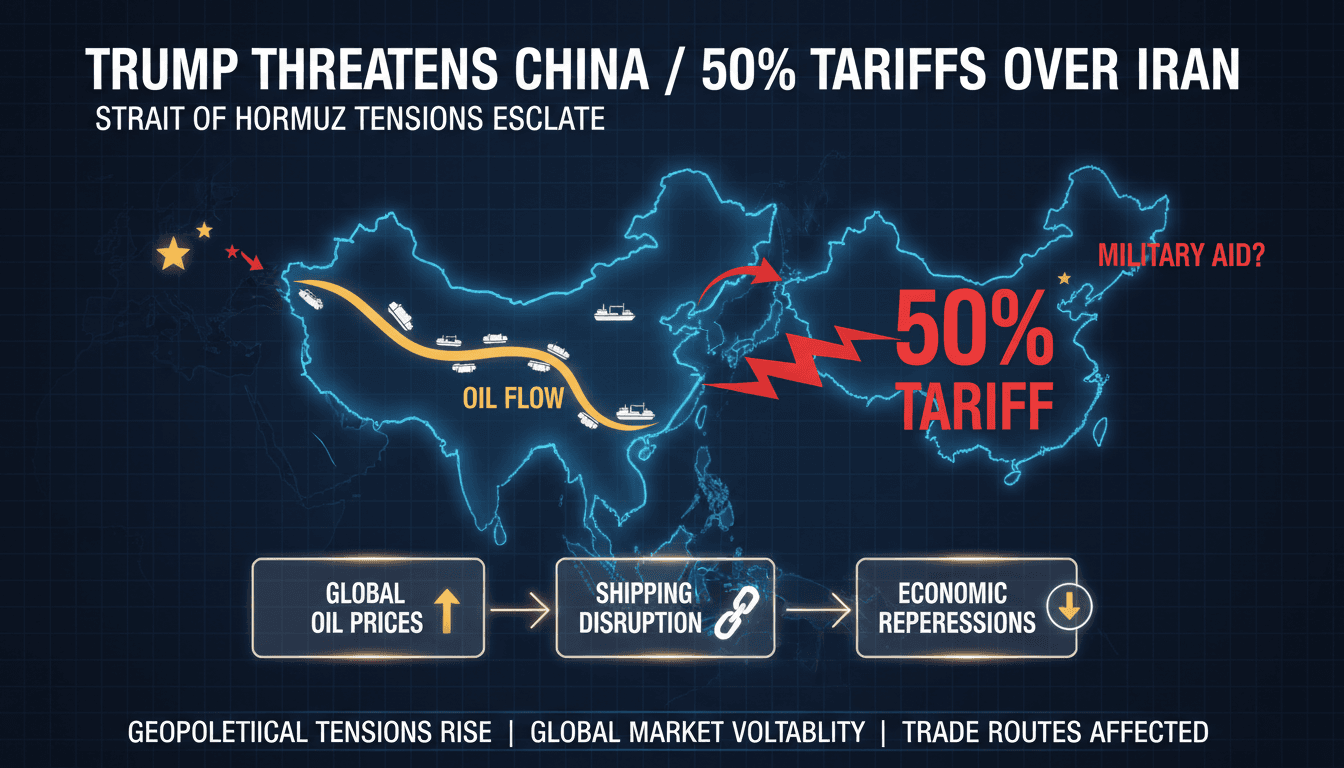
Here's what it means for you.
If you’re in global trade or energy markets, prepare for potential price volatility and supply chain disruptions.
Why it matters
This tariff threat could escalate tensions in global trade, impacting energy prices and international relations.
What happened (in 30 seconds)
- On April 13, 2026, President Trump warned China of a staggering 50% tariff if it supplies military aid to Iran.
- This warning follows U.S. intelligence reports alleging Chinese shipments of military equipment to Tehran amid a U.S. naval blockade of the Strait of Hormuz.
- The situation escalated after failed ceasefire talks between the U.S. and Iran, leading to increased military and economic pressure on Iran.
The context you actually need
- The Strait of Hormuz is a critical chokepoint for global oil supply, with 20% of the world's petroleum liquids transiting through it annually.
- U.S.-Iran relations have deteriorated significantly since March 2026, following Iranian retaliation against U.S. and Israeli strikes.
- China's involvement in Iran's military support is seen as a direct challenge to U.S. influence in the region, especially as China purchases over 80% of Iran's sanctioned oil exports.
What's really happening
The geopolitical landscape surrounding the Strait of Hormuz has become increasingly fraught, with the U.S. imposing a naval blockade to exert economic pressure on Iran following failed diplomatic efforts. The U.S. intelligence community has reported that China is allegedly preparing to supply military aid to Iran, including man-portable air defense systems (MANPADS) and shoulder-fired missiles. This has prompted President Trump to issue a stark warning to China, threatening a 50% tariff on any military supplies sent to Iran.
This tariff threat is not merely a punitive measure; it reflects a broader strategy to deter Chinese support for Iran while simultaneously reinforcing U.S. dominance in the region. The U.S. aims to isolate Iran economically and militarily, thereby curtailing its nuclear ambitions and regional influence. The blockade of the Strait of Hormuz is a critical component of this strategy, as it directly impacts Iran's ability to export oil, which is vital for its economy.
The implications of this situation extend beyond the immediate U.S.-China-Iran triangle. The potential for increased tariffs and military tensions could lead to significant disruptions in global oil markets, particularly as oil prices hover near $100 per barrel. Dubai, as a key trading hub, is already experiencing rising fuel prices and disrupted trade routes due to the blockade. The UAE, which has strong economic ties with both Iran and the U.S., faces heightened risks from U.S. tariffs on Iranian traders, potentially exacerbating inflation and economic instability in the region.
Moreover, the upcoming Trump-Xi summit scheduled for May 14, 2026, adds another layer of complexity. This meeting could either de-escalate tensions or further entrench the adversarial positions of the U.S. and China, depending on the outcomes of negotiations regarding military aid and tariffs. The stakes are high, as both nations navigate a delicate balance between economic interests and geopolitical strategy.
Who feels it first (and how)
- Energy traders: Increased volatility in oil prices could impact trading strategies and profit margins.
- UAE businesses: Companies reliant on trade with Iran may face higher costs and supply chain disruptions.
- Consumers in Dubai: Rising fuel prices could lead to increased costs of living and inflationary pressures.
- Global investors: Market uncertainty may affect investment decisions and risk assessments in the region.
What to watch next
- May 14 Trump-Xi summit: The outcomes of this meeting could significantly influence U.S.-China relations and the future of tariffs.
- Oil price fluctuations: Watch for changes in oil prices as the blockade continues and geopolitical tensions escalate.
- Iran's military responses: Any military actions taken by Iran in response to U.S. pressures could further destabilize the region.
The U.S. has imposed a naval blockade of the Strait of Hormuz.
China will respond to U.S. tariffs with countermeasures, potentially escalating trade tensions.
The long-term effects of these tensions on global oil markets and international trade dynamics.
Frequently Asked Questions
- Why it matters?
- This tariff threat could escalate tensions in global trade, impacting energy prices and international relations.
- What happened (in 30 seconds)?
- On April 13, 2026, President Trump warned China of a staggering 50% tariff if it supplies military aid to Iran. This warning follows U.S. intelligence reports alleging Chinese shipments of military equipment to Tehran amid a U.S. naval blockade of the Strait of Hormuz. The situation escalated after failed ceasefire talks between the U.S. and Iran, leading to increased military and economic pressure on Iran.
- What's really happening?
- The geopolitical landscape surrounding the Strait of Hormuz has become increasingly fraught, with the U.S. imposing a naval blockade to exert economic pressure on Iran following failed diplomatic efforts. The U.S. intelligence community has reported that China is allegedly preparing to supply military aid to Iran, including man-portable air defense systems (MANPADS) and shoulder-fired missiles. This has prompted President Trump to issue a stark warning to China, threatening a 50% tariff on any m
- Who feels it first (and how)?
- Energy traders: Increased volatility in oil prices could impact trading strategies and profit margins. UAE businesses: Companies reliant on trade with Iran may face higher costs and supply chain disruptions. Consumers in Dubai: Rising fuel prices could lead to increased costs of living and inflationary pressures. Global investors: Market uncertainty may affect investment decisions and risk assessments in the region.
- What to watch next?
- May 14 Trump-Xi summit: The outcomes of this meeting could significantly influence U.S.-China relations and the future of tariffs. Oil price fluctuations: Watch for changes in oil prices as the blockade continues and geopolitical tensions escalate. Iran's military responses: Any military actions taken by Iran in response to U.S. pressures could further destabilize the region.
Conservative-leaning coverage of current events.
"Fox News is a highly influential conservative news outlet known for right-leaning political commentary and coverage."
— A47 Editor
Trump warns China of 'staggering' 50% tariff if caught supplying military aid to Iran
President Trump has issued a stark warning to China, threatening a staggering 50% tariff if it is found supplying military aid to Iran, coinciding with the implementation of a U.S. Navy blockade in the Strait of Hormuz. This blockade follows failed p...
Sports reporting with a focus on Saudi and regional competitions.
"Okaz sports coverage is broad and audience-friendly, with strong attention to Saudi teams and leagues."
— A47 Editor
ترمب للصين: سنفرض عليكم رسوماً جمركية نسبتها 50%
U.S. President Donald Trump has threatened to impose a 50% tariff on Chinese imports if China provides military assistance to Iran. This statement was made during an interview with Fox News, highlighting escalating tensions between the U.S. and China...
Conservative-leaning political and national coverage.
"The Washington Times is a conservative-leaning newspaper known for its political coverage and advocacy of right-of-center viewpoints."
— A47 Editor
Trump warns China of consequences for arming Iran amid U.S. conflict
President Trump has issued a warning to China regarding the potential consequences of supplying arms to Iran, stating that Beijing would encounter significant problems if it proceeds with such actions amid escalating U.S. and Israeli military operati...
Arabic-language coverage of international news and geopolitics.
"RT Arabic is a Russian state-funded outlet often criticized for promoting Kremlin-aligned narratives."
— A47 Editor
ترامب يلوح برسوم 50% على الصين إذا دعمت إيران عسكريا
U.S. President Donald Trump has linked trade and national security issues, threatening to impose a 50% tariff on China if it provides military support to Iran. This statement underscores the ongoing tensions between the U.S. and both China and Iran, ...
Business, investment, entrepreneurship, leadership, and innovation.
"Forbes is known for its coverage of business leaders, market trends, and entrepreneurial ventures with a pro-business editorial stance."
— A47 Editor
Trump Warns China Of ‘Big Problems’—But Here’s How China And Russia Could Be Helping Iran
Former President Donald Trump has issued a warning to China regarding potential repercussions if it supplies arms to Iran, amidst ongoing tensions involving the U.S. and Israel. Reports suggest that while China and Russia have not directly intervened...
Conservative-leaning political and national coverage.
"The Washington Times is a conservative-leaning newspaper known for its political coverage and advocacy of right-of-center viewpoints."
— A47 Editor
Trump warns China not to supply arms to Iran
President Trump issued a warning to China against supplying arms to Iran, emphasizing that such actions would lead to significant repercussions. This statement comes amid reports that China is preparing to deliver new air defense systems to Iran, esc...
Arabic-language UAE newspaper coverage focused on domestic affairs, public institutions, business, society, and regional developments.
"Al Khaleej coverage generally reflects a mainstream UAE editorial lens with strong attention to public affairs, institutions, and regional developments."
— A47 Editor
ترامب يهدد الصين برسوم جمركية 50% في حال ساعدت إيران عسكرياً
U.S. President Donald Trump has threatened to impose a 50% tariff on China if it provides military assistance to Iran. This statement underscores the ongoing tensions between the U.S. and both China and Iran, particularly regarding military and econo...