
Aave Protocol Faces $196 Million Bad Debt After KelpDAO Exploit Triggers Liquidity Crisis
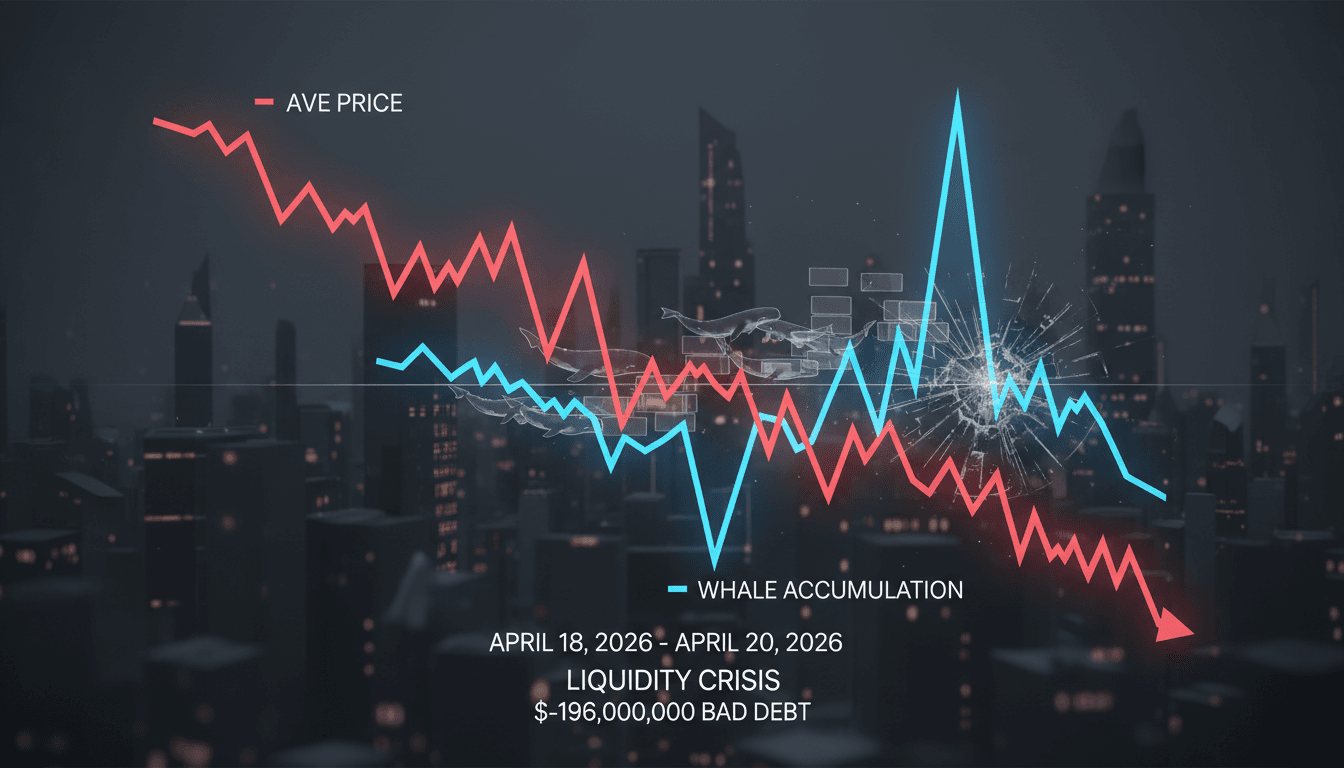
Here's what it means for you.
If you're involved in decentralized finance (DeFi), this incident could impact your investment strategies and risk assessments.
Why it matters
The exploit highlights vulnerabilities in DeFi protocols, potentially shaking investor confidence and affecting liquidity across the sector.
What happened (in 30 seconds)
- On April 18, 2026, attackers exploited a vulnerability in KelpDAO's rsETH bridge, minting unbacked tokens and borrowing approximately $196 million in wrapped ETH from Aave.
- Aave froze rsETH markets across its V3 and V4 platforms, leading to a liquidity crisis where users withdrew $8.45 billion in deposits within 48 hours.
- The AAVE token fell 14-18 percent, trading near $96, while whale investors began accumulating at perceived price bottoms despite the unresolved bad debt.
The context you actually need
- Aave is a decentralized lending protocol on Ethereum that has faced a prolonged bearish trend since late 2025, with its token consistently hitting lower highs and lows.
- The exploit stemmed from KelpDAO's restaking bridge, which allowed attackers to mint 116,500 unbacked rsETH tokens valued at approximately $292 million, used as collateral on Aave V3.
- The liquidity crisis reduced Aave's total value locked (TVL) from over $26 billion to around $17-20 billion, indicating a significant loss of user trust and capital.
What's really happening
The exploit of KelpDAO's rsETH bridge has exposed critical vulnerabilities in the DeFi ecosystem, particularly in how collateral is managed and verified. Attackers took advantage of a flaw that allowed them to mint unbacked tokens, which they then used to borrow a staggering $196 million in wrapped ETH from Aave. This incident not only triggered immediate panic but also raised alarms about the overall security of decentralized finance platforms.
In response to the exploit, Aave quickly froze the rsETH markets across its V3 and V4 platforms, effectively halting any further withdrawals. This move was intended to prevent further losses but inadvertently sparked a liquidity crisis. Within just 48 hours, users withdrew a staggering $8.45 billion in deposits, a clear indication of the panic that ensued. The total value locked (TVL) in Aave plummeted from over $26 billion to a range of $17-20 billion, reflecting a significant erosion of trust among users.
The AAVE governance token, which was trading near $115 before the incident, saw a decline of 14-18 percent, settling around $96. However, on-chain metrics from CryptoQuant revealed that whale investors began accumulating AAVE tokens at these lower price points, suggesting a belief that the price may have hit a bottom. This behavior aligns with historical patterns where large investors often buy during market downturns, anticipating a recovery.
Governance discussions within Aave have since focused on addressing the liquidity contagion risks and potential reserve activations, including the $80-100 million Umbrella fund. However, this amount falls short of fully covering the incurred bad debt, leaving the protocol in a precarious position. The ongoing discussions reflect a broader concern about the sustainability of DeFi protocols in the face of such vulnerabilities.
As the situation evolves, the implications for Aave and the wider DeFi landscape remain significant. The exploit not only raises questions about the security measures in place but also highlights the need for more robust governance frameworks to manage risks effectively. Investors and users alike are left to navigate a landscape that is increasingly fraught with uncertainty.
Who feels it first (and how)
- Retail Investors: Those holding AAVE tokens may experience immediate financial losses and reduced confidence in DeFi investments.
- DeFi Protocols: Other platforms may see increased scrutiny and withdrawals as users reassess their risk exposure.
- Whale Investors: Large holders may capitalize on lower prices but face risks associated with unresolved bad debt.
What to watch next
- Governance Decisions: Watch for outcomes from Aave's governance discussions regarding liquidity measures and reserve activations, as these will impact user confidence and protocol stability.
- Market Recovery Indicators: Monitor whale accumulation patterns and overall market sentiment towards AAVE and similar tokens, which could signal a potential recovery or further decline.
- Regulatory Responses: Keep an eye on any regulatory developments in the DeFi space that may arise from this incident, as they could reshape operational frameworks and investor protections.
Aave incurred $196 million in bad debt due to the exploit.
Governance discussions will lead to new liquidity measures, but full recovery of bad debt is uncertain.
The long-term impact on investor confidence in DeFi protocols remains to be seen.
Frequently Asked Questions
- Why it matters?
- The exploit highlights vulnerabilities in DeFi protocols, potentially shaking investor confidence and affecting liquidity across the sector.
- What happened (in 30 seconds)?
- On April 18, 2026, attackers exploited a vulnerability in KelpDAO's rsETH bridge, minting unbacked tokens and borrowing approximately $196 million in wrapped ETH from Aave. Aave froze rsETH markets across its V3 and V4 platforms, leading to a liquidity crisis where users withdrew $8.45 billion in deposits within 48 hours. The AAVE token fell 14-18 percent, trading near $96, while whale investors began accumulating at perceived price bottoms despite the unresolved bad debt.
- What's really happening?
- The exploit of KelpDAO's rsETH bridge has exposed critical vulnerabilities in the DeFi ecosystem, particularly in how collateral is managed and verified. Attackers took advantage of a flaw that allowed them to mint unbacked tokens, which they then used to borrow a staggering $196 million in wrapped ETH from Aave. This incident not only triggered immediate panic but also raised alarms about the overall security of decentralized finance platforms. In response to the exploit, Aave quickly froze th
- Who feels it first (and how)?
- Retail Investors: Those holding AAVE tokens may experience immediate financial losses and reduced confidence in DeFi investments. DeFi Protocols: Other platforms may see increased scrutiny and withdrawals as users reassess their risk exposure. Whale Investors: Large holders may capitalize on lower prices but face risks associated with unresolved bad debt.
- What to watch next?
- Governance Decisions: Watch for outcomes from Aave's governance discussions regarding liquidity measures and reserve activations, as these will impact user confidence and protocol stability. Market Recovery Indicators: Monitor whale accumulation patterns and overall market sentiment towards AAVE and similar tokens, which could signal a potential recovery or further decline. Regulatory Responses: Keep an eye on any regulatory developments in the DeFi space that may arise from this incident, as th
Bitcoin news, technical analysis, and forecasts across crypto markets.
"NewsBTC covers Bitcoin news, technical analysis, and forecasts across crypto markets and major blockchain projects."
— A47 Editor
Aave Is Down 18% And Carrying $196M In Bad Debt, But Smart Money Is Buying Anyway
Aave has faced a significant downturn, with an 18% drop in its token value following a $292 million exploit of KelpDAO's rsETH bridge, which resulted in approximately $196 million in bad debt. This incident has led to a massive withdrawal crisis, wit...
Research, news, and analysis on blockchain startups, DeFi, and regulations.
"Crypto Briefing provides research, news, and analysis on blockchain startups, DeFi, and crypto regulations with investor-focused coverage."
— A47 Editor
$293M DeFi exploit hits Kelp/AAVE, raises systemic risk concerns
A significant exploit of the Kelp restaking platform has resulted in a loss of approximately $293 million, raising systemic risk concerns within the decentralized finance (DeFi) sector. This incident highlights the vulnerabilities present in DeFi pla...
Covers blockchain, cryptocurrency news, project analysis, and market insights.
"Cointelegraph is a leading crypto-focused media outlet known for timely news, analysis, and educational content related to blockchain and digital assets."
— A47 Editor
Aave risk manager models 2 bad debt scenarios from Kelp DAO exploit
Aave's risk management team has modeled two potential bad debt scenarios following the recent exploit of Kelp DAO, which resulted in significant financial losses. The first scenario, while less expensive, poses a risk of a 15% depegging of rsETH, whi...
Research, news, and analysis on blockchain startups, DeFi, and regulations.
"Crypto Briefing provides research, news, and analysis on blockchain startups, DeFi, and crypto regulations with investor-focused coverage."
— A47 Editor
KelpDAO exploit exposes $290M in unbacked assets, AAVE freezes rsETH markets
The KelpDAO exploit has exposed approximately $290 million in unbacked assets, leading to AAVE freezing its rsETH markets. This incident highlights significant vulnerabilities within decentralized finance (DeFi) platforms, raising alarms about their ...
Covers Bitcoin plus altcoin news, market updates, and educational resources.
"Bitcoin.com provides news, market data, and guides focused on Bitcoin and the wider crypto industry."
— A47 Editor
Incident Report: Llamarisk, Aave Service Providers Detail Kelp rsETH Hack Across Ethereum and Arbitrum Markets
A significant security breach involving KelpDAO has resulted in the loss of approximately $292 million, including a substantial amount of rsETH, impacting Ethereum and Arbitrum markets. This incident has prompted Aave to suspend its rsETH markets and...
Covers blockchain, cryptocurrency news, project analysis, and market insights.
"CoinDesk is a well-established cryptocurrency and blockchain news provider, offering comprehensive insights, market data, and industry research."
— A47 Editor
Aave could face up to $230 million in losses after Kelp DAO bridge exploit triggers DeFi chaos
Aave is facing potential losses of up to $230 million following a significant exploit of the Kelp DAO bridge, which drained approximately $292 million from its reserves. The report outlines two scenarios for the impact on Aave, depending on how the s...
Covers blockchain, cryptocurrency news, project analysis, and market insights.
"Cointelegraph is a leading crypto-focused media outlet known for timely news, analysis, and educational content related to blockchain and digital assets."
— A47 Editor
LayerZero says Kelp setup enabled exploit, as Aave loss questions mount
LayerZero has reported that the recent $290 million exploit of KelpDAO was facilitated by a setup that did not adhere to multi-verifier recommendations, allowing attackers to compromise the system. This incident has raised significant concerns regard...
Real-time updates, analysis, and reports on the blockchain and cryptocurrency sectors.
"Crypto News delivers real-time updates, analysis, and reports on the blockchain and cryptocurrency sectors."
— A47 Editor
Aave price drops to $90 after Kelp DAO exploit, derivatives hint at potential rebound
Aave's price has fallen nearly 20% to approximately $90 following a significant exploit at Kelp DAO, which resulted in around $196 million in bad debt for the protocol. This incident has raised concerns about the security and stability of decentraliz...
Covers blockchain, cryptocurrency news, project analysis, and market insights.
"CoinDesk is a well-established cryptocurrency and blockchain news provider, offering comprehensive insights, market data, and industry research."
— A47 Editor
A $300 million borrowing spike on Aave signals liquidity crunch after KelpDAO exploit
Aave has experienced a significant liquidity crunch, marked by a $300 million spike in borrowing, following the KelpDAO exploit that drained approximately $292 million from its reserves. This incident has caused widespread instability in the stableco...
Covers blockchain, cryptocurrency news, project analysis, and market insights.
"Cointelegraph is a leading crypto-focused media outlet known for timely news, analysis, and educational content related to blockchain and digital assets."
— A47 Editor
Aave's TVL tanks $8B a day after $293M Kelp DAO hack
Aave's total value locked (TVL) has plummeted by $8 billion following a significant hack of Kelp DAO, which drained approximately $293 million from its reserves. The Aave token has also seen a nearly 20% drop in value, falling to $89.5 within 24 hour...
Research, news, and analysis on blockchain startups, DeFi, and regulations.
"Crypto Briefing provides research, news, and analysis on blockchain startups, DeFi, and crypto regulations with investor-focused coverage."
— A47 Editor
AAVE TVL drops to $17B after KelpDAO exploit triggers $8.4B withdrawals
The total value locked (TVL) in AAVE has dropped to $17 billion following a significant exploit of KelpDAO, which triggered approximately $8.4 billion in withdrawals. This incident underscores vulnerabilities in cross-chain security and has led to th...
Research, news, and analysis on blockchain startups, DeFi, and regulations.
"Crypto Briefing provides research, news, and analysis on blockchain startups, DeFi, and crypto regulations with investor-focused coverage."
— A47 Editor
KelpDAO exploit causes $10.5B drop in DeFi TVL, AAVE suspends rsETH markets
The KelpDAO exploit has led to a significant $10.5 billion drop in the total value locked (TVL) in decentralized finance (DeFi), prompting AAVE to suspend its rsETH markets. This incident highlights the vulnerabilities present in DeFi platforms, rais...
Covers Bitcoin plus altcoin news, market updates, and educational resources.
"Bitcoin.com provides news, market data, and guides focused on Bitcoin and the wider crypto industry."
— A47 Editor
DeFi Lender Aave Battles Withdrawal Crisis After KelpDAO rsETH Exploit
Aave, a decentralized finance (DeFi) lender, is currently facing a withdrawal crisis following a significant exploit of KelpDAO's rsETH, which resulted in a loss of approximately $292 million. This breach has led Aave to suspend its rsETH markets and...
Research, news, and analysis on blockchain startups, DeFi, and regulations.
"Crypto Briefing provides research, news, and analysis on blockchain startups, DeFi, and crypto regulations with investor-focused coverage."
— A47 Editor
AAVE TVL plummets $6B after Kelp DAO hack exploits LayerZero bridge flaw
AAVE's total value locked (TVL) has plummeted by $6 billion following a significant hack of Kelp DAO, which exploited a flaw in the LayerZero bridge. The breach has raised alarms about the security vulnerabilities inherent in decentralized finance (D...
Covers blockchain, cryptocurrency news, project analysis, and market insights.
"CoinDesk is a well-established cryptocurrency and blockchain news provider, offering comprehensive insights, market data, and industry research."
— A47 Editor
Aave sees $6 billion deposit drop as Kelp hack exposes structural risk for DeFi lender
Aave has experienced a significant drop in deposits, losing approximately $6 billion, following a hack that exploited drained rsETH as collateral to borrow wrapped ether. This incident has resulted in a 16% decline in the value of the AAVE token as t...
Research, news, and analysis on blockchain startups, DeFi, and regulations.
"Crypto Briefing provides research, news, and analysis on blockchain startups, DeFi, and crypto regulations with investor-focused coverage."
— A47 Editor
KelpDAO exploit triggers $236M bad debt, $AAVE drops 18%
The KelpDAO exploit has triggered a staggering $236 million in bad debt, leading to an 18% drop in the value of AAVE. This incident underscores the vulnerabilities within decentralized finance (DeFi) platforms, raising alarms about their security and...
Research, news, and analysis on blockchain startups, DeFi, and regulations.
"Crypto Briefing provides research, news, and analysis on blockchain startups, DeFi, and crypto regulations with investor-focused coverage."
— A47 Editor
KelpDAO exploit causes AAVE ETH pool to utilization
The KelpDAO exploit has caused significant disruption in the decentralized finance (DeFi) sector, leading to a utilization crisis in the AAVE ETH pool. This incident has resulted in an estimated $280 million loss, raising alarms about the security vu...