
US-Iran Ceasefire at Risk Following Deadly Israeli Airstrikes in Lebanon
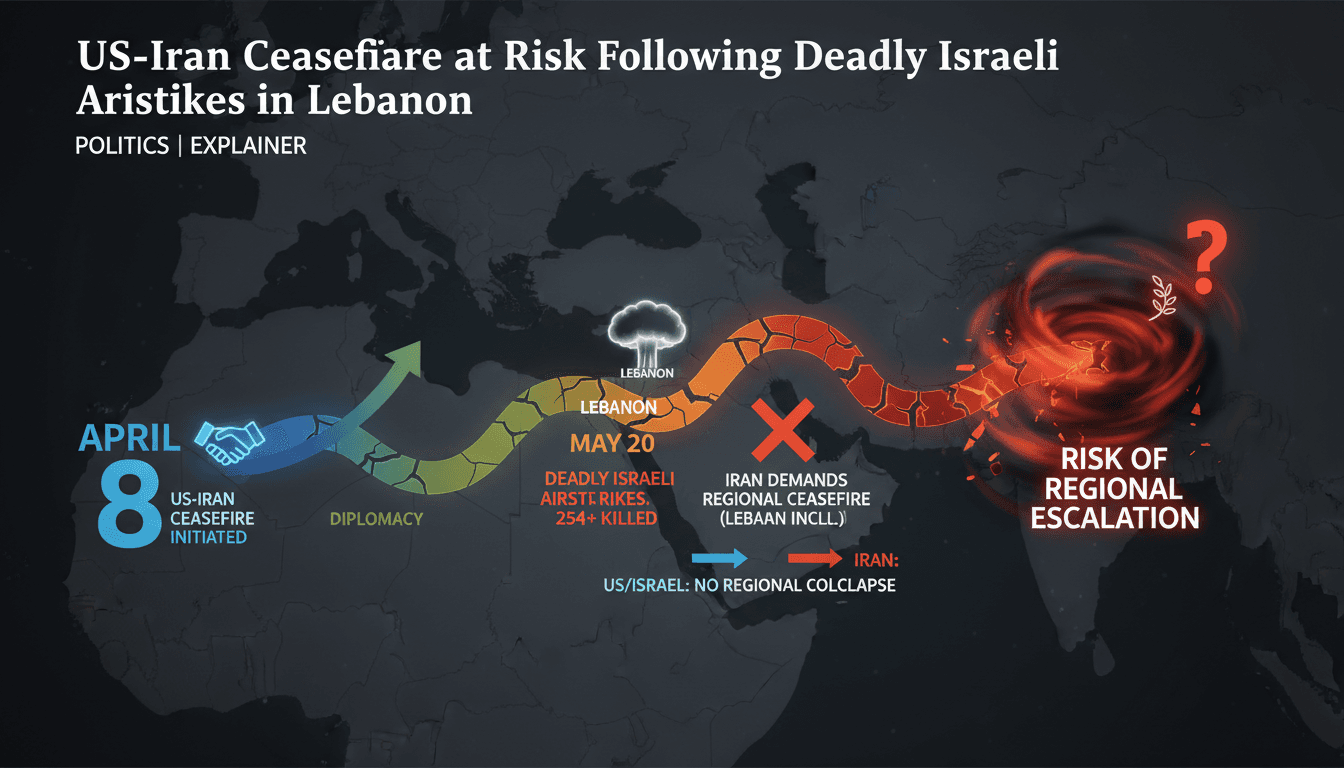
Here's what it means for you.
As geopolitical tensions rise, your investments and travel plans may be affected by volatility in oil prices and regional security dynamics.
Why it matters
The fragile ceasefire impacts global oil markets and regional stability, influencing economic conditions far beyond the Middle East.
What happened (in 30 seconds)
- On April 8, 2026, a conditional two-week ceasefire was announced between the US and Iran after 40 days of conflict, but it excludes the Israel-Hezbollah situation.
- On April 8, Israeli airstrikes in Lebanon killed at least 254 people, exacerbating tensions and leading Iran to accuse Israel of violating the ceasefire.
- As of April 9, the ceasefire is in jeopardy, with diplomatic talks scheduled in Islamabad amid ongoing military actions.
The context you actually need
- The 2026 Iran war began on February 28 following the assassination of Ayatollah Ali Khamenei, resulting in over 3,000 Iranian deaths and a blockade of the Strait of Hormuz.
- Hezbollah's involvement in early March escalated the conflict into the 2026 Lebanon war, leading to over 1,700 fatalities and further complicating the ceasefire negotiations.
- The US and Israel's stance excludes Lebanon from the ceasefire, which Iran insists must include regional actors to be effective, highlighting a significant diplomatic divide.
What's really happening
The current geopolitical landscape is marked by a complex interplay of military actions, diplomatic negotiations, and regional power dynamics. The ceasefire, brokered with the intention of halting hostilities between the US and Iran, faces immediate threats from ongoing Israeli airstrikes in Lebanon. This situation is exacerbated by the historical animosities and strategic interests of the involved parties.
The US-Israeli alliance has been solidified through a series of military actions against Iran, particularly following the assassination of a key Iranian leader. This has not only intensified the conflict but also led to Iran's blockade of the Strait of Hormuz, a critical chokepoint for global oil supply. The closure of this waterway has significant implications for oil prices and energy security, impacting economies worldwide.
The Israeli airstrikes, which resulted in a high civilian death toll, have drawn international condemnation and further complicated the ceasefire. Iran's insistence on including Lebanon in any ceasefire agreement reflects its broader regional ambitions and its commitment to supporting Hezbollah, which it views as a critical ally against Israeli aggression. This stance puts Iran at odds with the US and Israel, who are focused on limiting Iran's influence in the region.
The diplomatic efforts in Islamabad aim to address these tensions, but the exclusion of Lebanon from the ceasefire negotiations raises questions about the viability of any agreement. The ongoing military actions and accusations of violations create an environment of mistrust, making it difficult for all parties to reach a sustainable resolution.
As the situation evolves, the potential for escalation remains high, with both sides maintaining military readiness. The outcome of the upcoming talks will be crucial in determining whether the ceasefire can hold or if the region will plunge back into deeper conflict.
Who feels it first (and how)
- Investors in oil markets: Fluctuations in oil prices due to conflict can directly impact investment returns.
- Travelers and expatriates in the Gulf: Heightened security alerts and aviation advisories may disrupt travel plans and increase costs.
- Regional businesses: Companies operating in or trading with the Middle East may face supply chain disruptions and increased operational risks.
What to watch next
- Diplomatic developments in Islamabad: The outcome of the talks will indicate whether the ceasefire can be sustained or if tensions will escalate further.
- Oil price fluctuations: Watch for changes in Brent crude prices, which can signal market reactions to geopolitical events.
- Military actions by Israel and Iran: Continued military engagements could lead to a broader conflict, impacting global security and economic conditions.
The ceasefire is fragile and at imminent risk of collapse.
Continued military actions will exacerbate tensions and complicate diplomatic efforts.
The long-term implications for regional stability and global oil markets remain uncertain.
Frequently Asked Questions
- Why it matters?
- The fragile ceasefire impacts global oil markets and regional stability, influencing economic conditions far beyond the Middle East.
- What happened (in 30 seconds)?
- On April 8, 2026, a conditional two-week ceasefire was announced between the US and Iran after 40 days of conflict, but it excludes the Israel-Hezbollah situation. On April 8, Israeli airstrikes in Lebanon killed at least 254 people, exacerbating tensions and leading Iran to accuse Israel of violating the ceasefire. As of April 9, the ceasefire is in jeopardy, with diplomatic talks scheduled in Islamabad amid ongoing military actions.
- What's really happening?
- The current geopolitical landscape is marked by a complex interplay of military actions, diplomatic negotiations, and regional power dynamics. The ceasefire, brokered with the intention of halting hostilities between the US and Iran, faces immediate threats from ongoing Israeli airstrikes in Lebanon. This situation is exacerbated by the historical animosities and strategic interests of the involved parties. The US-Israeli alliance has been solidified through a series of military actions against
- Who feels it first (and how)?
- Investors in oil markets: Fluctuations in oil prices due to conflict can directly impact investment returns. Travelers and expatriates in the Gulf: Heightened security alerts and aviation advisories may disrupt travel plans and increase costs. Regional businesses: Companies operating in or trading with the Middle East may face supply chain disruptions and increased operational risks.
- What to watch next?
- Diplomatic developments in Islamabad: The outcome of the talks will indicate whether the ceasefire can be sustained or if tensions will escalate further. Oil price fluctuations: Watch for changes in Brent crude prices, which can signal market reactions to geopolitical events. Military actions by Israel and Iran: Continued military engagements could lead to a broader conflict, impacting global security and economic conditions.
24/7 international news from a French perspective in multiple languages.
"France 24 is viewed as a globally focused outlet with balanced coverage and a European perspective."
— A47 Editor
US-Iran truce hangs in balance as war flares in Lebanon
The fragile two-week truce between the United States and Iran is at risk as Israel intensifies its military operations in Lebanon, launching extensive airstrikes that have resulted in at least 182 fatalities and nearly 900 injuries according to Leban...
Breaking news, politics, business, and entertainment from the U.S. and around the world.
"The New York Post is a tabloid-format newspaper known for its sensationalist headlines and conservative-leaning editorial tone."
— A47 Editor
Iran wildly accuses US of breaking cease-fire, blasts America for being unable to ‘leash its rabid dog’
Iran has accused the United States of violating a recently established two-week ceasefire, coinciding with Israel's intensified military operations against Hezbollah in Lebanon. This accusation comes as Israel conducts its largest airstrikes against ...