
UAE Banks Reach Record 439 Billion AED Reserves at Central Bank
Here's what it means for you.
If you’re involved in the UAE’s financial landscape, this surge in bank reserves could enhance your access to loans and investment opportunities.
Why it matters
This milestone indicates a robust banking sector, which is crucial for economic stability and growth in the UAE.
What happened (in 30 seconds)
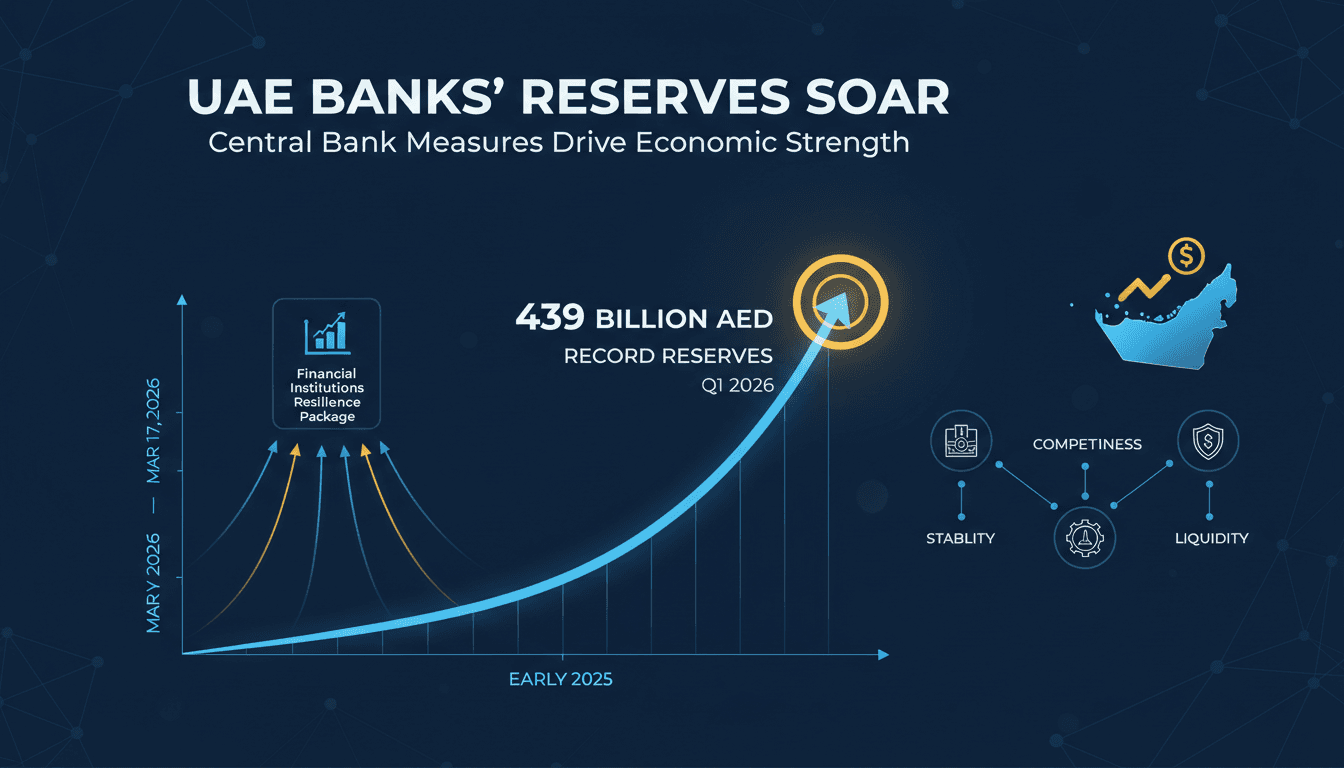
- UAE banks' reserves reached 439 billion AED at the Central Bank in Q1 2026, with 271 billion AED in mandatory reserves and 168 billion AED in excess liquidity.
- The Central Bank's Financial Institutions Resilience Package launched on March 17, 2026, aimed to bolster banking stability amid global economic pressures.
- Banking assets expanded to 5.5 trillion AED, reflecting effective utilization of liquidity and reserve mechanisms.
The context you actually need
- The Financial Institutions Resilience Package (FIRP) was introduced to provide banks with access to their mandatory reserves and enhance liquidity.
- Banking assets have been growing steadily, supported by favorable monetary policies and an increase in foreign assets.
- Digital infrastructure initiatives are underway, aiming to modernize the banking sector and improve consumer protection.
What's really happening
In the first quarter of 2026, UAE banks achieved a historic milestone with reserves at the Central Bank of the UAE (CBUAE) peaking at 439 billion AED. This figure is composed of 271 billion AED in mandatory reserves and 168 billion AED in excess liquidity, reflecting a proactive approach by banks to bolster their financial positions. The surge in reserves is a direct result of the Central Bank's Financial Institutions Resilience Package (FIRP), which was implemented on March 17, 2026. This package allowed banks to utilize up to 30% of their mandatory reserves and provided term lending facilities in both AED and USD, enabling banks to navigate through exceptional global economic pressures.
Throughout Q1 2026, banks effectively tested and deployed these mechanisms, leading to a significant increase in reserves. The CBUAE's support through monetary policies has facilitated this growth, with banking assets rising to 5.5 trillion AED. This expansion is not merely a number; it signifies the resilience of the banking sector, which is crucial for maintaining confidence among consumers and investors alike.
The meeting on April 10, 2026, between CBUAE Governor Khaled Mohamed Balama and bank CEOs underscored the importance of this development. It was confirmed that asset growth was on track, and advancements in the Financial Infrastructure Transformation Programme were being made. Initiatives such as the Jaywan domestic card scheme, Al Tareq open finance platform, and Aani instant payments system are set to enhance the banking experience for consumers.
Moreover, the positive sentiment generated by the FIRP has led to gains in bank stocks, indicating investor confidence. The CBUAE has also mandated OTP verification to combat electronic fraud, further enhancing consumer protection. Leadership support, including from Sheikh Mansour bin Zayed Al Nahyan, emphasizes the commitment to ongoing collaborations within the banking sector. With no market disruptions observed, the focus is now on rolling out digital infrastructure, positioning the UAE banking sector for greater global competitiveness.
Who feels it first (and how)
- Banking professionals: Increased job security and potential for growth in roles related to liquidity management.
- Small and medium enterprises (SMEs): Enhanced access to loans and financing options, vital for business expansion.
- Consumers: Improved banking services and protections, leading to better mortgage stability and investment opportunities.
What to watch next
- Digital infrastructure rollout: The speed and effectiveness of implementing new banking technologies will determine consumer adoption and satisfaction.
- Bank stock performance: Continued gains or losses in bank stocks will indicate market confidence in the banking sector's stability.
- Economic indicators: Monitoring GDP growth and foreign investment levels will provide insights into the broader economic impact of the banking sector's resilience.
UAE banks have reached record reserves, indicating strong sector resilience.
Continued growth in banking assets and improved consumer services as digital initiatives are implemented.
The long-term impact of global economic conditions on the UAE banking sector’s stability.
Frequently Asked Questions
- Why it matters?
- This milestone indicates a robust banking sector, which is crucial for economic stability and growth in the UAE.
- What happened (in 30 seconds)?
- UAE banks' reserves reached 439 billion AED at the Central Bank in Q1 2026, with 271 billion AED in mandatory reserves and 168 billion AED in excess liquidity. The Central Bank's Financial Institutions Resilience Package launched on March 17, 2026, aimed to bolster banking stability amid global economic pressures. Banking assets expanded to 5.5 trillion AED, reflecting effective utilization of liquidity and reserve mechanisms.
- What's really happening?
- In the first quarter of 2026, UAE banks achieved a historic milestone with reserves at the Central Bank of the UAE (CBUAE) peaking at 439 billion AED. This figure is composed of 271 billion AED in mandatory reserves and 168 billion AED in excess liquidity, reflecting a proactive approach by banks to bolster their financial positions. The surge in reserves is a direct result of the Central Bank's Financial Institutions Resilience Package (FIRP), which was implemented on March 17, 2026. This packa
- Who feels it first (and how)?
- Banking professionals: Increased job security and potential for growth in roles related to liquidity management. Small and medium enterprises (SMEs): Enhanced access to loans and financing options, vital for business expansion. Consumers: Improved banking services and protections, leading to better mortgage stability and investment opportunities.
- What to watch next?
- Digital infrastructure rollout: The speed and effectiveness of implementing new banking technologies will determine consumer adoption and satisfaction. Bank stock performance: Continued gains or losses in bank stocks will indicate market confidence in the banking sector's stability. Economic indicators: Monitoring GDP growth and foreign investment levels will provide insights into the broader economic impact of the banking sector's resilience.
Arabic-language UAE newspaper coverage focused on domestic affairs, public institutions, business, society, and regional developments.
"Al Khaleej coverage generally reflects a mainstream UAE editorial lens with strong attention to public affairs, institutions, and regional developments."
— A47 Editor
439 مليار درهم احتياطات بنوك الإمارات لدى «المركزي» بالربع الأول 2026
In a recent meeting, Khaled Mohammed Balama, Governor of the Central Bank of the UAE, convened with the CEOs of banks operating in the country to discuss key initiatives and projects of the central bank. This meeting highlights the ongoing collaborat...
Arabic-language economic and business reporting with strong UAE market relevance.
"Emarat Al Youm business coverage often centers UAE property, banking, consumer issues, and economic policy."
— A47 Editor
المصرف المركزي يشدد على التزام البنوك بمتطلبات التحقق من هوية العملاء المصرف المركزي يشدد على التزام البنوك بمتطلبات التحقق من هوية العملاء
The Governor of the Central Bank of the United Arab Emirates, Khaled Mohammed Balama, met with the CEOs of banks operating in the country during a regular meeting to emphasize the importance of compliance with customer identity verification requireme...