
Vitol CEO Reports One Billion Barrels Lost in Global Oil Market Due to Iran War
Here's what it means for you.
Rising fuel prices and potential shortages could affect your daily expenses and travel plans.
Why it matters
The ongoing disruptions in the oil market threaten global economic stability and energy security.
What happened (in 30 seconds)
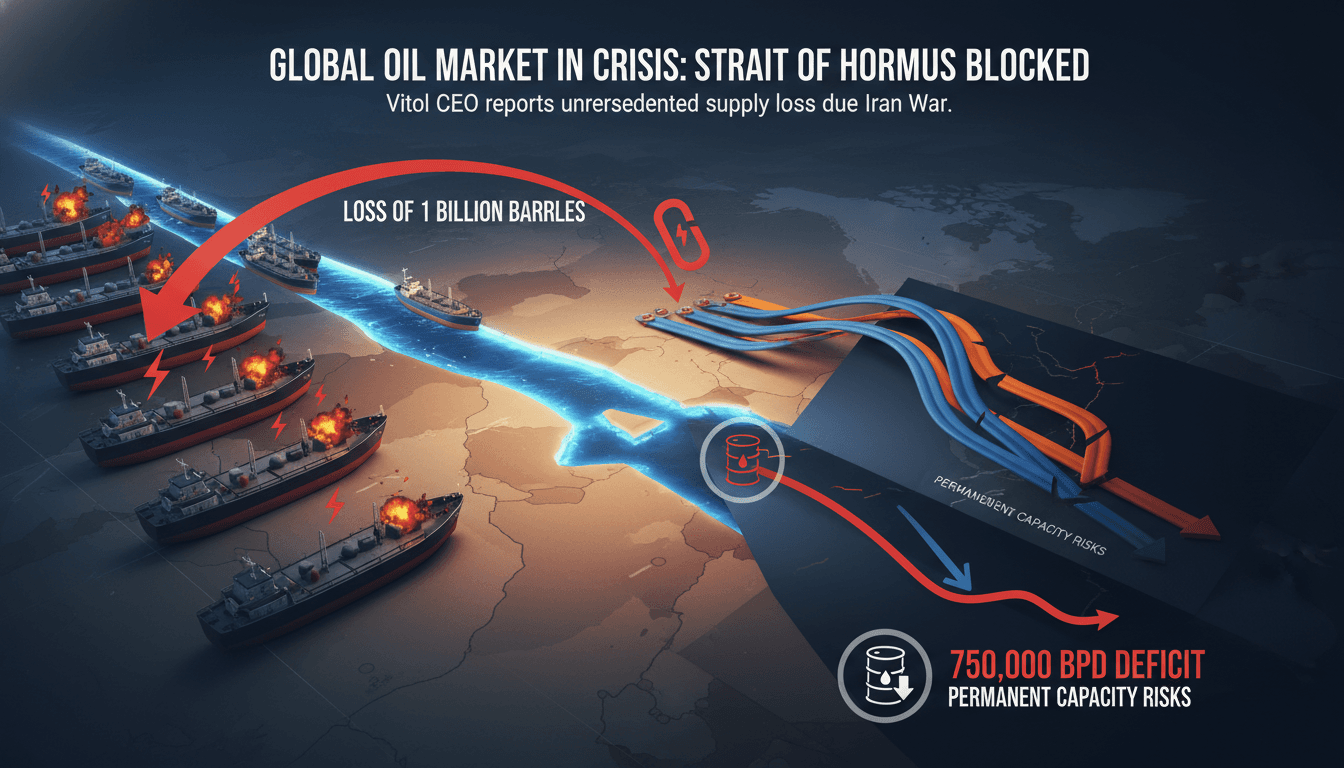
- Vitol CEO Russell Hardy warned that the global oil market has lost one billion barrels due to the Iran war.
- The conflict, initiated on February 28, 2026, has led to significant supply disruptions, including the closure of the Strait of Hormuz.
- Despite a temporary ceasefire, cumulative losses are expected to reach one billion barrels, impacting prices and availability.
The context you actually need
- The Iran war began with US-Israeli strikes on Iranian targets, escalating regional tensions and leading to immediate supply chain disruptions.
- The Strait of Hormuz closure on March 4 halted 20% of global oil flows, forcing Gulf producers to shut in production.
- Global oil demand has fallen by 4 million barrels per day, while supply losses have reached 12 million barrels per day, creating a significant market imbalance.
What's really happening
The Iran war has triggered a complex chain of events that has severely disrupted the global oil market. The conflict began on February 28, 2026, when coordinated US-Israeli strikes targeted Iranian military assets, escalating existing tensions in the region. By March 4, the situation worsened with the closure of the Strait of Hormuz, a critical chokepoint for oil transportation, effectively halting 20% of global oil flows. This closure forced major Gulf producers, including Saudi Arabia, Iraq, and the UAE, to shut in production due to the lack of viable export routes.
As a result, cumulative production losses have reached staggering figures, with estimates suggesting a loss of 600-700 million barrels by mid-April. The impact on refinery output has also been significant, with a reduction of approximately 6 million barrels per day. Even with a temporary ceasefire agreed on April 8, the damage has been done, and Hardy's warning of a cumulative loss of one billion barrels reflects the long-term implications of these disruptions.
The market's response has been swift, with Brent crude prices surging past $120 per barrel before stabilizing amid recession fears. The International Energy Agency (IEA) has coordinated emergency stock releases to mitigate the impact, but the underlying issues remain unresolved. Analysts predict a market deficit of 750,000 barrels per day on average for 2026, raising concerns about permanent capacity risks and the potential for further price volatility.
The economic ramifications extend beyond just oil prices. Dubai residents are already feeling the pinch, with fuel prices exceeding pre-war levels and risks of shortages looming due to regional supply chain breaks. The tourism sector, a vital part of Dubai's economy, is also experiencing strain, with visitor numbers plummeting and luxury sectors reeling from higher shipping costs and market volatility.
Who feels it first (and how)
- Consumers: Higher fuel prices directly impact daily expenses and travel costs.
- Tourism sector: Reduced visitor numbers and increased operational costs threaten profitability.
- Energy traders: Companies like Vitol face significant market volatility and operational challenges.
- Gulf producers: Countries reliant on oil exports experience economic strain from production shut-ins.
What to watch next
- Fuel price trends: Monitoring fluctuations in oil prices will indicate the broader economic impact and consumer behavior.
- Geopolitical developments: Any escalation or resolution in the Iran conflict could significantly alter supply dynamics.
- Market responses: Watch for changes in trading strategies among energy companies as they adapt to ongoing disruptions.
The Iran war has caused significant disruptions in global oil supply.
Continued volatility in oil prices and potential shortages in affected regions.
The long-term implications for global energy security and economic stability.
Frequently Asked Questions
- Why it matters?
- The ongoing disruptions in the oil market threaten global economic stability and energy security.
- What happened (in 30 seconds)?
- Vitol CEO Russell Hardy warned that the global oil market has lost one billion barrels due to the Iran war. The conflict, initiated on February 28, 2026, has led to significant supply disruptions, including the closure of the Strait of Hormuz. Despite a temporary ceasefire, cumulative losses are expected to reach one billion barrels, impacting prices and availability.
- What's really happening?
- The Iran war has triggered a complex chain of events that has severely disrupted the global oil market. The conflict began on February 28, 2026, when coordinated US-Israeli strikes targeted Iranian military assets, escalating existing tensions in the region. By March 4, the situation worsened with the closure of the Strait of Hormuz, a critical chokepoint for oil transportation, effectively halting 20% of global oil flows. This closure forced major Gulf producers, including Saudi Arabia, Iraq, a
- Who feels it first (and how)?
- Consumers: Higher fuel prices directly impact daily expenses and travel costs. Tourism sector: Reduced visitor numbers and increased operational costs threaten profitability. Energy traders: Companies like Vitol face significant market volatility and operational challenges. Gulf producers: Countries reliant on oil exports experience economic strain from production shut-ins.
- What to watch next?
- Fuel price trends: Monitoring fluctuations in oil prices will indicate the broader economic impact and consumer behavior. Geopolitical developments: Any escalation or resolution in the Iran conflict could significantly alter supply dynamics. Market responses: Watch for changes in trading strategies among energy companies as they adapt to ongoing disruptions.
Editor-curated FT homepage stories spanning markets, business, world, and opinion.
"The Financial Times is a globally respected business publication with a centrist/center-left tone and strong markets focus."
— A47 Editor
Oil market has lost a billion barrels due to Iran war, Vitol boss warns
The ongoing conflict in Iran has led to a staggering loss of approximately one billion barrels of oil, according to the CEO of Vitol, a leading energy trading company. This disruption in supply is attributed to geopolitical tensions and the near-clos...
Sports reporting with a focus on Saudi and regional competitions.
"Okaz sports coverage is broad and audience-friendly, with strong attention to Saudi teams and leagues."
— A47 Editor
حرب إيران تتسبب في فقد مليار برميل نفط من الإمدادات
Senior market analysts have reported that the ongoing Iran war has led to a significant disruption in oil supplies, with an estimated loss of one billion barrels, potentially rising to 1.5 billion if the conflict continues. The closure of the Strait ...