
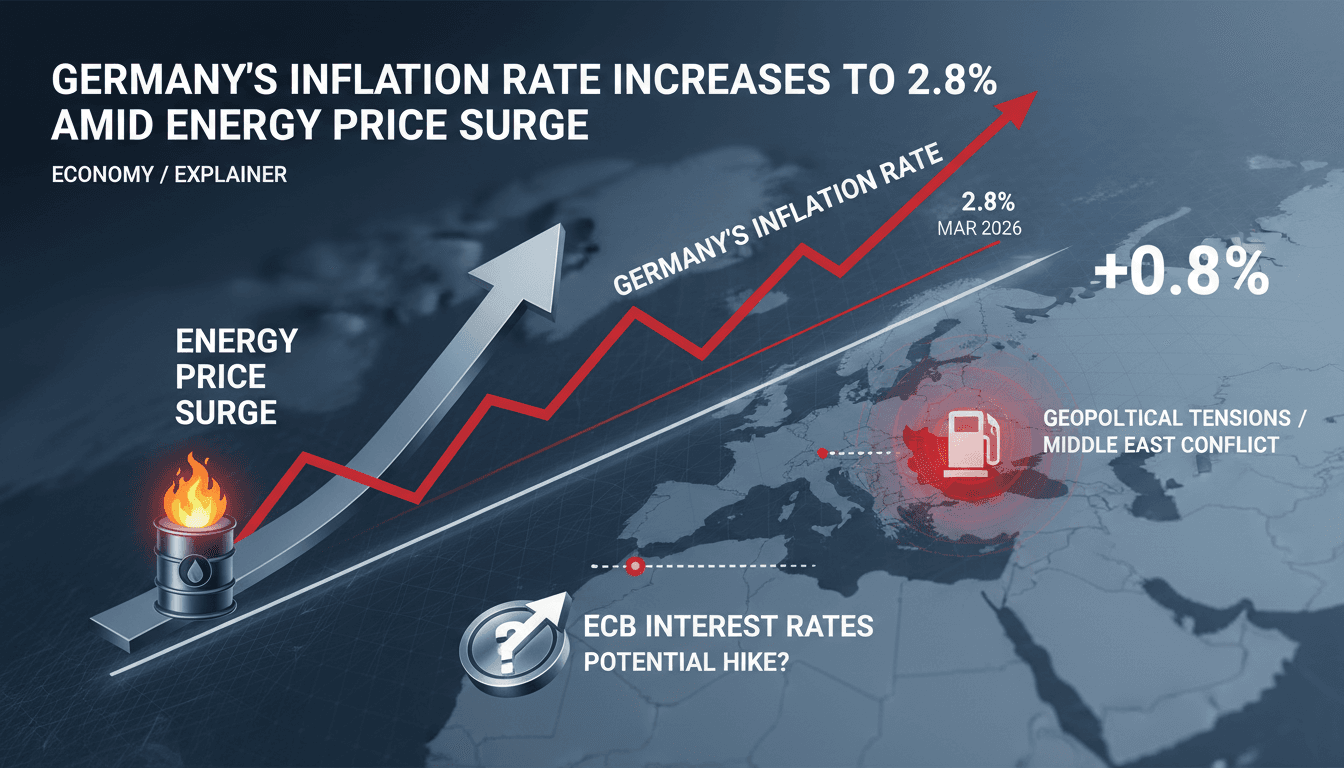
Germany's Inflation Rate Increases to 2.8% Amid Energy Price Surge
Here's what it means for you.
If you rely on European imports or have ties to the eurozone, expect potential price increases in the coming months.
Why it matters
This inflation spike signals potential shifts in monetary policy that could affect economic stability across Europe.
What happened (in 30 seconds)
- Germany's annual inflation rate rose to 2.8% in March 2026, up from 2.0% in February, driven by surging energy prices.
- Energy prices increased by 7.2% year-on-year, marking the first rise since December 2023, amid geopolitical tensions in the Middle East.
- The European Central Bank is closely monitoring this trend, with indications of possible rate adjustments to counter inflationary pressures.
The context you actually need
- Germany's inflation had previously moderated to around 2.0% in February 2026, following a decline in energy prices during late 2025.
- Preliminary estimates indicated a rebound to 2.7-2.8% in late March, attributed to escalating global energy costs linked to the Iran war and Middle East conflicts.
- Core inflation rates in the eurozone remain stable at approximately 2.5%, while headline inflation is hovering near the ECB's 2% target.
What's really happening
The recent rise in Germany's inflation rate to 2.8% is primarily a reflection of escalating energy prices, which have surged amid geopolitical tensions in the Middle East. The harmonised index of consumer prices (HICP) captures this increase, indicating a broader trend affecting not just Germany but potentially the entire eurozone. Energy prices, which rose 7.2% year-on-year, have been a significant driver of this inflation, marking a shift from the previous trend of declining energy costs observed in late 2025.
The backdrop to this inflationary pressure is a complex interplay of global supply chain disruptions and geopolitical instability. The ongoing conflict in the Middle East, particularly the Iran war, has created uncertainty in energy markets, leading to increased costs for producers and consumers alike. As energy prices rise, so do transport and production costs, creating a ripple effect throughout the economy.
The European Central Bank (ECB) is closely monitoring these developments, as rising inflation poses risks to price stability across the eurozone. With inflation now exceeding the ECB's target, officials are considering potential rate adjustments in mid-2026 to mitigate these risks. German economists have noted early signs of second-round effects, with price expectations rising among businesses, indicating that inflation could become entrenched if not addressed promptly.
Moreover, the Bundesbank has emphasized the need for vigilance regarding potential spillovers from energy shocks, suggesting that the economic landscape may continue to shift in response to these pressures. The interplay between energy costs and inflation is critical, as sustained high energy prices could lead to a prolonged period of elevated inflation, impacting consumer spending and overall economic growth.
In summary, the rise in Germany's inflation rate is not an isolated incident but part of a broader trend influenced by global events. The implications for consumers, businesses, and policymakers are significant, as they navigate the challenges posed by rising costs and potential monetary policy shifts.
Who feels it first (and how)
- Consumers: Higher prices for energy and goods, impacting household budgets.
- Businesses: Increased production and transport costs, potentially leading to higher prices for consumers.
- Expatriates: German expatriates may see changes in remittances and purchasing power due to inflationary pressures in Germany.
- Importers: Companies relying on European imports may face rising costs, affecting pricing strategies.
What to watch next
- ECB Policy Announcements: Watch for any changes in interest rates or monetary policy from the ECB, as these will directly impact economic conditions across Europe.
- Energy Price Trends: Keep an eye on global energy prices, as fluctuations will influence inflation rates and consumer costs.
- Consumer Sentiment Reports: Monitor consumer confidence and spending patterns, as these will indicate how inflation is affecting household behavior.
Inflation in Germany has risen to 2.8% due to increased energy prices.
The ECB may adjust interest rates in response to rising inflation.
The long-term impact of geopolitical tensions on energy prices and inflation remains uncertain.
Frequently Asked Questions
- Why it matters?
- This inflation spike signals potential shifts in monetary policy that could affect economic stability across Europe.
- What happened (in 30 seconds)?
- Germany's annual inflation rate rose to 2.8% in March 2026, up from 2.0% in February, driven by surging energy prices. Energy prices increased by 7.2% year-on-year, marking the first rise since December 2023, amid geopolitical tensions in the Middle East. The European Central Bank is closely monitoring this trend, with indications of possible rate adjustments to counter inflationary pressures.
- What's really happening?
- The recent rise in Germany's inflation rate to 2.8% is primarily a reflection of escalating energy prices, which have surged amid geopolitical tensions in the Middle East. The harmonised index of consumer prices (HICP) captures this increase, indicating a broader trend affecting not just Germany but potentially the entire eurozone. Energy prices, which rose 7.2% year-on-year, have been a significant driver of this inflation, marking a shift from the previous trend of declining energy costs obser
- Who feels it first (and how)?
- Consumers: Higher prices for energy and goods, impacting household budgets. Businesses: Increased production and transport costs, potentially leading to higher prices for consumers. Expatriates: German expatriates may see changes in remittances and purchasing power due to inflationary pressures in Germany. Importers: Companies relying on European imports may face rising costs, affecting pricing strategies.
- What to watch next?
- ECB Policy Announcements: Watch for any changes in interest rates or monetary policy from the ECB, as these will directly impact economic conditions across Europe. Energy Price Trends: Keep an eye on global energy prices, as fluctuations will influence inflation rates and consumer costs. Consumer Sentiment Reports: Monitor consumer confidence and spending patterns, as these will indicate how inflation is affecting household behavior.
Arabic-language UAE newspaper coverage focused on domestic affairs, public institutions, business, society, and regional developments.
"Al Khaleej coverage generally reflects a mainstream UAE editorial lens with strong attention to public affairs, institutions, and regional developments."
— A47 Editor
2.8 % التضخم الألماني في مارس
Recent data from the Federal Statistical Office of Germany revealed that the inflation rate in Germany rose to 2.8% in March. This increase indicates ongoing economic pressures affecting consumer prices in the country.